

Plan the perfect Kakadu 4 day itinerary for first time visitors with ancient rock art, natural pools, cruises, and other must-see highlights in Kakadu National Park.

KAKADU IN A NUTSHELL
World-class Aboriginal rock art, immense biodiversity, vast uncrowded landscapes.
Dry season (July–September) for full access to park attractions (best for first timers)
Wet season (November-April) for epic scenic flights and explosive nature, but less open attractions and risks of flooding
Kakadu 4 day itinerary: Must Do
- Buy park pass
- Check the Kakadu Access Report for updates on opening / closures of park sites
- Follow strict croc safety
- Book Yellow Water cruise
- Stay a minimum of three days
- Avoid driving at night!
Kakadu 4 day itinerary: Where to stay
Split your time between Mercure Kakadu Crocodile Hotel (Jabiru) and Cooinda Lodge (Yellow Water region), to explore different areas of the park.
Kakadu 4 day itinerary: How to get around
2WD fine for most sites in dry season | tours/4WD recommended for Jim Jim/Twin Falls or wet season
Kakadu 4 day itinerary – Key highlights
- Ubirr & Burrungkuy (ancient rock art)
- Yellow Water Cruise (wildlife in pristine environment)
- Maguk, Gunlom, Jim Jim/Twin Falls (spectacular escarpments and fresh water pools)
Kakadu 4 day itinerary: Our Top 3 Favourities
- Watch sunset from Nawurlandja lookout
- Yellow River Cruise at sunrise
- Swim in Maguk
Lorem ipsum dolor sit amet, consectetur adipiscing elit. Ut elit tellus, luctus nec ullamcorper mattis, pulvinar dapibus leo.
The Top End – Australia’s northernmost part of the Northern territory (no pun intended) captures the traveller’s imagination with burning sunsets, mystical Aboriginal culture, and fresh water natural pools nested in its quintessential, red-scorched soil.
With Kakadu being the jewel of the crown, it is a no brainer that this National Park should rightly so be on your radar if you are in this part of the world. You will see ancient rock art, learn about a fascinating culture, swim in crystal clear natural pools and experience beautiful and diverse landscapes.
However, despite the sales pitch, we believe that Kakadu is not a place for ticking boxes on a map or rushing from one attraction to the next, and it requires multiple considerations and careful preparation to make your visit a success.
We created this self-drive, Kakadu 4 day itinerary, perfect for first time travellers, visiting in dry season. It also includes our personal travel tips, to maximise sightseeing at a realistic pace, helping you to truly appreciate the cultural and natural essence of the place without compromises.
TRAVEL LOGISTICS & USEFUL TIPS
NATIONAL PARK PASS –You could purchase it in advance here or visit the Bowali Visitor Centre inside the park.
CAR BOOKING – Best to book it at Darwin Airport via Booking.com.
CAR INSURANCE – Normally recommend getting a Super CDW (Collision Damage Waiver) when picking your car.
TRAVEL INSURANCE – We use Coverwise.
ACCOMMODATION – Stay inside the Park to avoid excessive driving, even though you have limited offering. Split your time between the Mercure Kakadu Crocodile Hotel (or alternatively the Aurora Kakadu Lodge) in Jabiru and the Cooinda Lodge in the Yellow Water region, to give yourself time to explore the different areas of the park.
WHAT TO BOOK – Yellow Water Cruise, Jim Jim Falls Tour, Kakadu Scenic Flight.
WHAT TO BRING – Must have: Hat, Sun Cream, Plenty of Water, Hiking Pants, Camera! | Useful to have: Bug spray, Head fly net, Swimming Costume, Hiking Boots, Snacks for the road.
SAFETY – Please abide by the park rules and obey all warning signs, especially related to crocodiles. If you do not see a warning sign by the water, assume crocodiles are present. If in doubt, out!
WHAT IS IT & WHY YOU SHOULD VISIT KAKADU NATIONAL PARK?
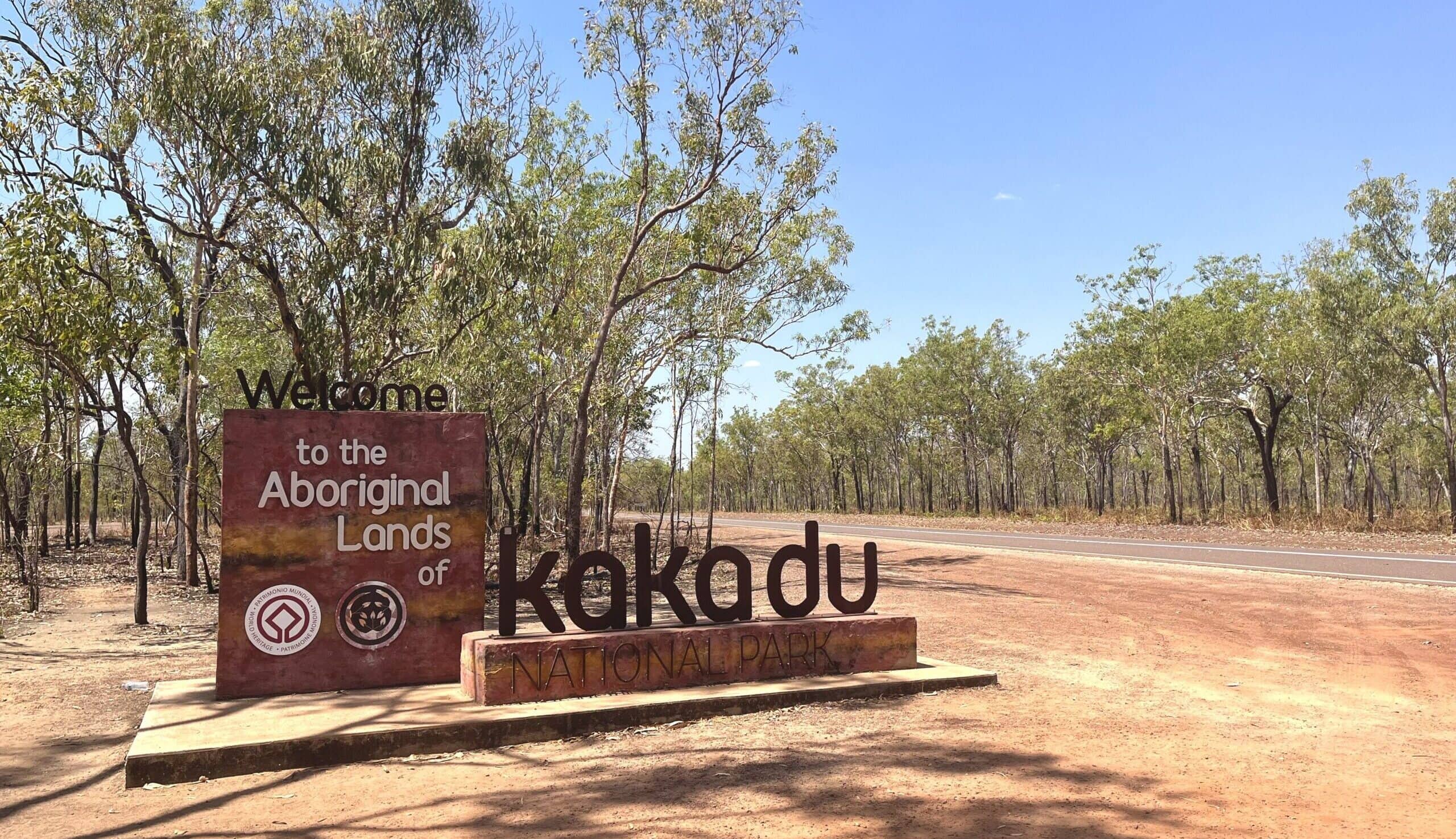
Welcome to the Aboriginal lands of Kakadu National Park!
Despite the undisputed importance, Kakadu still remains under the radar when travelling to Australia, unlike for example the Great Ocean Road, the Great Barrier Reef, Uluru or Sydney and Melbourne. In this introduction, we hope to spark your interest and convince you to explore Kakadu, in a 4 day curated itinerary.
Kakadu is the largest Australian national park, and one of the few UNESCO-listed places for both culture and nature. The park is divided into seven regions, each offering unique habitats to explore:
- South Alligator – The gateway to the park
- Jabiru – Offering essential services and various accommodation options
- East Alligator – Diverse landscape, rock art, crocodiles
- Burrungkuy (Nourlangie) – Rock art, spectacular sunset viewing
- Yellow Water – Top-notch wetland cruise, crocodiles, bird watching
- Jim Jim / Twin Falls – Spectacular escarpments and waterfalls
- Mary River – Bushwalks, enchanting swimming holes, diverse landscapes
The name Kakadu comes from a mispronunciation of “Gagudju”, one of the dominant Aboriginal languages in the area. Aboriginal people known as Bininj/Mungguy have inhabited Kakadu continuously for more than 65,000 years, since before the last ice age. Ancient rock art here provides one of the longest historical records of any group of people in the world, and its 5,000 art sites tell different stories from the ancestral creation up to the first European contact.
This invaluable piece of history is combined with rich ecosystem and diverse landscapes. This includes sandstone escarpments, woodlands, monsoon vine forests, floodplains, and giant termite cathedrals, delivering visitors a spiritual and visual experience alike. Being huge and out of the mass tourism circuits also means that, even in the most popular places, it doesn’t feel crowded allowing you to fully appreciate the essence of the place.
KEY FACTORS TO CONSIDER WHEN PLANNING YOUR KAKADU 4 DAY ITINERARY
Kaka-do or Kaka-don’t? Our key considerations for a successful trip
Despite its appeal, you find blogs questioning whether Kakadu is worth it compared to other alternatives, like Litchfield. If you think the answer is YES, the truth is actually more nuanced.
The first and most important question, is how much time you have.
With only 1-2 days available, you should focus on Litchfield. Kakadu is huge, and it will take 3h to get there from Darwin. Key attractions are 1-2h driving from each other. As the heat is serious for most of the day, you should only hike in the early morning or late afternoon. That makes it impossible to appreciate the full scope of the park in a touch-and-go visit. The secret here is taking your time and visit Kakadu in a 4 day itinerary (at minimum).
The second aspect to consider is when you are visiting.
Coming in the right season, based on your interests, is crucial to avoid finding certain sites closed or inaccessible (most people visit during dry season). The “Kakadu’s calendar” is reported on the opening plan, while daily sites updates are found in the Kakadu Access Report.
The third consideration pertains to the closure of certain sites, for reasons linked to disputes with the traditional owners. This is less relevant now that Gunlom, one of Kakadu’s main highlight, has reopened after six years of closure. However, as things change rapidly, we recommend checking this in advance to decide whether you still want to visit.
It is inevitable that if you have high expectations, but only stay for a fleeting visit and do not make the appropriate research, are likely to feel disappointed.
We are definitely in the “Kaka-do’s team” but recognize that careful planning and dedicating it the right time is paramount.
WHEN IS THE BEST TIME TO VISIT?
KAKADU’S SEASONS
Australia’s Top End seasons are serious and particularly pronounced in Kakadu, due to the particular topography of the park.
Broadly divided into dry (May-October) and wet (November-April), there are 6 micro seasons, bringing substantial changes to the landscape:
- May to June (Yekke): Relatively cool climate with little humidity. Key attractions such as Yellow River and Burrungkuy are normally open, while Ubirr may only be accessible via 4WD. Other attractions in the Jim Jim and Mary River regions are likely to be still closed, especially in May. The wetlands in the park are carpeted with beautiful water lilies.
- June to mid-August (Wurrkeng): Early dry season as most creeks stop flowing and floodplains start to dry out. The climate is quite pleasant (for Northern Territory standards) and it is normally a great time to visit. By mid-July most of the places in the park are normally accessible.
- Mid-August to October (Kurrung): The floodplains are dry and the savanna woodlands are barren. Sea Turtles start laying their eggs and thousands of magpie geese congregate to feed, especially around the Mamukala wetlands. All places are normally accessible.
- October to December (Kunumeleng): Pre-monsoon season with common afternoon thunderstorms bringing green to the woodlands. Most of places in Jim Jim region begin to flood, making them inaccessible.
- December to March (Kudjewk): Thunderstorms and flooding are common, although bringing an explosion of plant and animal life. Majority of the places are inaccessible although key attractions such as Yellow River and Burrungkuy remain open. A great time to book a scenic flight from Jabiru or Cooinda airstrips.
- April (Bangkerreng): Mostly clear skies with windy storms. Some areas start opening again but most are still subject to seasonal closure.
OUR RECOMMENDATION
The dry season, especially July to September, is when most travellers visit the park. This is when we recommend you to go, especially if you’re a first time visitor and want to maximise sightseeing.
We visited in August, and while being very hot during the day, it was pleasant outside peak hours. Yes, part of the landscape was barren and dry, but other areas remained surprisingly green as a result of the incredible natural diversity in the ecosystem. It was also great to have all the park at our disposal without a flood making certain roads impassable.
This itinerary is particularly suited for visiting during dry season. However, this shouldn’t discourage you if you come in wet season. Some key attractions such as Yellow River Cruise and Burrungkuy (Nourlangie) remain open in wet season, as well as treks like Barrk or Yurmikmik walks. Given the explosive nature at this time, book a scenic flight to see Jim Jim / Twin Falls at their best.
DO YOU NEED A 4WD?
Short answer “no”, long answer “it depends how much you want to visit in autonomy”.
We don’t think a 4WD is necessary especially if you travel in dry season and this is your first visit. The main roads are paved and majority of the sites (including Ubirr, Cahill Crossing, Yellow River and Burrungkuy) are easily accessible with a 2WD.
Furthermore, certain areas such as Jim Jim and Twin Falls are not easily accessible unless you have prior 4×4 driving experience, and use a snorkel to get through the water streams. Certain insurance companies even forbid you from going into Jim Jim / Twin Falls areas and do not cover you if the car gets damaged. If you want to visit these areas, you should book a tour instead of attempting to go there by yourself.
Gunlom or Maguk are accessible with 2WD but a 4WD is recommended, especially for Maguk due to the corrugated road. We drove to Maguk in a SUV, which was a long journey given the bad road conditions and we wouldn’t attempt it in a small car.
Overall, you can have a great experience with a 2WD, but we recommend hiring a big-ish SUV to maximise exploration.
KAKADU 4 DAY ITINERARY
Discover the Northern Territory’s hidden gem in this curated 4 day itinerary in Kakadu National Park
DAY 1 – SETTLE-IN, CROCODILES & AMAZING SUNSET AT UBIRR
MORNING
Fetch your car at Darwin Airport and start your quintessential Aussie experience in the Outback!
It’s a 2h drive from Darwin to the edge of Kakadu and not an eventful one. There is a “jumping croc cruise” along the way, but you will see plenty of crocodiles inside the park, in a less zoo-like setting.
As you enter the park you’re in the South Alligator region, characterized by vast, yet barren (in dry season) open spaces and wetlands.
There isn’t much to explore here if you don’t go off path, but a few notable points are worth mentioning.
After the ceremonial photo at the park entrance, stop at the South Alligator River Picnic Area for a quick snack. The area is normally quite empty and a good spot for a break, enjoy the shade and perhaps spot your first crocs!
Soon after the South Alligator river, go to Mamukala Wetlands. Depending when in the dry season, the scenery from the observation platform could be more or less beautiful, but you will still be in a serene environment. If you are lucky, you might also see wallabies like we did! Late in dry season there are thousands of magpie geese congregating here, resembling a National Geographic documentary.
There is also a 3km walk adjacent to the wetlands but unless you’re really keen we recommend to skip it, even just because of the unbearable heat.
Leaving the wetlands, stop at the Bowali Visitor Centre for information from the rangers and buy your park pass if you haven’t done so, otherwise go straight to your accommodation in Jabiru to relax.
AFTERNOON
Spend the afternoon visiting two other “must see” of this area.
Drive from Jabiru to Cahills Crossing in the East Alligator region.
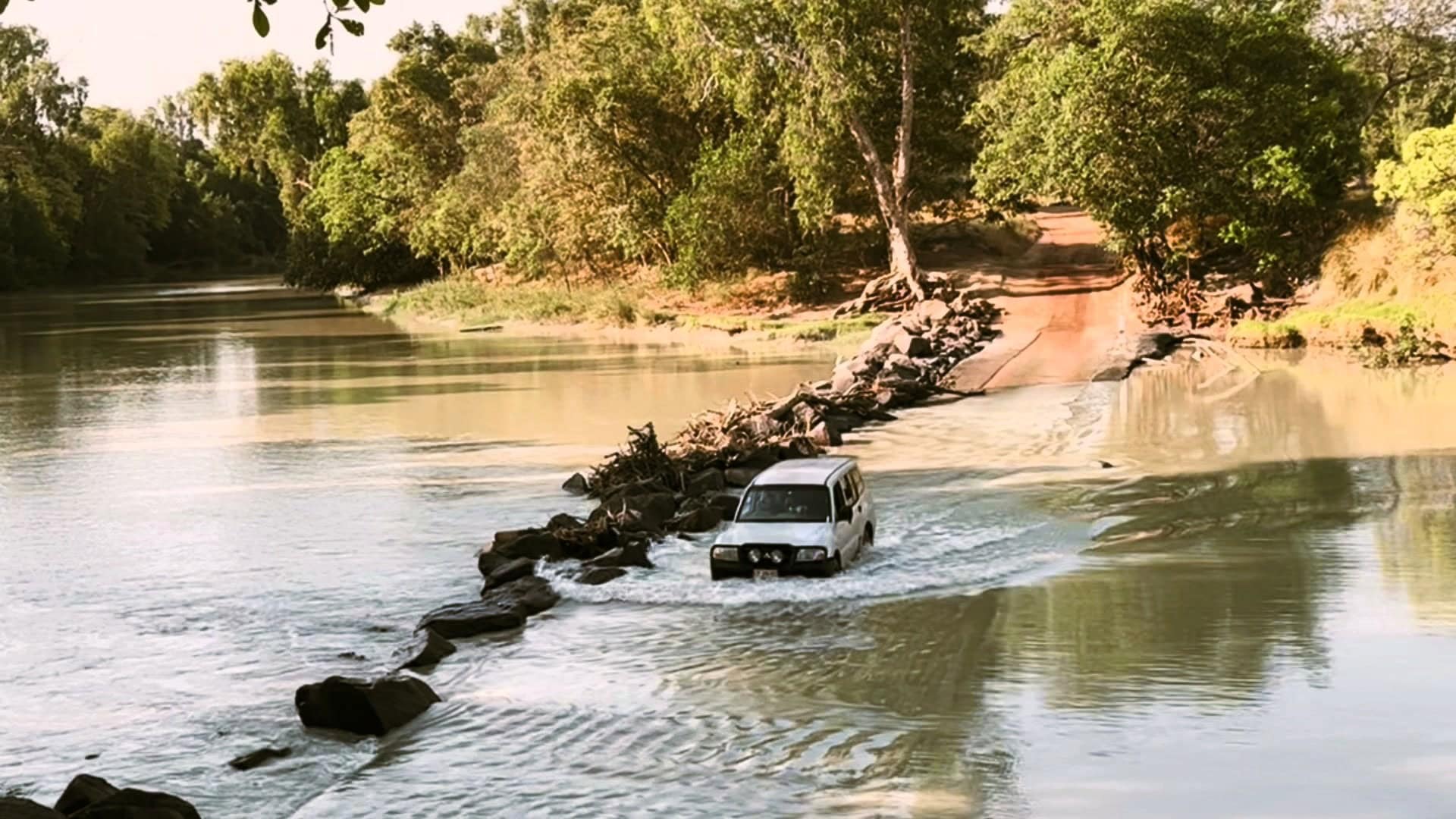
The place is cool as you’ll see dozens of crocodiles, including approaching cars crossing the half-submerged road to Arnhem Land (once again, make sure you are croc-wise). It is also usually green and breezy here, which makes the visit quite pleasant.
But the key highlight of the region is definitely Ubirr.
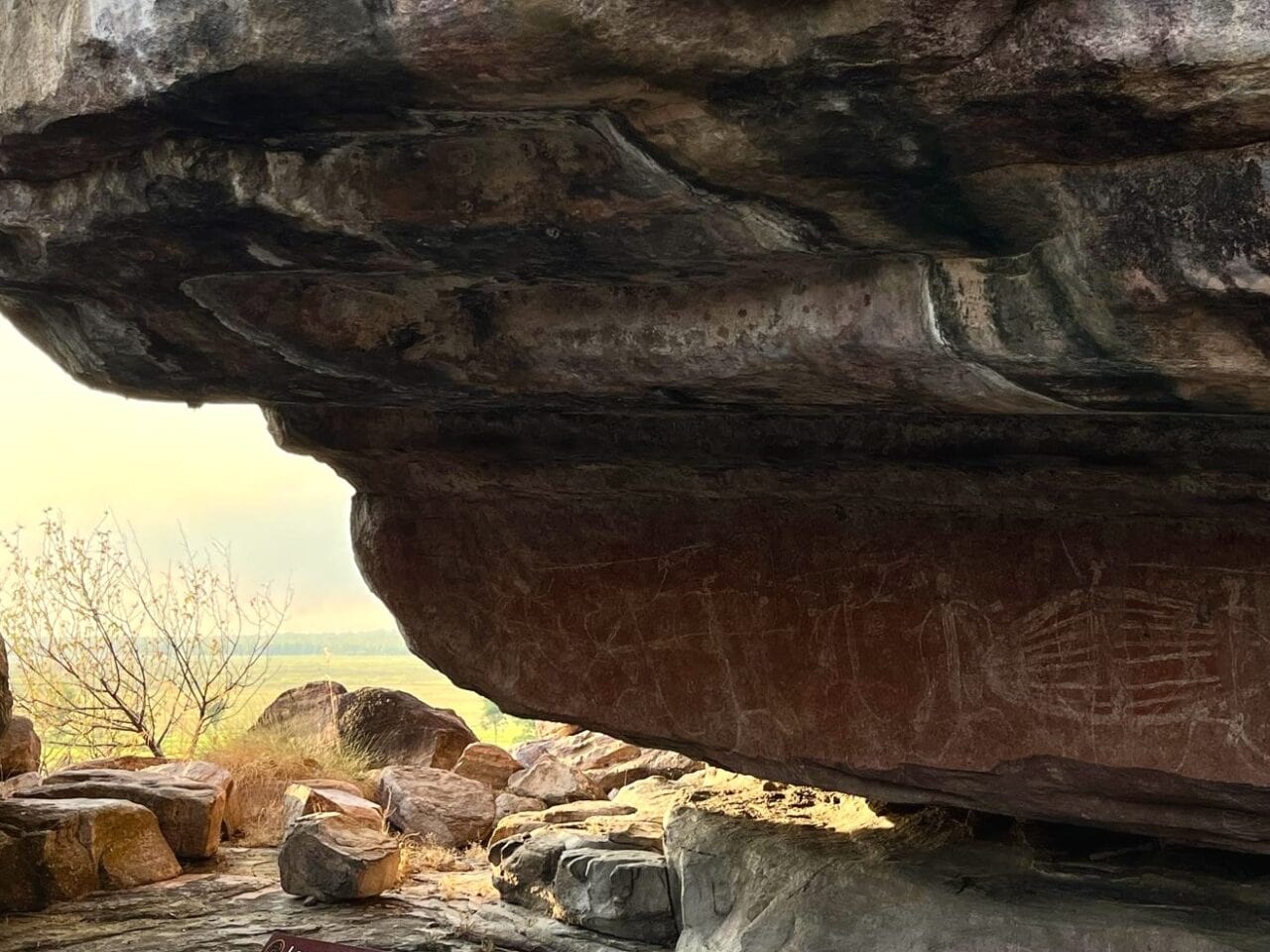
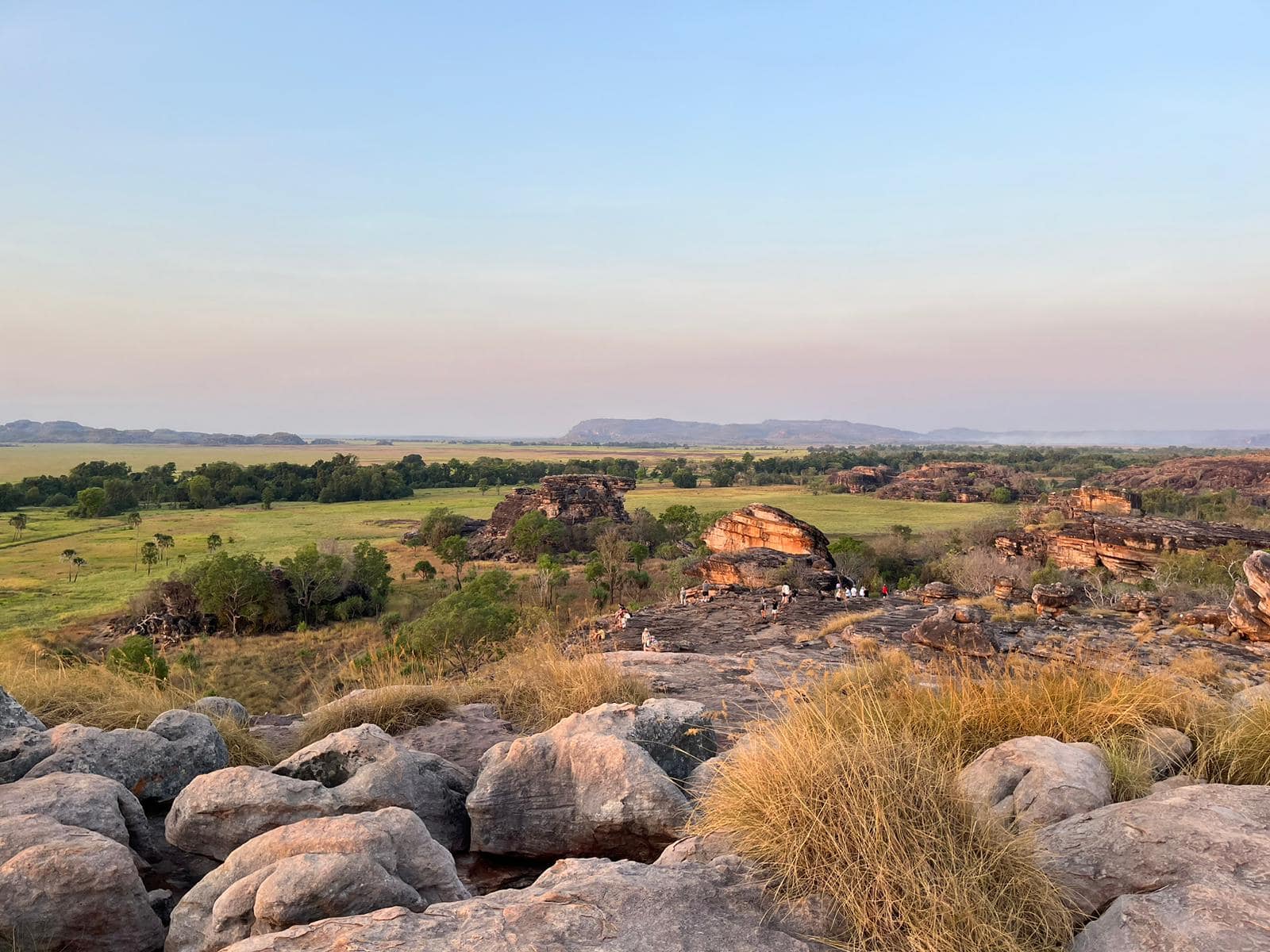
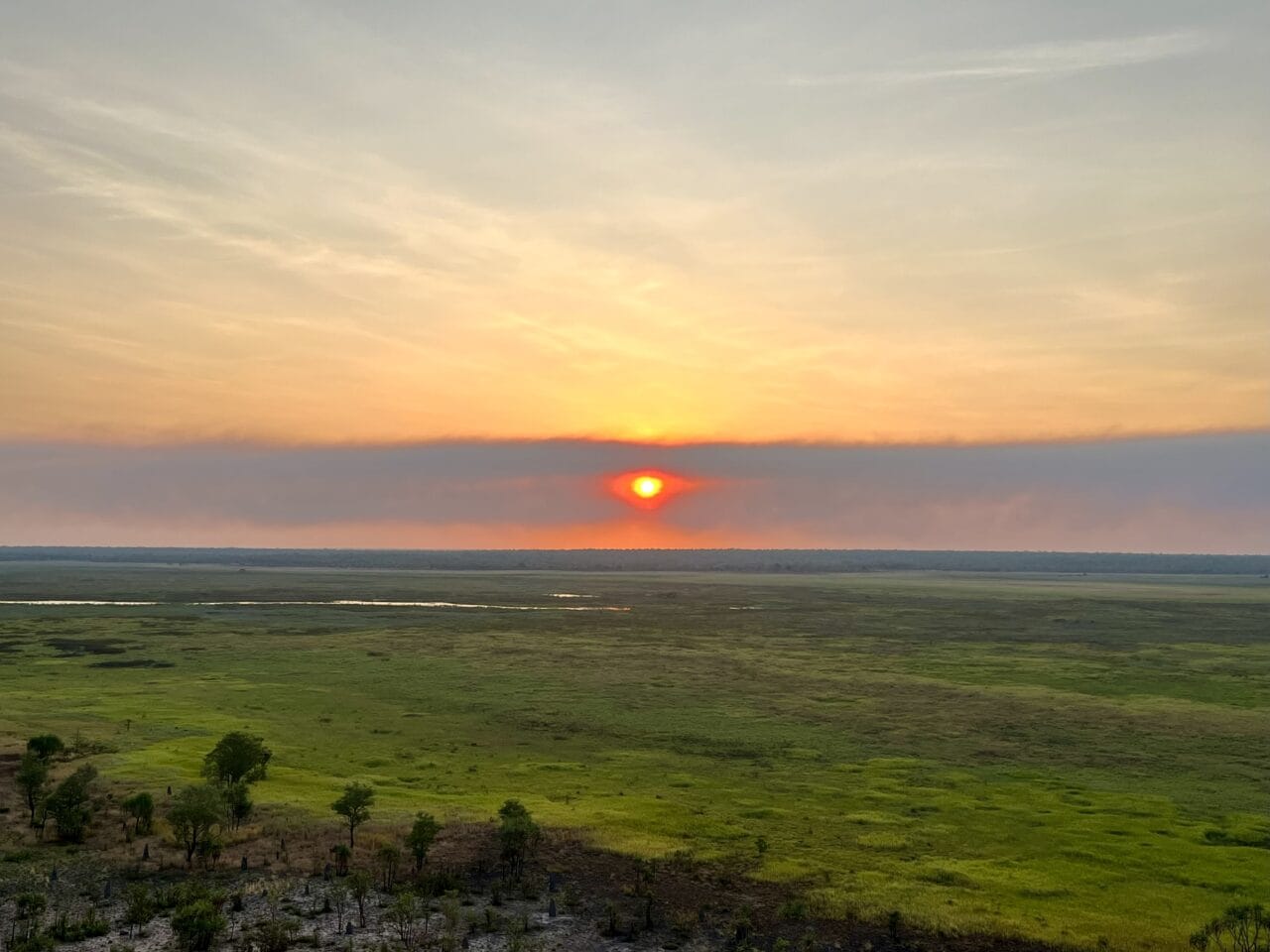
Make sure to spend a good amount of time here, as the landscape and Aboriginal rock art are both amazing. The best time to visit is in the late afternoon and you have to make sure to stay until sunset. A moderately steep, but easy climb will take you to the top of a lookout offering a spectacular view of the floodplain and a sunset to remember. It might sound corny, but it really looked like an Australian adaptation of the Lion King watching the Savanna from top of Pride Rock.
After sunset, you should probably dash to your car and go back to Jabiru. It will take you approximately 40 min, and it is best to drive when there is still some daylight, as you don’t really want to risk crashing into a buffalo or a kangaroo while it is pitch black.
Spend the rest of the evening having dinner and relaxing at your hotel.
KEY HIGHLIGHTS – Mamukala Wetlands, Cahill Crossing, Ubirr (sunset)
ACCOMMODATION – Mercure Crocodile Hotel, Aurora Kakadu Lodge in Jabiru
DAY 2 – LEARN ABOUT ANCIENT ROCK ART
MORNING
Today you’ll dig deeper into Kakadu fascinating rock art after your first exposure at Ubirr.
Start your day by getting your logistics sorted in Jabiru. You’ll move to Cooinda Lodge in the Yellow River Area today, to access other areas of the park. As Jabiru is the only retail hub available in the park, you should use it to buy food and anything else you need for your stay.
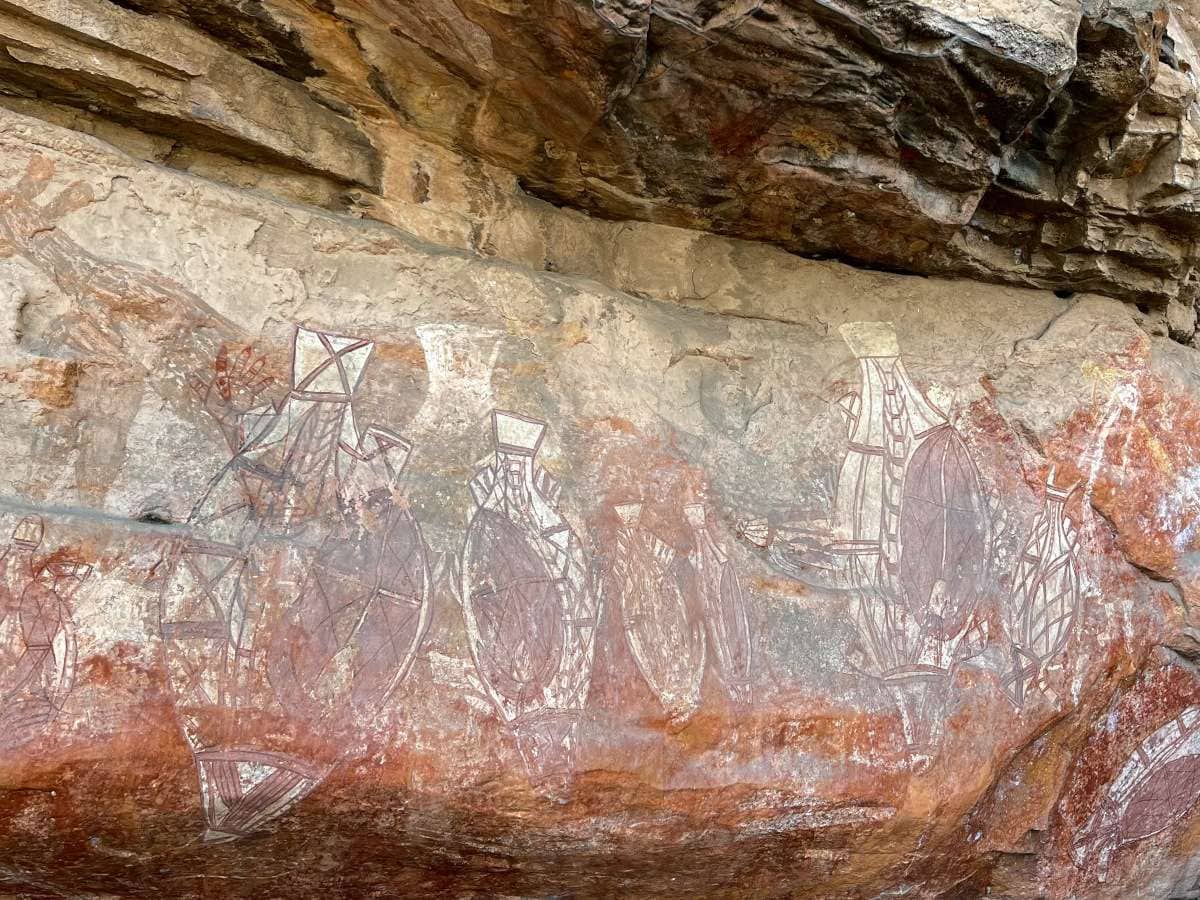
Get your ducks in a row and then venture south into the Burrungkuy region, stopping at Nanguluwurr car park after a short drive. You can then start a 3.5km return walk to a quiet and underrated art site, normally overlooked by fleeting visitors. The walk is flat and easy although it will probably be very hot (bring plenty of water). Once you arrive, there is opportunity for shelter making your exploration easier. What stands out at this site, is a depiction of contact between Europeans and Aboriginals in the form of a sailing ship, which is in contrast with other stone paintings in the park tracing back thousands of years.
Spend some time exploring, and after you get back to your car you may start feeling hungry. Make a short drive to the nearby Anbangbang Billabong. This is one of Kakadu’s most iconic billabongs (stagnant pond) although it may be dry depending when you go. Nevertheless, it is a pleasant circular walk and there are picnic tables where you can relax and have lunch.
Say goodbye to Anbangbang and drive for 30min to Cooinda Lodge. This is your accommodation to explore the rest of the park, which otherwise would be a bit far from Jabiru. As it will be hot, we recommend that you hit the swimming pool and chill-out for a couple of hours.
AFTERNOON
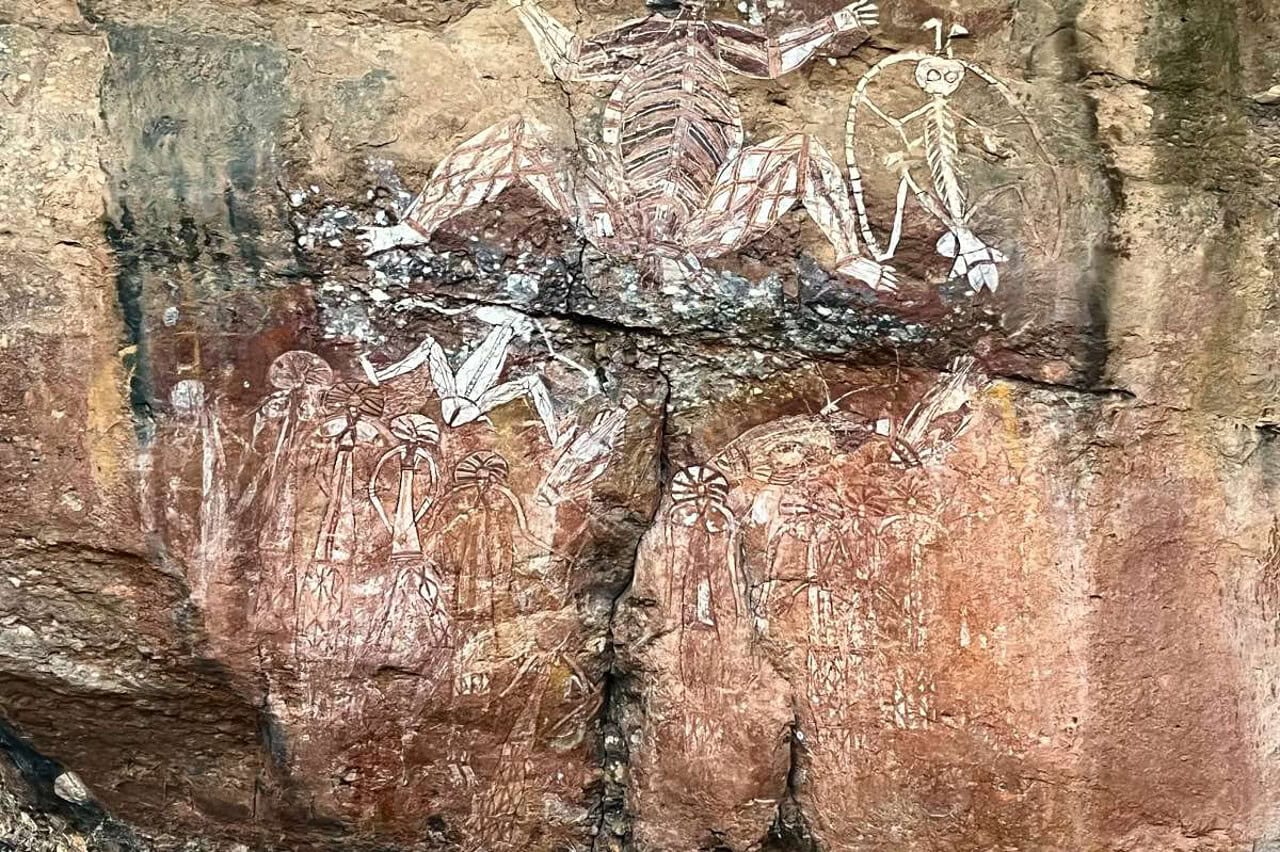
Once the temperature starts dropping, drive backwards to Burrungkuy (Nourlangie). This is a key spot of the region and, together with Ubirr, the best place to observe ancient rock art at Kakadu.
Between the two, we preferred Burrungkuy in terms of art diversity and Ubirr for the setting and landscape, but it is no doubt that both places should be on your bucket list. You can see a large diversity of subjects here, including the “Lightning Man” and various x-ray paintings of humans and animals, some of them up to 20,000 years old!
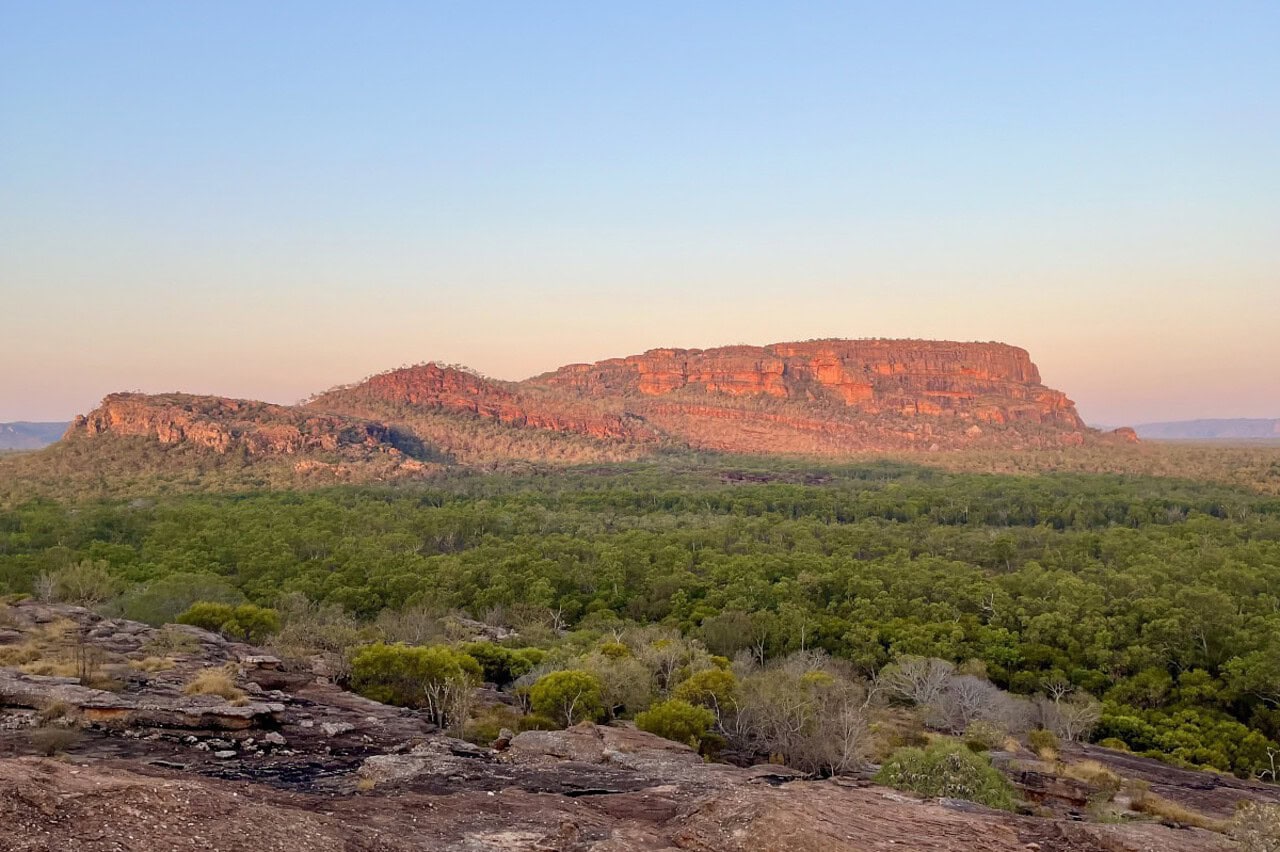
If you are up for some steps, the Kunwarddewardde lookout provides amazing view of the Burrungkuy escarpment and extensive savanna woodland stretching below.
However, we suggest to make a 2min drive and head to the Nawurlandja lookout for an amazing sunset spot. Less crowded than Ubirr, but not any less beautiful, this was one of our favourite places in Kakadu!
Drive to Cooinda Lodge, have dinner and stay for the night.
KEY HIGHLIGHTS – Burrungkuy, Nawurlandja Lookout (sunset)
ACCOMMODATION – Cooinda Lodge
DAY 3 – SPECTACULAR CRUISE & VISIT MAGUK
MORNING
It’s an early start for one of Kakadu’s most beautiful places. But trust us, it’s worth it.
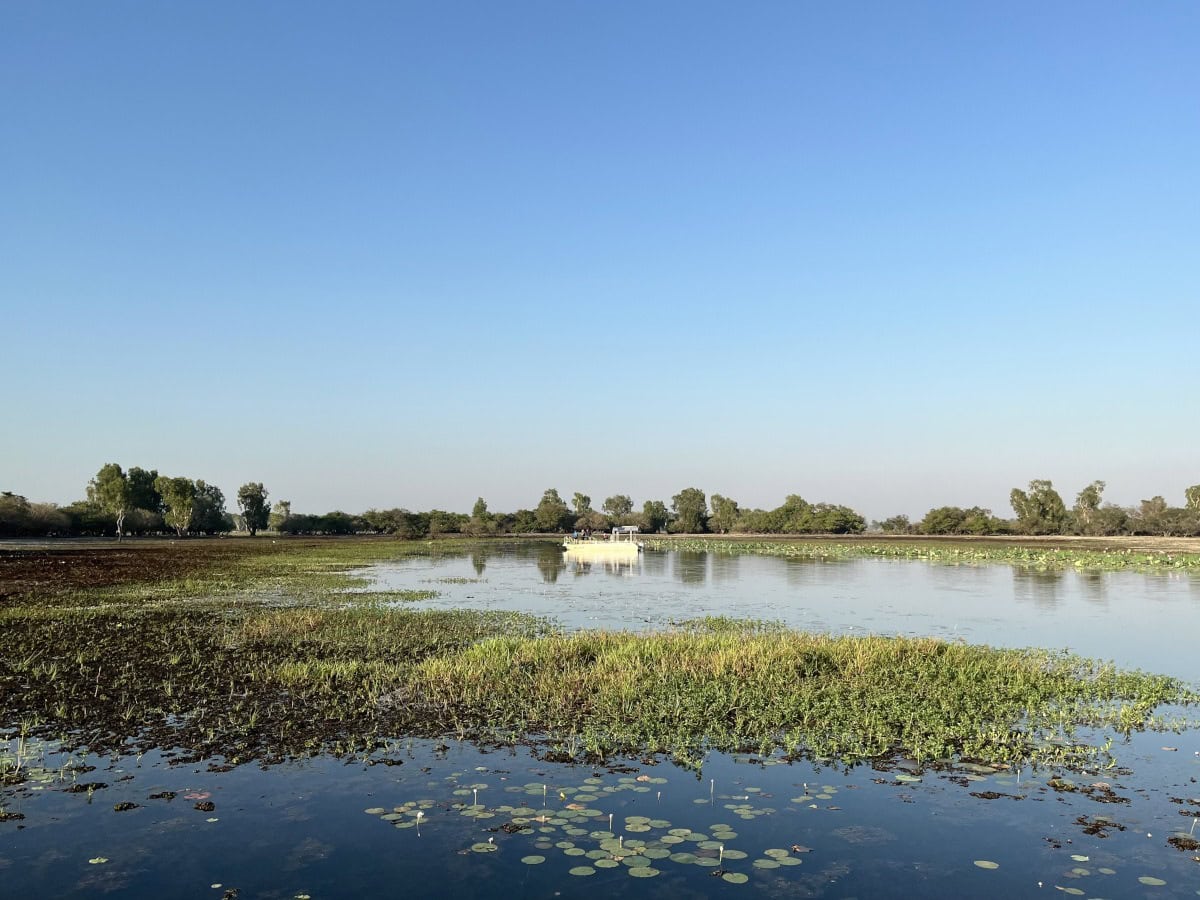
Part of the South Alligator River floodplain, Yellow Water is best seen from a cruise. This is one of Kakadu’s most popular attractions and for good reason. As availability is limited we recommend booking this in advance.
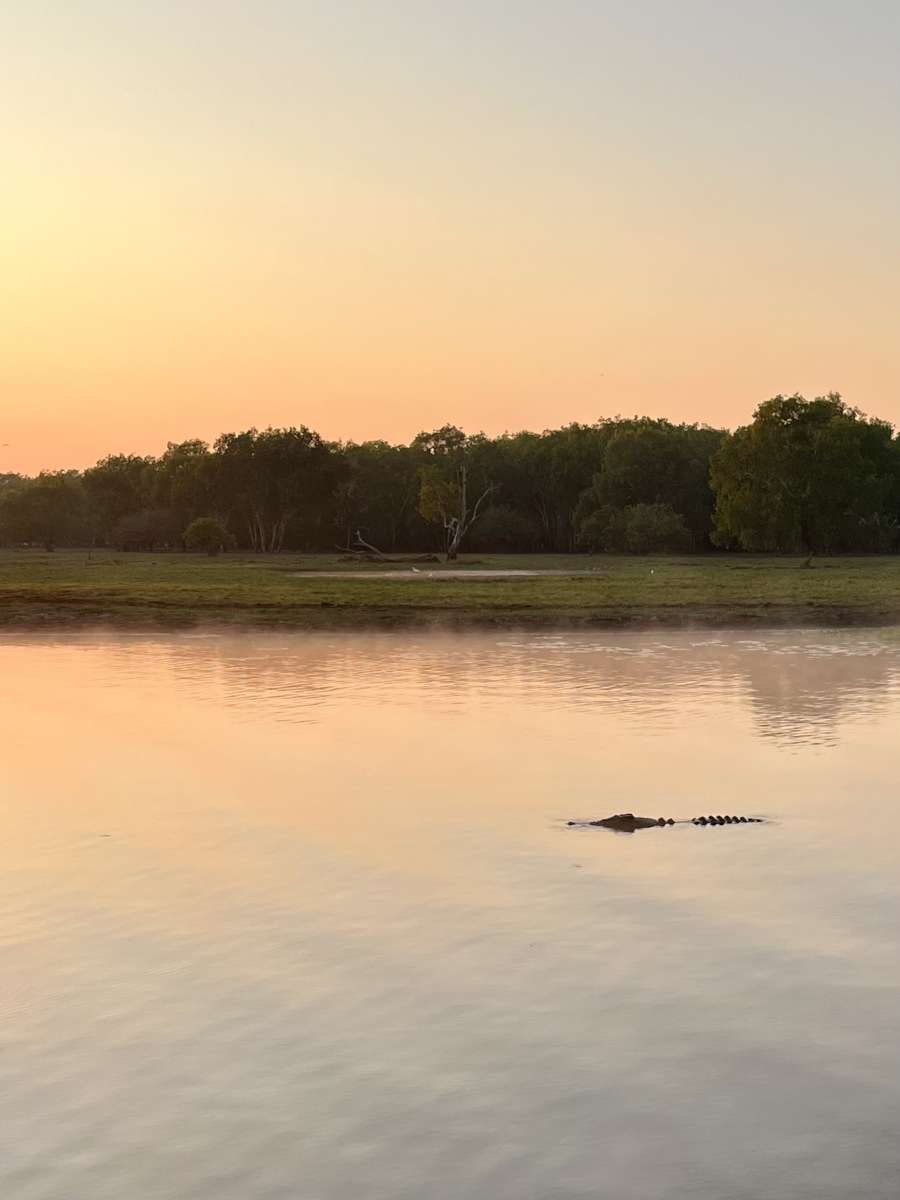
The most popular cruises are at sunrise or sunset, with sunrise being our favourite. Crocodiles are more active at sunset, but there is higher concentration of birds and other wildlife at sunrise, and you are basically guaranteed to see crocs too.
You will start boarding around 6am for your 2h journey plying across calm waters, slowly waking up together with the surrounding environment. Hazy mist begins to lift, displaying a clearer picture of the tranquil water basin, reflecting pastel shades of purple and orange tints from the sky.
The twits of hundreds fluvial birds, including multicolour kingfishers, whistling ducks, sea eagles and prehistoric-looking jabirus dominate the scene. The first sun beams enlighten hundreds of water lilies, floating aimlessly on the calm water surface.
Suddenly, a spine-chilling sight disturbing this serene environment. The first saltwater crocodile emerging from river, showing its slit-shaped eyes and protruding snout. And then the second, third and so forth, all patiently patrolling the area, waiting for a mistake to take advantage of, and reminding you that this is their territory. In the distance, the vast plains teeming with wallabies, buffalos and other animals, complementing the place’s diversity.
Upon returning to the hotel you’ll have an abundant breakfast, a prelude for much-needed chill time. Rest at the lodge and if you want a no-frills, culture injection, head to the Warradjan Cultural Centre nearby. Here you can learn more about Bininj/Mungguy culture, connect with traditional owners and shop for local arts and crafts.
AFTERNOON
After lunch, drive south into the Mary River region and take the exit to Maguk.
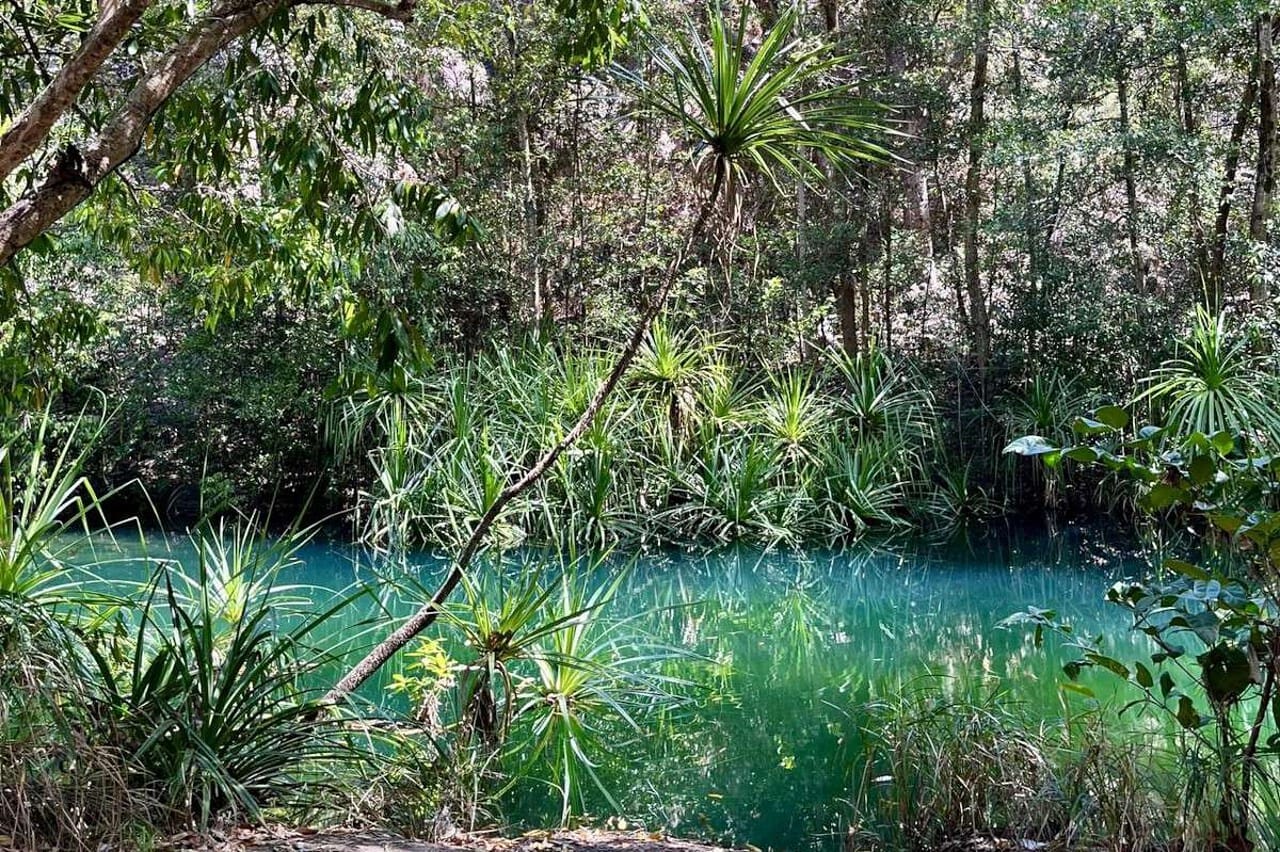
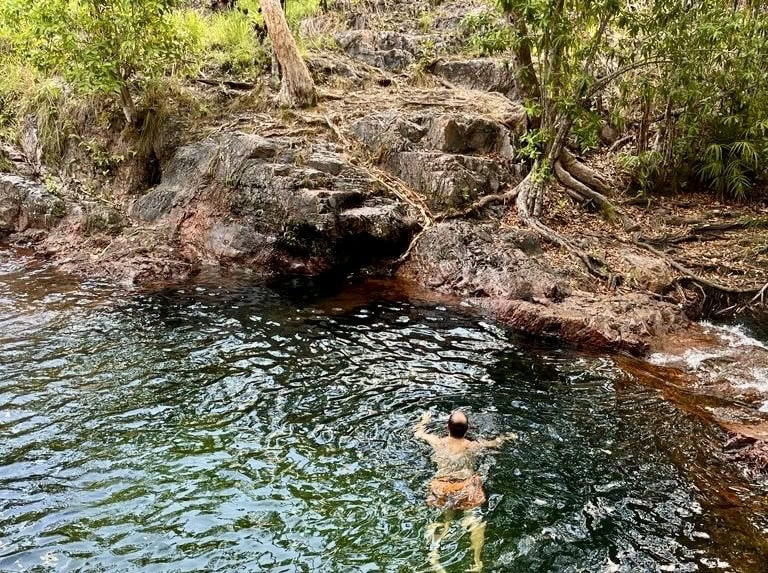
The road is very corrugated and we only recommend going in a SUV (at least) or with a proper 4WD. We got there in our SUV without major issues but consider that the 10km drive could be (very) slow. Once you get to the car park, there is an easy 1km walk crossing monsoonal forest and idyllic water pools, before arriving to Maguk (Barramundi gorge).
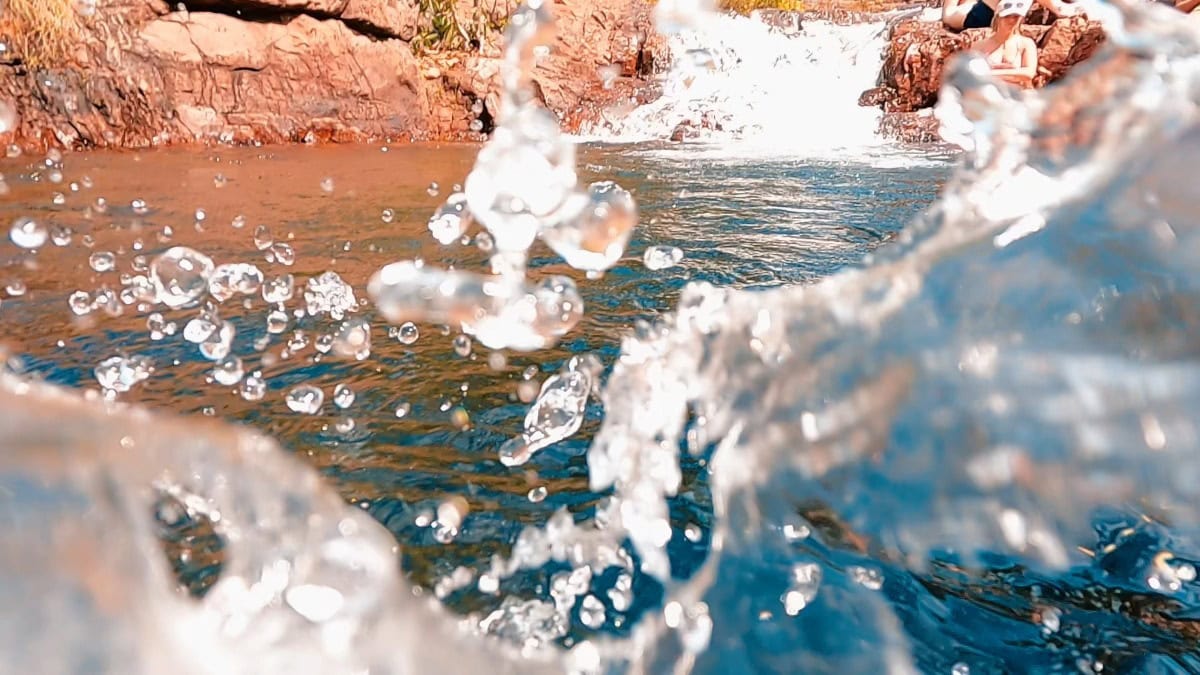
The natural pool is pretty amazing, the water is crystal clear and there is a small waterfall at the end of the gorge which makes the scenery picture perfect. We recommend that you spend a good amount of time here, simply relaxing, sun-bathing and going for a refreshing swim.
Can you actually swim at Maguk?
Kakadu’s stance on crocodiles is swim at your own risk and there is always an element of risk. Having said that, the chances of finding a saltwater crocodile are pretty slim in the late dry season. Maguk is also a “crocodile management zone” where Park Rangers actively monitor the area, set traps and remove any crocodiles if present.
Get back to the hotel, have dinner and spend the rest of the night there.
KEY HIGHLIGHTS – Yellow Water Cruise (book), Maguk
ACCOMMODATION – Cooinda Lodge

DAY 4 – VISIT THE PARK FAMOUS ESCARPMENTS & NATURAL POOLS
OPTION 1 – JIM JIM & TWIN FALLS
For the last day, there are various alternatives that you can choose based on your preference.
Depending exactly when you are visiting in the dry season, and if you want to see some of the best scenery in the park and do not mind a bit of a challenge, head for Jim Jim & Twin Falls.
You could spend a full day here and there are multiple areas and treks that you can do. This area has truly spectacular scenery although there are a couple of caveats to consider:
- The road to Jim Jim Falls is a 50km gravel road with some challenging points towards the end. Getting to Twin Falls is normally even more challenging as you require a snorkel and a boat crossing (Twin Falls are currently closed for upgrade works, although you could get to the plateau above the falls). If you hired a 2WD we do not recommend to come to Jim Jim on your own, but rather book a tour from Cooinda Lodge.
- The walk to the Jim Jim plunge pool is quite challenging, going up and down boulders in the boiling heat
- The area is closed during wet season and could be inaccessible early in dry season
- The scenery is spectacular but the waterfalls stop flowing the later you go into the dry season. If you have seen impactful photos of the Jim Jim waterfall on the Internet, these are taken in the wet season from a plane
We chose not to visit due to the reasons above and did not feel like we missed out, despite the undisputed grandeur of the place.
OPTION 2 – GUNLOM
If you give Jim Jim a miss, head down to the Mary River area (same as Maguk) to explore Gunlom, the highlight of the region’s Southern part, and one of Kakadu’s most popular attractions.
Depending on how crammed you want your day to be, you can either drive straight to Gunlom, or have an intermediate step (Yurmikmik walks). These are a series of interconnected walks of various length, with the most popular being the “Motor Car Falls walk”, a 7.5km easy trek across tropical monsoon forest, leading to a pretty plunge pool and waterfall.
If you instead prefer to have a chilled day, get straight to Gunlom and spend most of your day here. This is one of the most well-known attractions in Kakadu, made popular by the quintessentially Aussie “Crocodile Dundee” movie. Gunlom has been subject to a contentious dispute with traditional owners for more than 6 years and as a result, it has been closed to the public for a long period of time before opening again in 2025.
The area consists of a big natural pool with a beach at the bottom, and a steep (but worthy) walk to multiple infinity pools at the top. You can easily spend the whole day here relaxing, swimming and soaking up the beautiful views. The top pools are also the safest place to swim in Kakadu (apart from your hotel). Like Maguk, this is also a “crocodile management zone”. Also the pools are quite small and you can clearly see the bottom if you want to be extra sure.
Spend your last night relaxing at the lodge.
And that’s a magical four days at Kakadu done for you.
KEY HIGHLIGHTS – Gunlom or Jim Jim Falls (book)
ACCOMMODATION – Cooinda Lodge
IF YOU HAVE MORE TIME…
Is your Kakadu itinerary longer than 4 days?
Slow your pace and add a few other highlights to your trip. Here below a breakdown by region with some suggestions:
EAST ALLIGATOR REGION
- Bardedjilidji walk – Interesting and short walk featuring curious sandstone formations (some with rock art) and a relaxing river walk view
- Guluyambi Cultural Cruise – Aboriginal-led cruise through the scenic East Alligator River
BURRUNGKUY REGION
- Barrk Sandstone Walk – Difficult 12km walk passing through the Nanguluwurr (ship painting) and Burrungkuy art gallery sites
JIM JIM REGION
- Jim Jim falls – If doing Gunlom on Day 4
- Twin Falls Plateau Walk
MARY RIVER REGION
- Motor Car Walk – If skipping this on Day 4
- Koolpin Gorge – Only in a 4WD. Access by permit only which can be organized here
IF YOU ARE TRAVELLING IN WET SEASON…
You will witness explosive nature, but a large part of the park is flooded and inaccessible.
Key attractions like Yellow Water Cruise and Burrungkuy remain open and, depending on the month, Ubirr and Motor Car could be accessible. However, most of the other ones including Jim Jim, Maguk and Gunlom are closed.
If you are visiting in the wet season, we suggest that you cut a day or two and splurge on a scenic flight.
Are you ready for an exciting adventure in the Kakadu?
