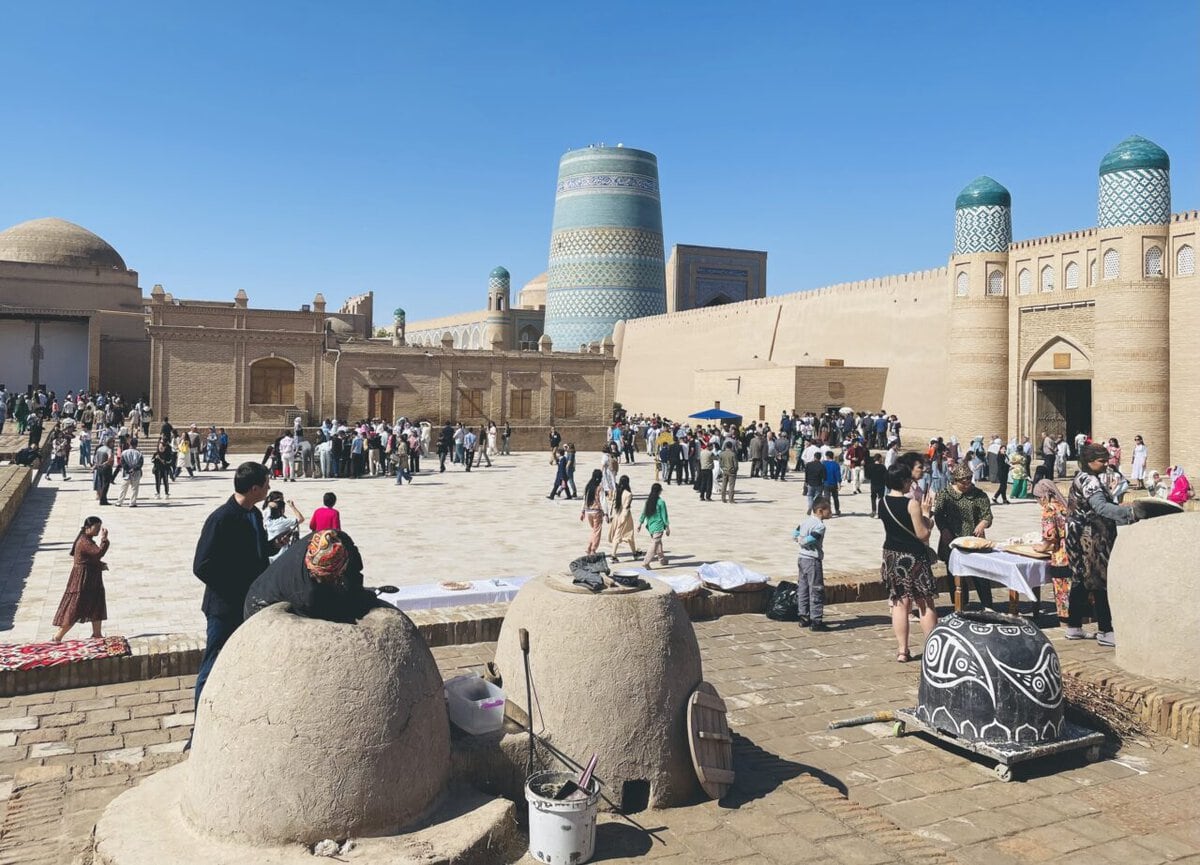

Discover the best things to see and do in Bukhara based on our personal experience and recommendations!
We reached Bukhara at dusk having left Samarkand behind. At first glance, Bukhara looks like a smaller Samarkand or, to those arriving from west, a larger Khiva.
The familiar sights are there. You have madrasas, mausoleums, and intricately-crafted patterns of tiles bedecking the facades of most buildings. Yet the city carries a different spirit, a distinct rhythm. What at first appear as subtle contrasts, soon reveal themselves as unmistakable Bukhara.
A thriving hub for trade, craftsmanship and the finest treasures of the East, no city captures the Silk Road like Bukhara. Some of the artisanal workshops, carpet-weaving studios and bric-a-brac-filled caravanserais have been inevitably adjusted to cater to tourists as opposed to ancient merchants. Yet as long as the purpose endures, the change in audience feels incidental, as the original spirit still lingers, alive and tangible.
Bukhara doesn’t scream grandeur as much as monumental Samarkand, and it is not as quaint or Insta-perfect as cozy Khiva. Yet in medio stat virtus (or virtue sits in the middle), and for us Bukhara strikes the perfect balance between the curated and the authentic, the polished and the rough. It feels like the ultimate frontier keeping the spirit of the ancient Silk Road alive. It may seems like an unlikely comparison, but think about the classic trio of Rome, Florence and Venice. If Rome is imposing and monumental and Venice is unique and romantic, Bukhara is, mutatis mutandis, Central Asia’s answer to Florence. And, quite literally, sitting between Samarkand and Khiva, it’s not a place you can simply pass by.
We confidently put Bukhara at the top of our Uzbekistan’s trip, and a must for any traveller in the area.
TOP 14 BEST THINGS TO DO IN BUKHARA
Getting into the heart of the matter, what are the best things to see and do in Bukhara?
We organized this listicle to help you navigating the key highlights, assuming a 2-3 day stay in the city. We’ve also included a few extra sites at the end for longer stays, though we haven’t visited them ourselves.
1. ADMIRE THE PO-I-KALYAN COMPLEX
Let’s start with a bang, and dive straight into the heart of Bukhara. Without a doubt this is the city’s most striking and historically significant site and you can’t miss it.
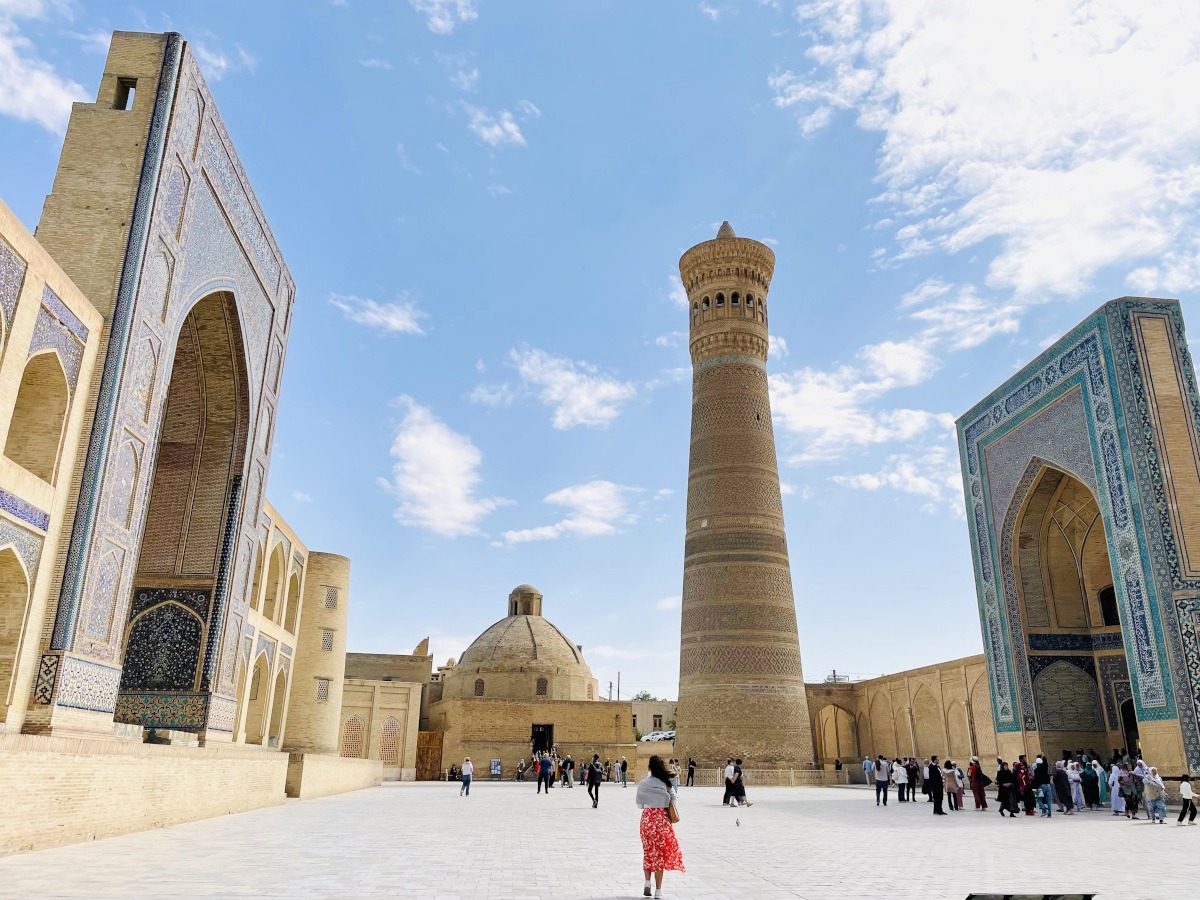
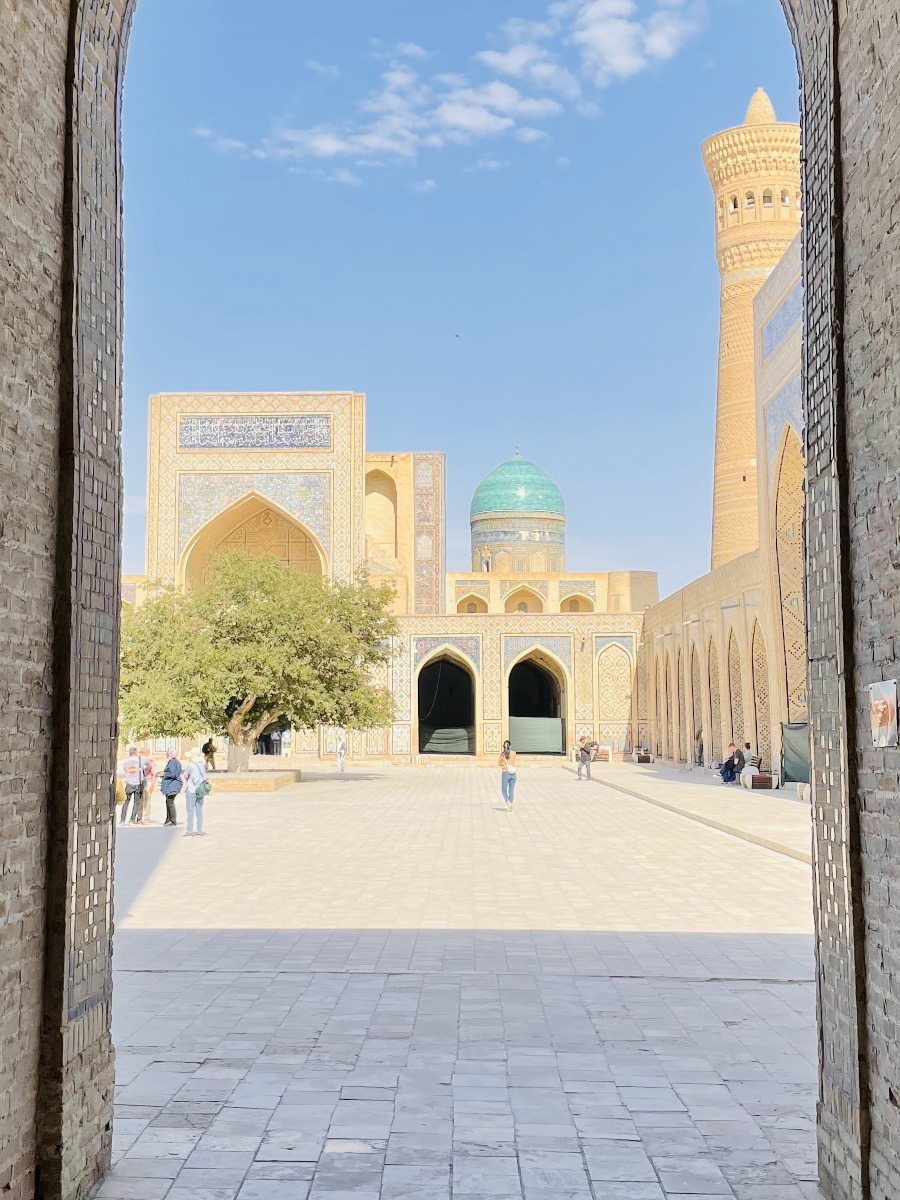
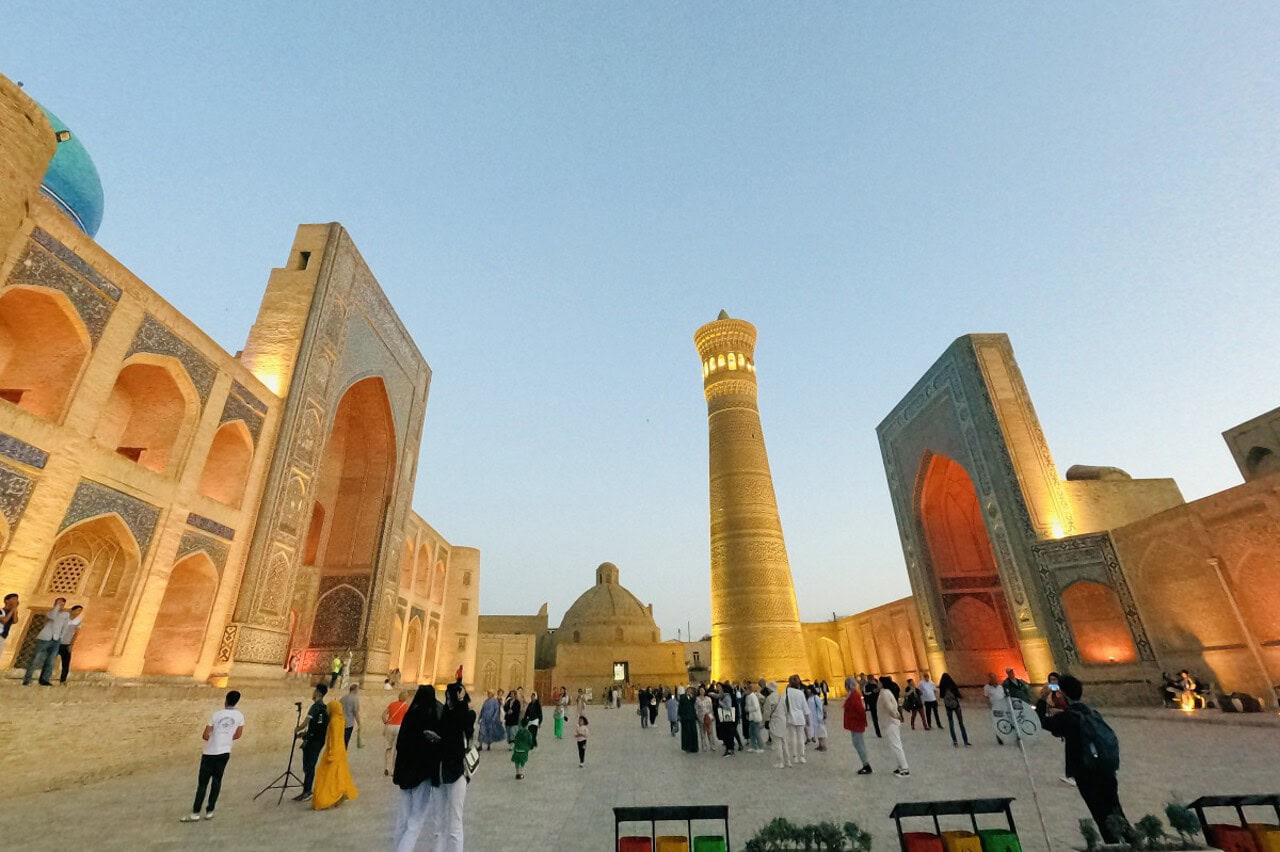
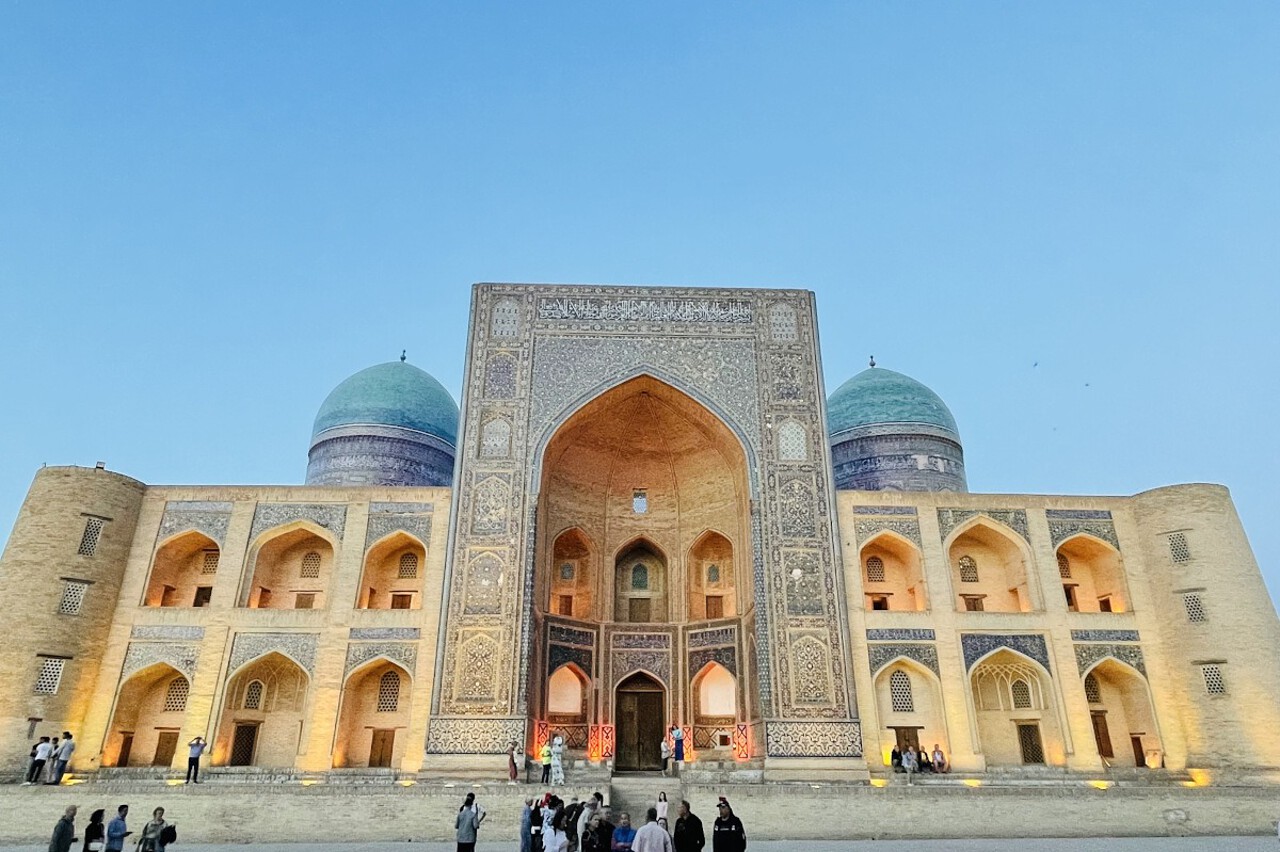
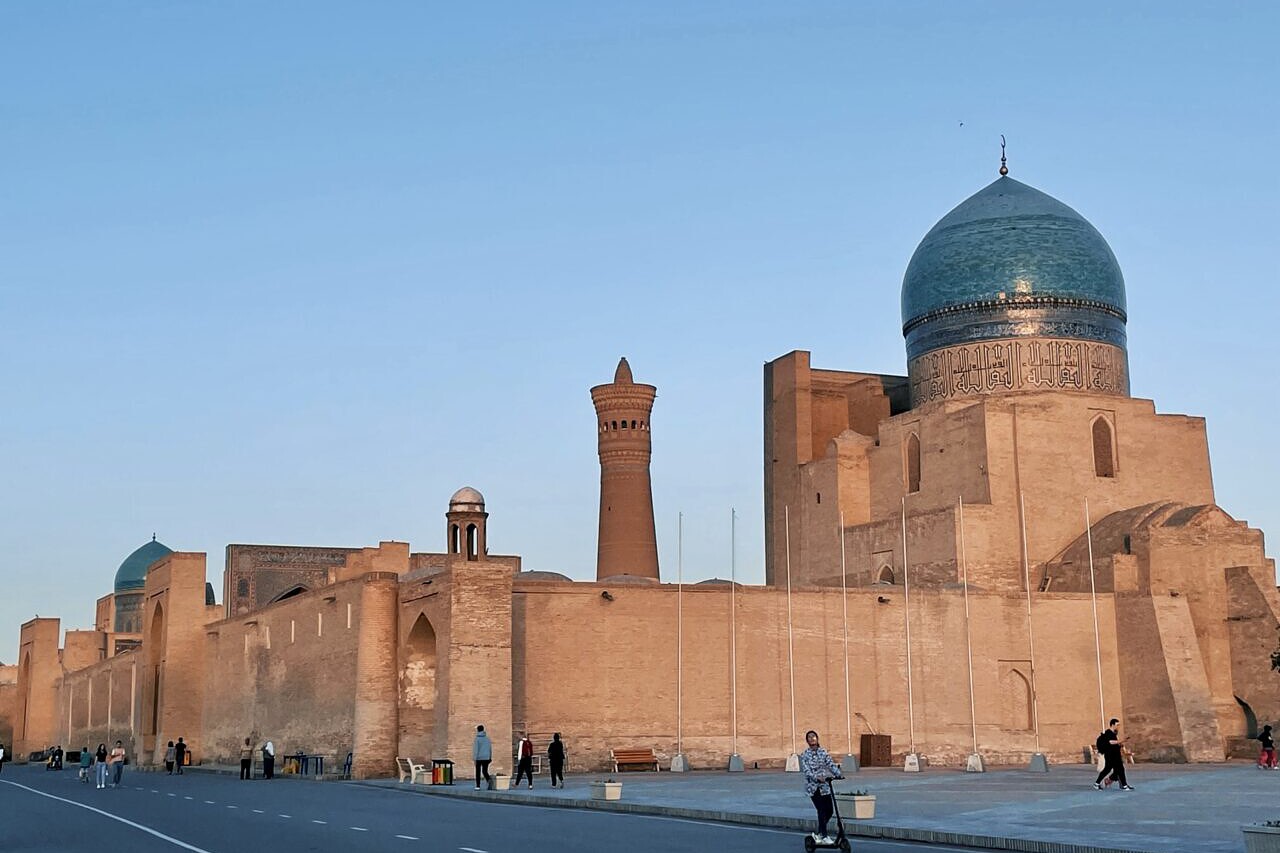
As you arrive to the complex, you’ll see the Kalan Mosque (1514) and the Mir-i-Arab Madrasah (1536) facing each other, with the Kalan Minaret (1127) directly ahead. Together, the three structures form a central square, with a bazaar closing on the northern end.
The Kalan Mosque is one of the largest in Central Asia, alongside Bibi-Khanym in Samarkand, and holds about 12,000 people. It has a very large courtyard on the inside which includes 288 domes held by 208 pillars. The history surrounding the Minaret is also an interesting one. According to the legend, when the Mongols invaded in 1220, Genghis Khan was so flabbergasted by its magnificence that decided to spare it from destruction.
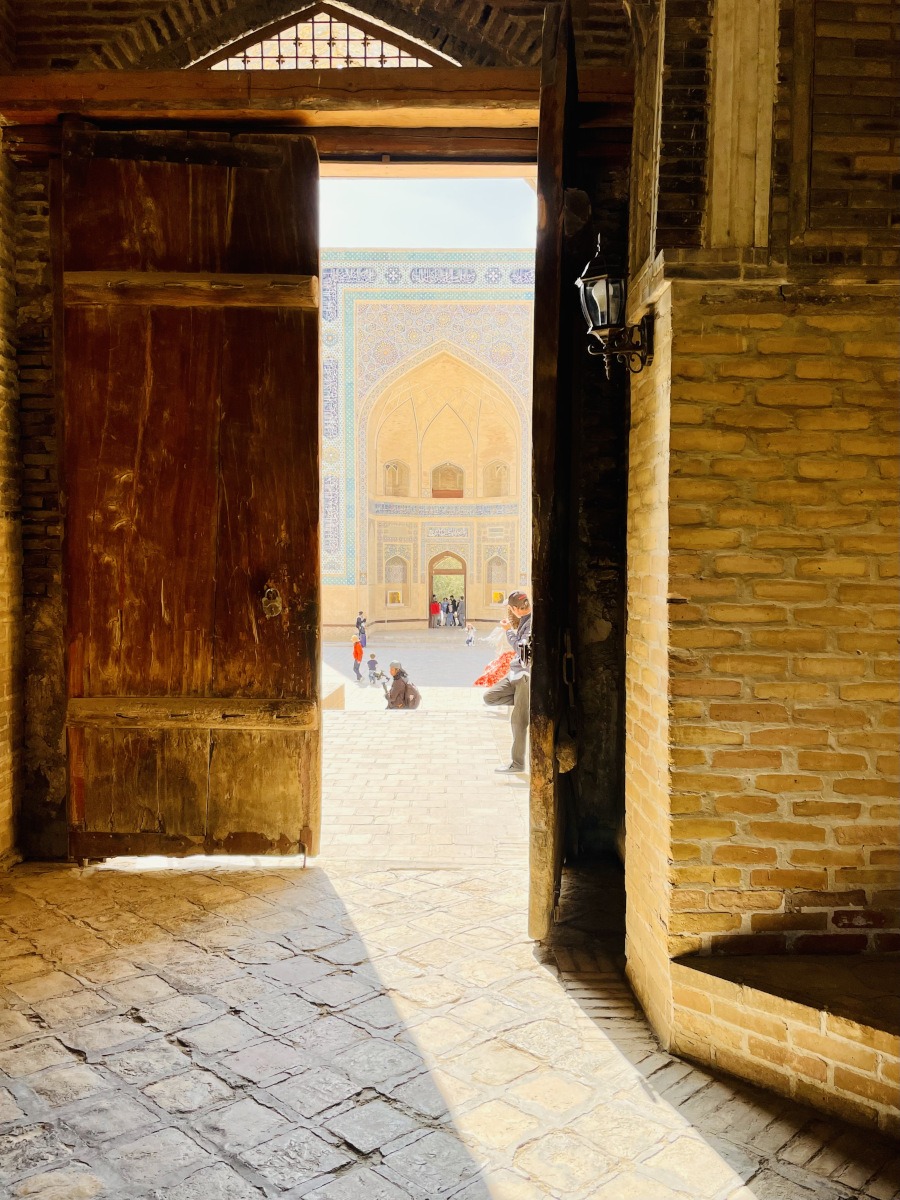
The complex is accessible like a public square, unlike the Registan in Samarkand, which is enclosed by a surrounding fence. You just can’t enter the Mir-i-Arab Madrasah (unless you are a future imam), and you’ll need to pay a small entrance fee to get inside the Kalan Mosque.
Spend a couple of hours here, then return at golden hour and stay until dark (more of this later).
2. COME BACK TO PO-I-KALYAN AT NIGHT
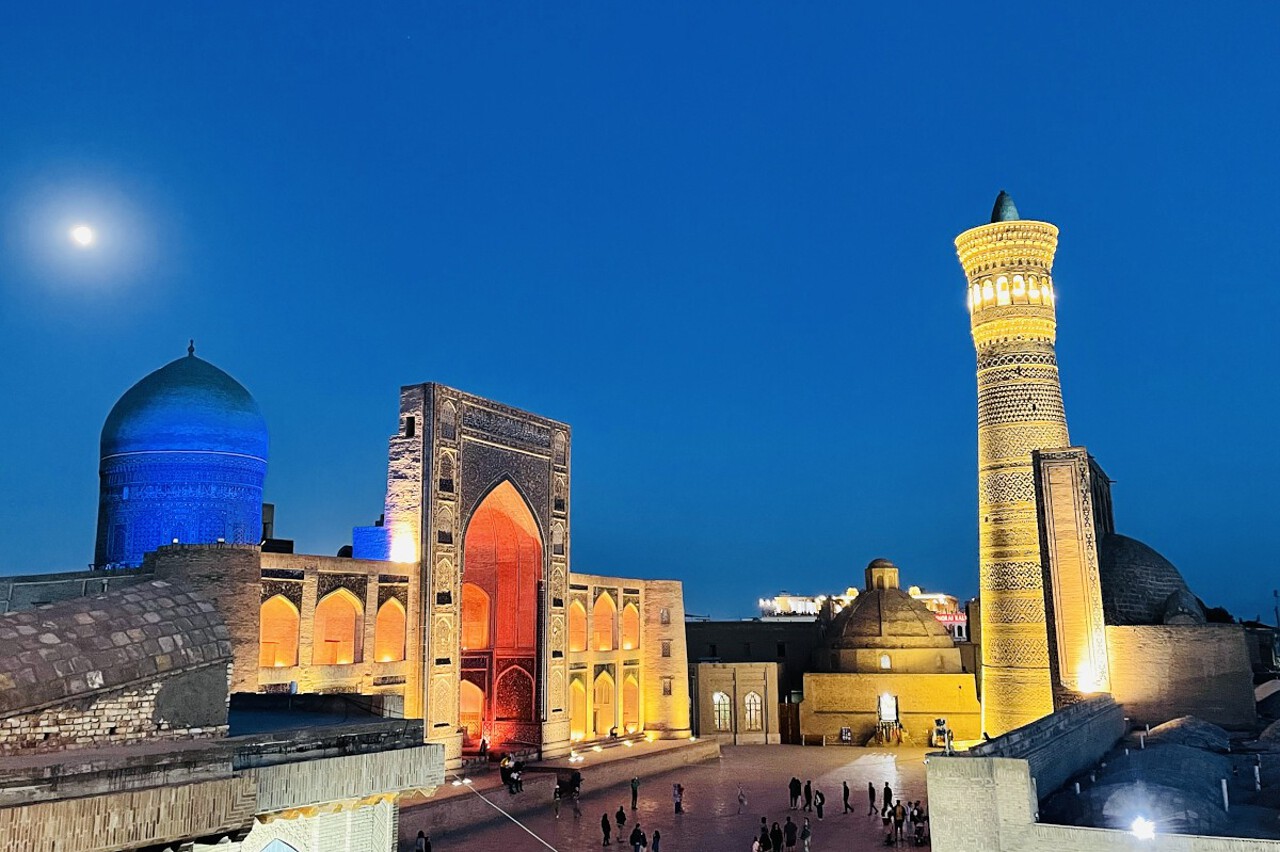
As much as we loved visiting the complex by day, sunset and night is when it looks the best.
As the sun sets, the intricate majolica and terracotta tiles are bathed in gold hue, before artificial lights illuminate the facades in a colourful display. This is the best time for photo opportunities!
As dinner approaches, head across the street to Zargaron Restaurant for authentic food and panoramic views of the complex.
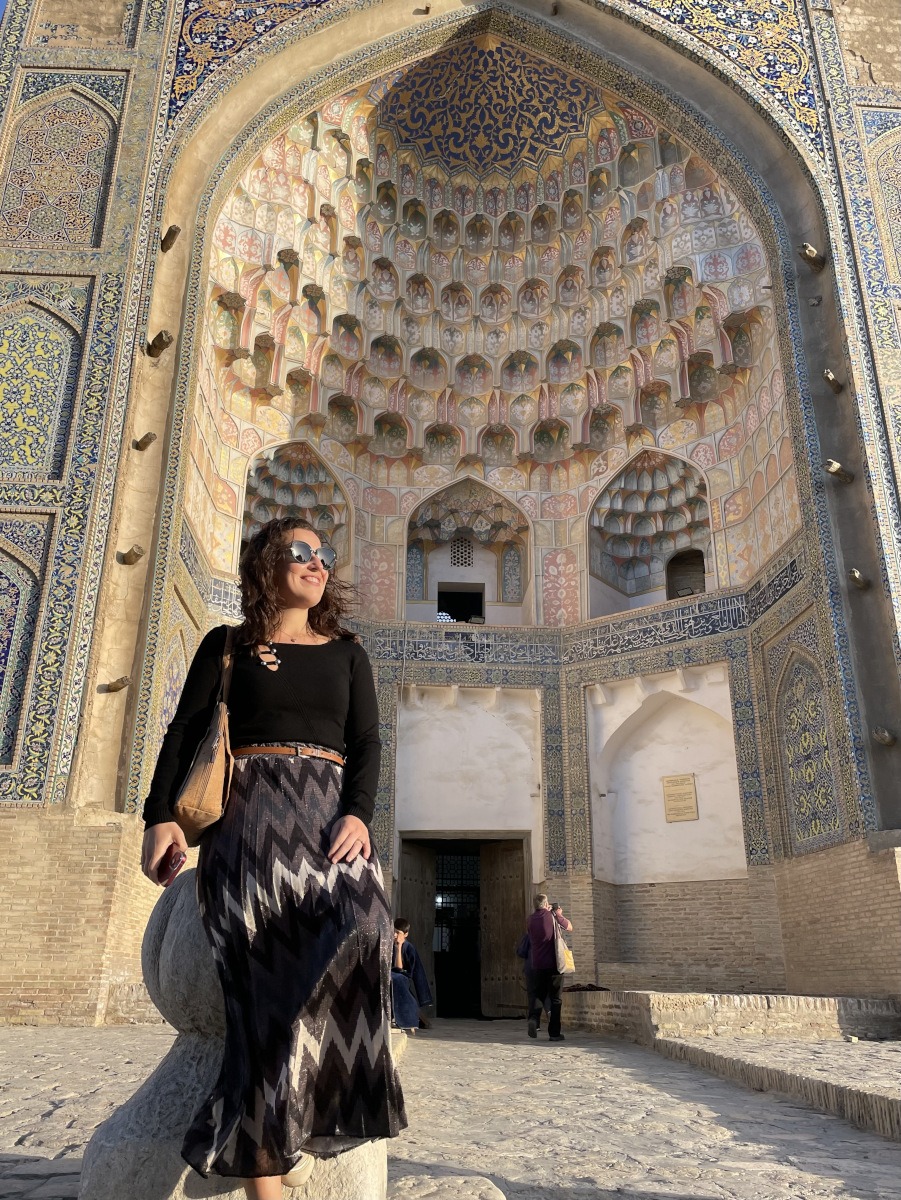
3. VISIT ENCHANTING ABDULAZIZ AND ULUG’BEK MADRASAHS
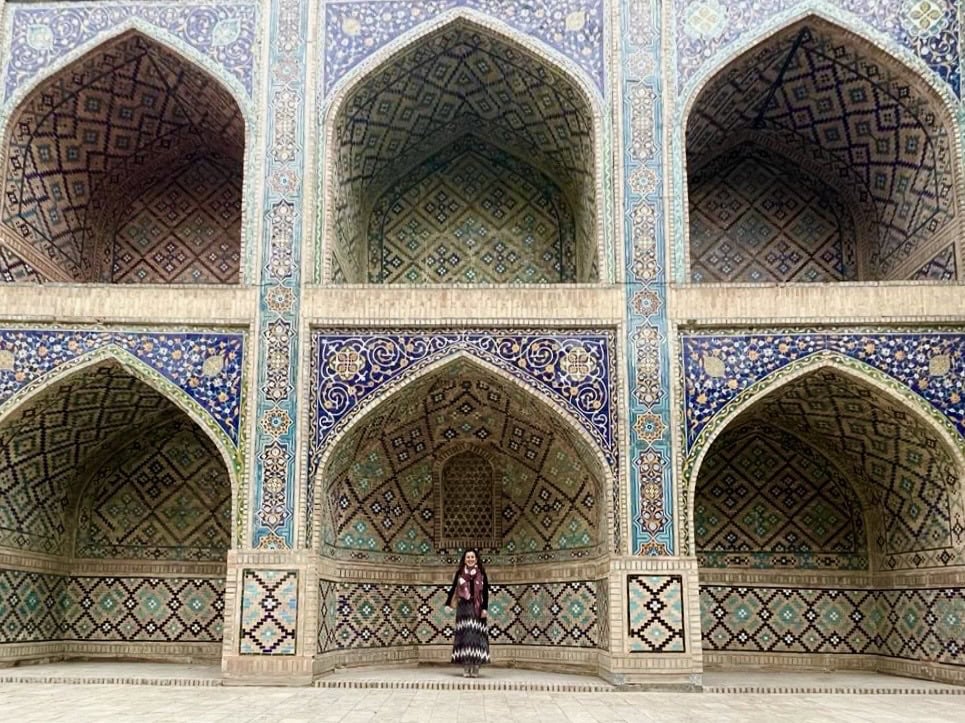
In the historic center not far from Po-I-Kalyan, you’ll see two ancient madrasahs facing each other. Together, they form a “before-and-after” snapshot of Central Asian architecture, one emphasizing clarity and simplicity, the other artistic flourish and splendour.
Ulug’Bek madrasah (1417) is the oldest preserved madrasah in Central Asia. Its design is relatively restrained, with elegant geometric tilework and a strong focus on proportion and symmetry. It was commisioned by Ulugh Beg, the Timurid astronomer-sultan, and reflects the ruler’s scientific mindset and its commitment to mathematics and astronomy education.
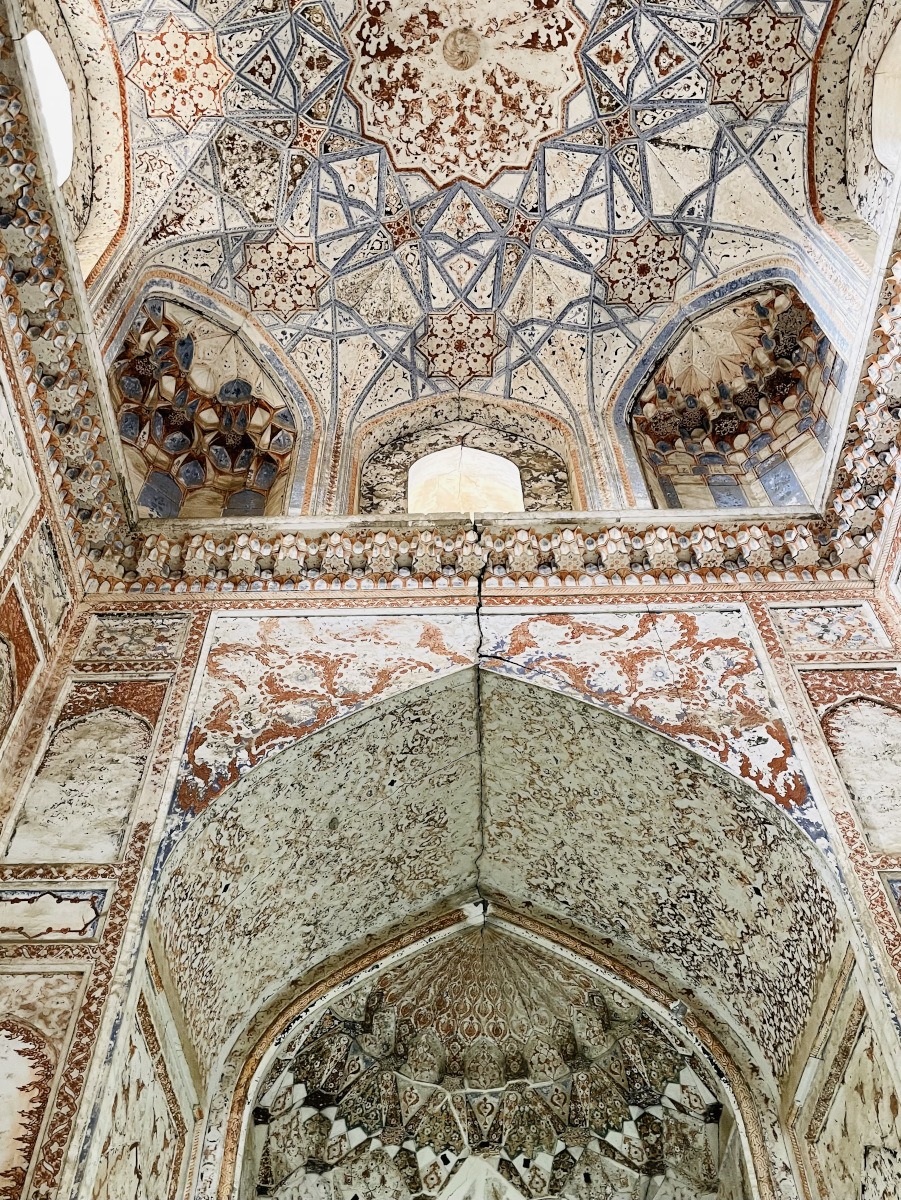
Abdulaziz Khan Madrasah (1652) on the opposite side of the square is far more ornate. It showcases richly detailed mosaics, floral motifs, and even unusual decorative elements like mythical creatures, which are rare in Islamic architecture. The interior is especially elaborate, with intricate carvings and vibrant colours that signal a shift toward more expressive design. The madrasah includes a small winter and summer mosques (you need a ticket), showcasing some of the most exquisite interiors in its original state.

4. EXPLORE THE ARK CITADEL
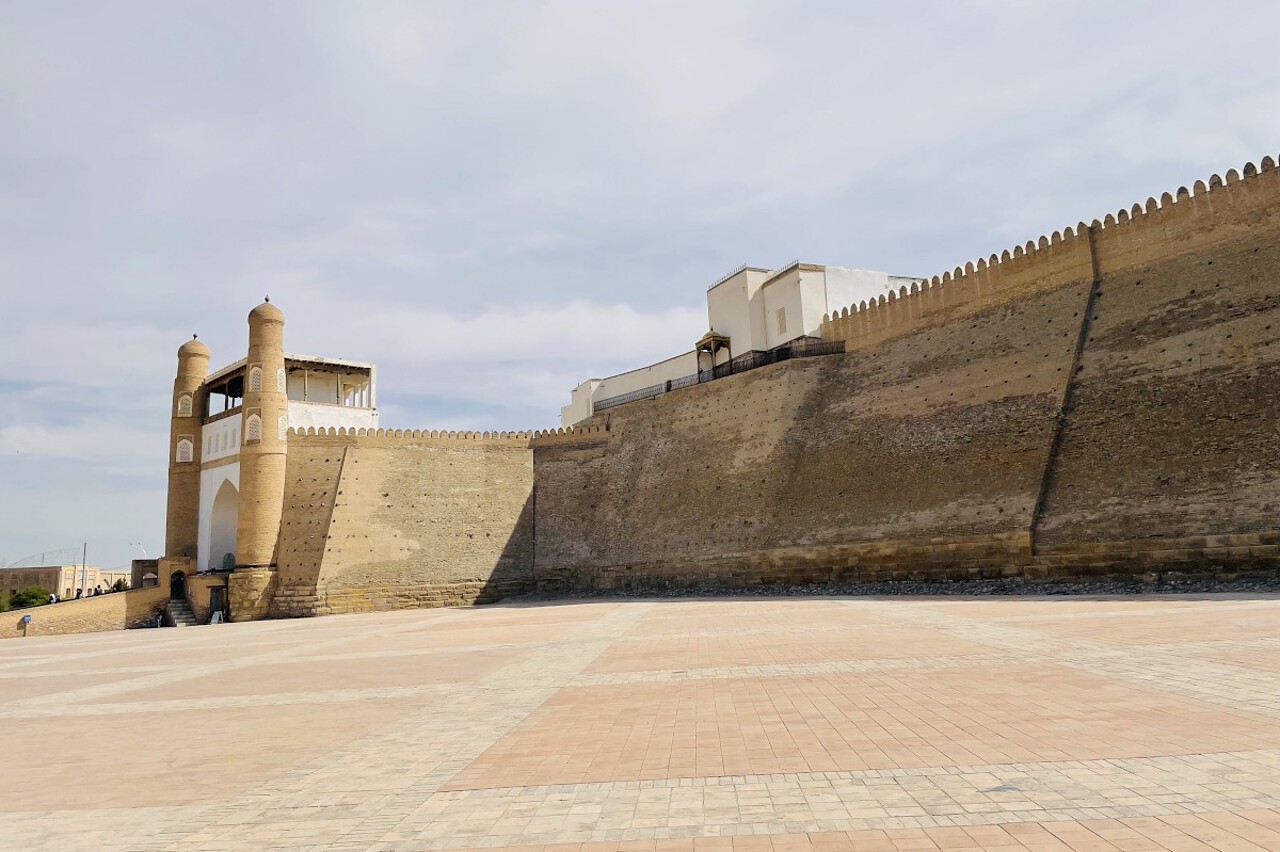
Rising like a sandy fortress above the old city, the Ark symbolized power in Bukhara for centuries. Dating back over a thousand years, the citadel used to house the Emirs, courts, soldiers, and servants until it fell to the Soviets in 1920.
Behind its massive walls stood palaces, mosques, courtyards, and a prison, forming the region’s political and cultural heart.
Today, much of it is in ruins, and the structure is more impressive from the outside than on the inside. If you have time, it’s worth spending a few hours visiting the complex and some of the museums inside. Otherwise, you can just admire the structure from the outside, on the way to other landmarks. You might even spot a camel or two along the way…
5. DISCOVER THE UNIQUE BOLO HAUZ MOSQUE
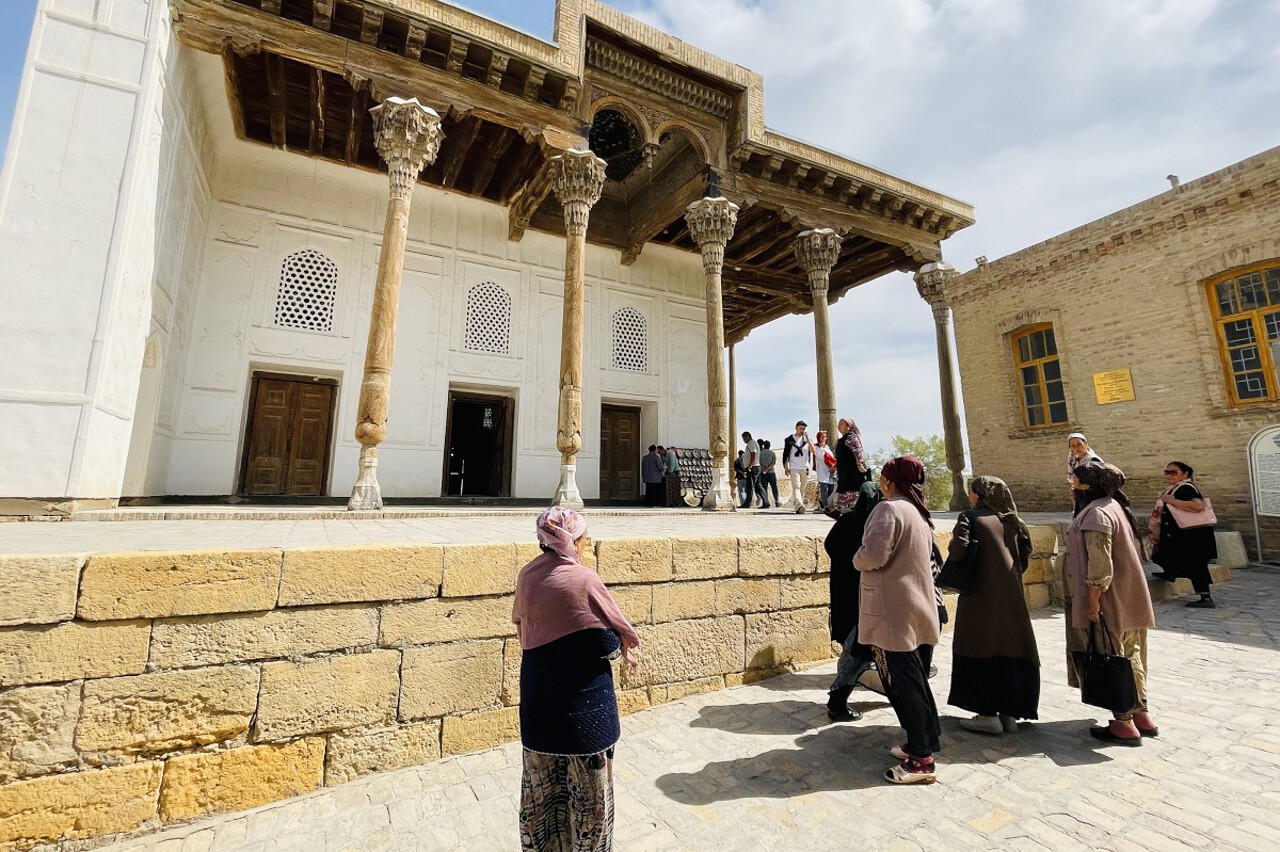
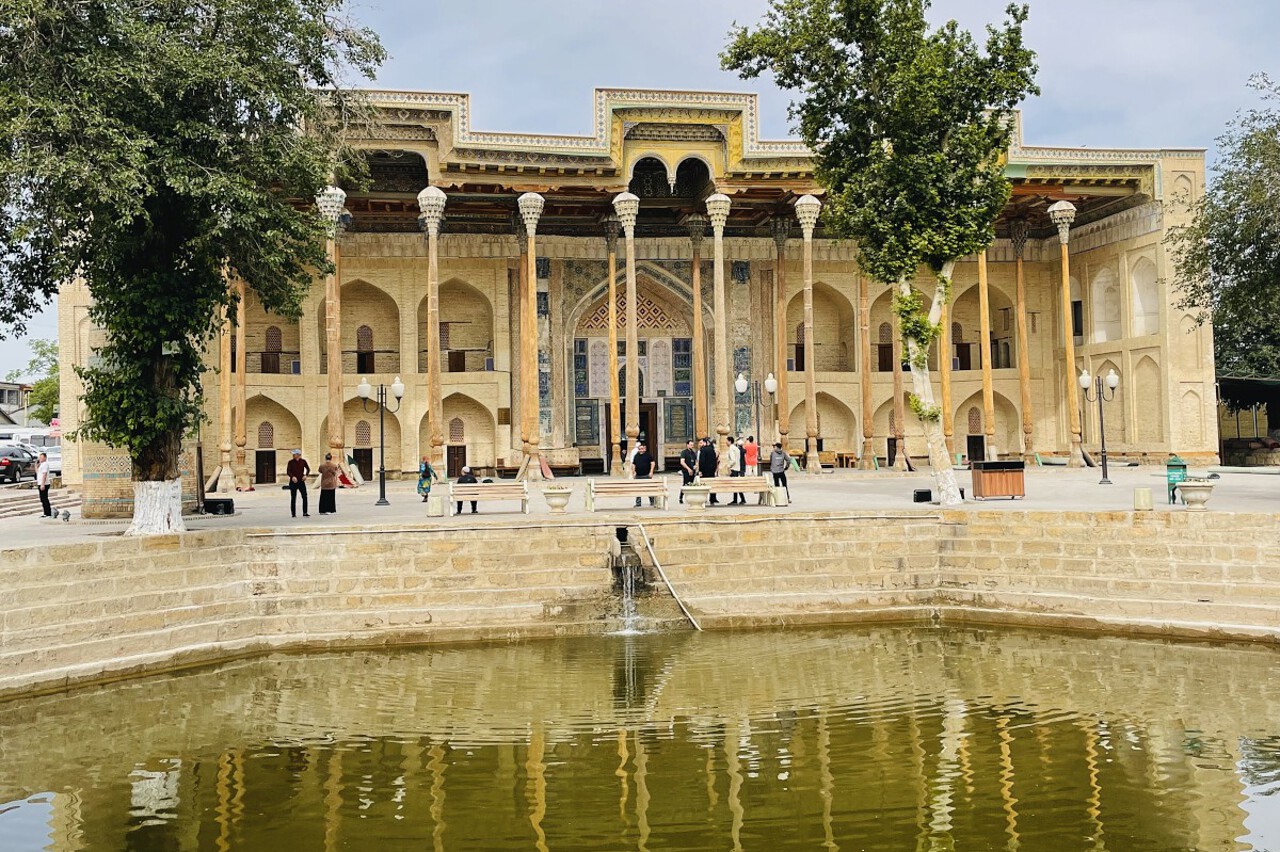
Near the Ark citadel, the Bolo Hauz Mosque is another of the iconic landmarks of Bukhara. Dating back to the early 18th century, it once served as the emir’s Friday Mosque and royal place of worship.
It has a finely carved wooden portico, upheld by a cluster of slender columns shimmering in the reflection of the adjacent pool (or “hauz”). The interplay of intricate woodwork, painted ceilings, and still water creates a peaceful setting, and different than other mosques in Bukhara.
When we visited, they were having a funeral onsite which was incredibly touching to see from the outside. But that also meant that we couldn’t go inside the mosque out of respect for the families. Regardless, the mosque was very beautiful from the outside, and you can easily pair it with the nearby Ark and Ismail Samani Mausoleum.


6. RELAX IN LYABI KHAUZ SQUARE
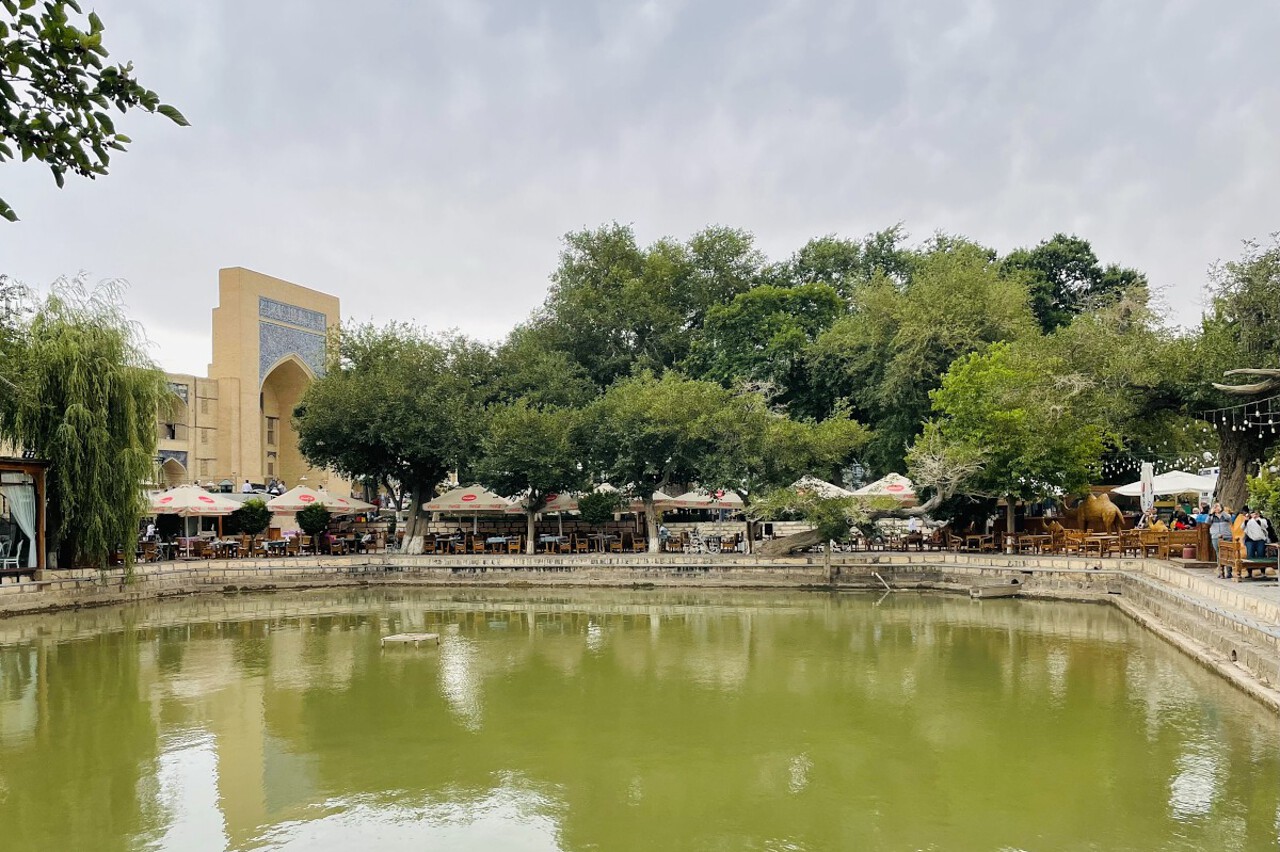
Lyabi-Khauz is one of the city’s most inviting and lively gathering spots. Centred around a historic 17th-century pool, one of the few reservoirs in the city still containing water, it is the perfect social hub for people-watching and to unwind in some of the cafés and local teahouses lining along the water’s edges.
Madrasahs, mulberry trees, and traditional buildings frame the square, giving the area a relaxed and picturesque feel. Of particular relevance, the Nadir Divan-Begi Madrasah (1622) is the square’s most memorable monument, with its intricate mosaic depicting a pair of mythological birds facing a central solar disk with a human face.
It is also an ideal area to stay in the city due to multiple ancient buildings and houses reconverted into boutique hotels.
7. DO SOME SHOPPING IN THE TRADING DOMES
We have a very different shopping tolerance between the two of us, but we set it aside when we travel. And as the epicentre of the Silk Road, you can’t really get away with shopping (or bargaining) here!
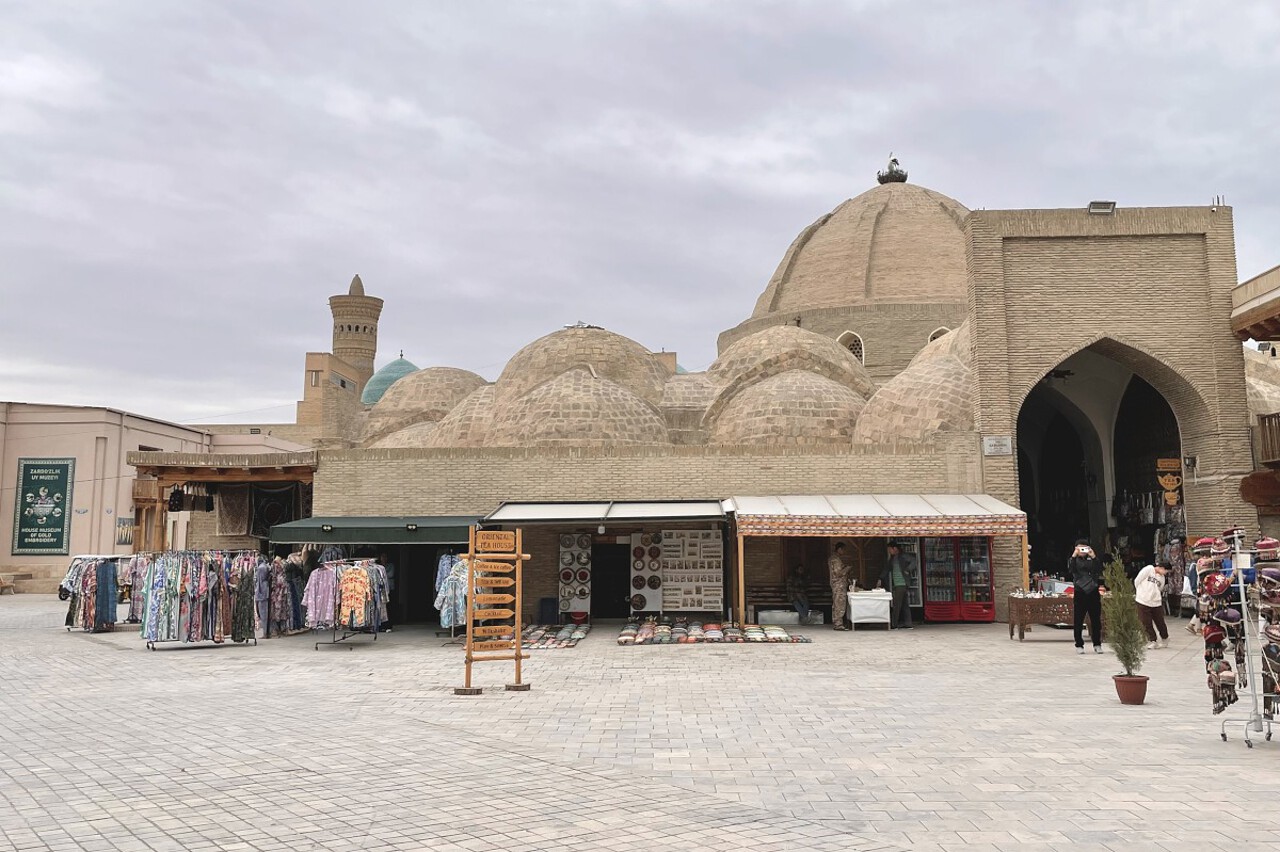
As you walk between Po-I-Kalyan and Lyabi Khauz square you’ll pass through various trading domes, giving you an idea of the city’s rich Silk Road heritage.
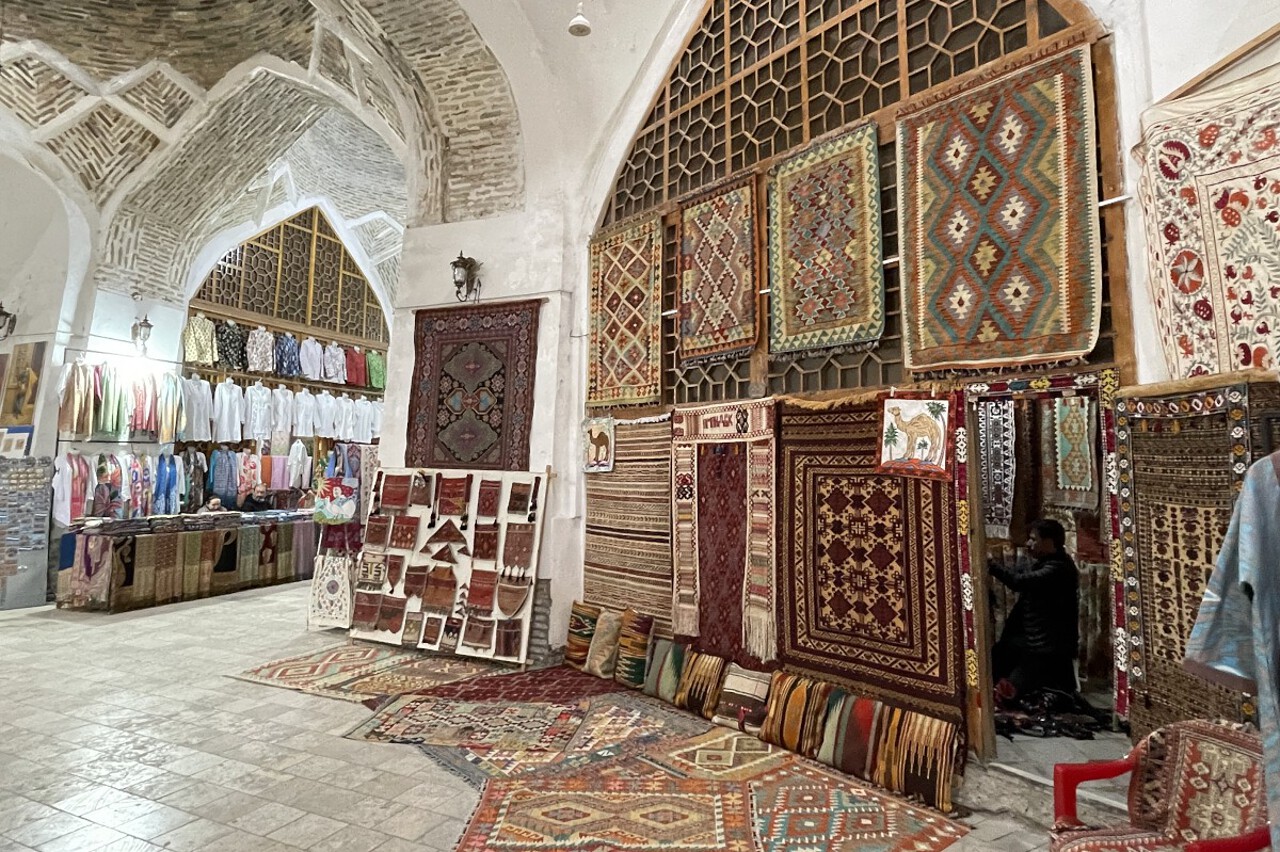
These historic vaulted markets, once busy trading hubs for silk, spices, and precious goods, still preserve their architectural charm and cultural significance. Today, most of the stalls host touristy shops, but you can still soak in the original atmosphere.
Bukhara also earns its reputation for beautiful carpets and most of the ones sold at the domes are, allegedly, claimed to be hand-made. We found most of them to be quite pricey and considering that you’re taking a leap of faith on authenticity, we suggest you do your research before purchasing.
8. DISCOVER CHOR MINOR
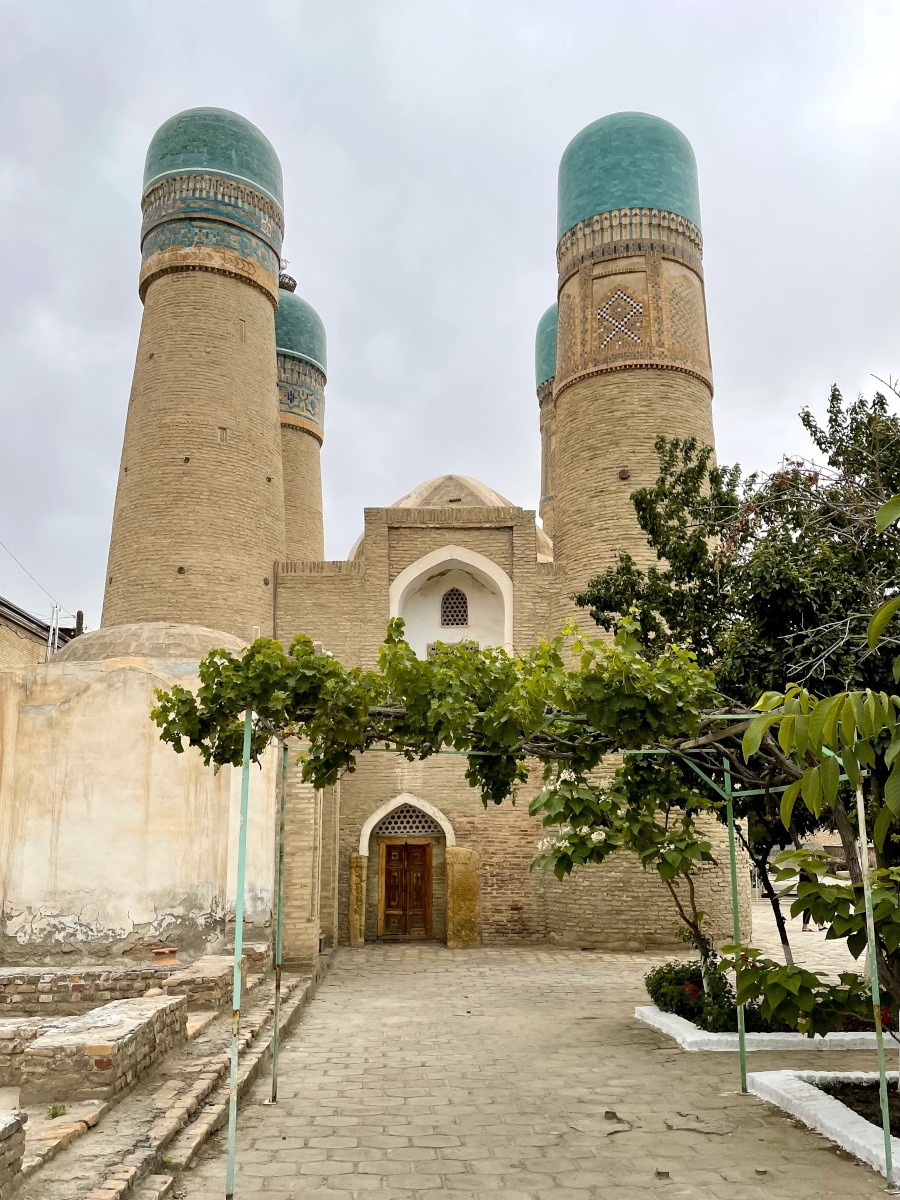
A 15-minute walk from Lyabi-Khauz in a quiet neighborhood, Chor Minor is one of the city’s most unusual landmarks. Built in the early 19th century, its name means “Four Minarets”, referring to the distinctive turquoise-domed towers that frame the structure.
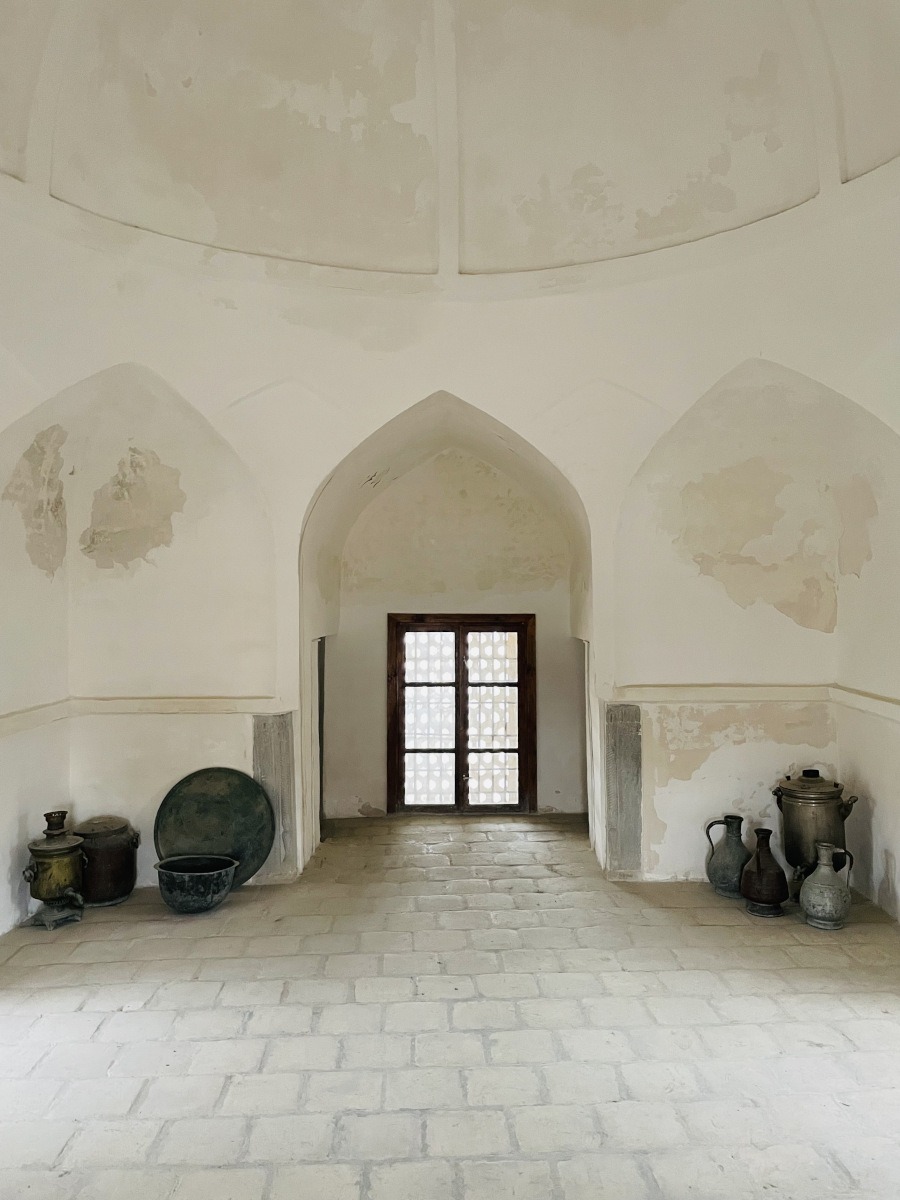
Unique and full of character from the outside, but bare and essential on the inside, it is a “not-so-hidden” gem just beyond the usual tourist trails. Beside it, an open-air antique stall filled with Soviet-era memorabilia adds a quirky touch. Well worth a pause if you’re hunting for a distinctive souvenir to take home!
9. VISIT AN OLD TRADITIONAL JEWISH HOUSE
A stone’s throw away from Lyabi-Khauz square you’ll find the original Jewish neighbourhood. Bukhara hosted a small Jewish community from at least the 12th century. Most of them were active merchants, at the time where the Silk Road was a flourishing trading hub.
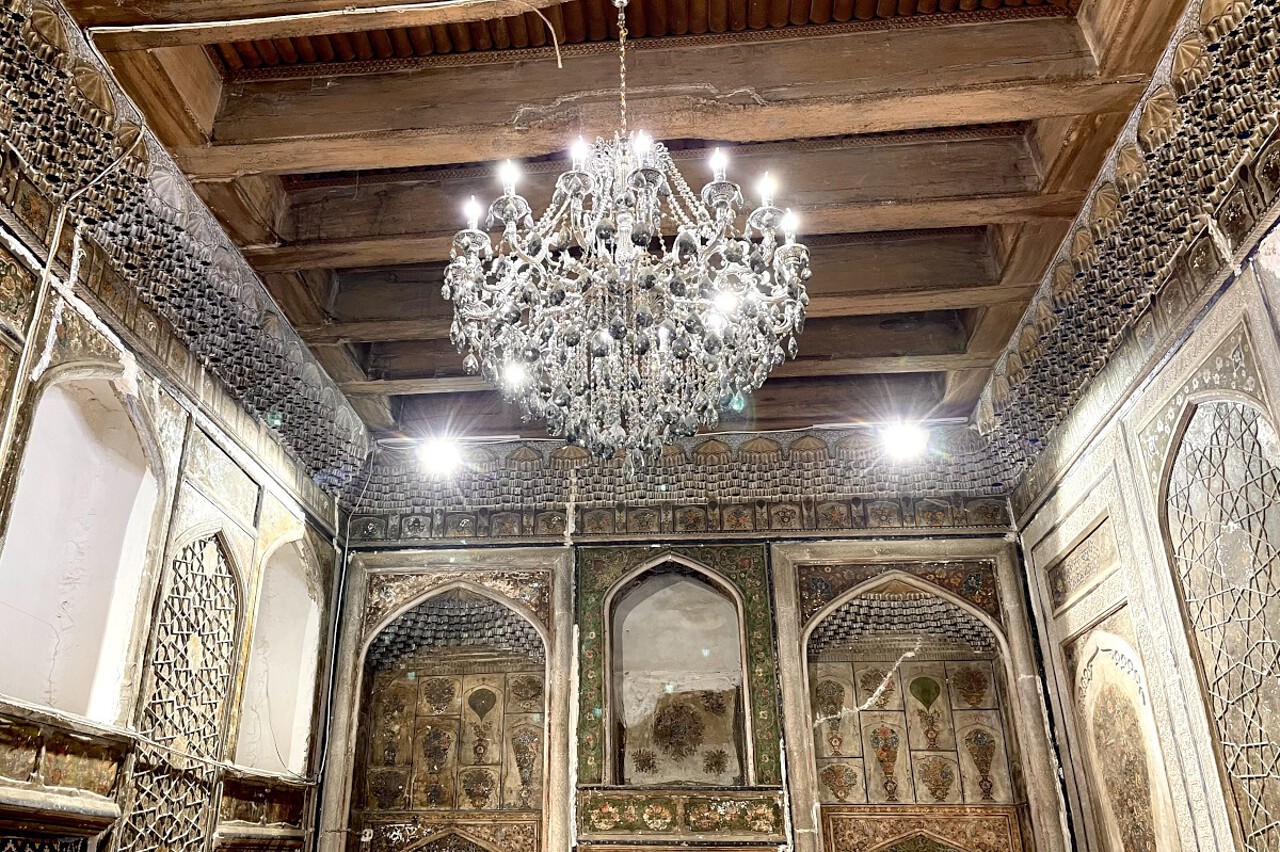
A few Jewish houses maintained their original state. We found one by chance just next to the Bukhara synagogue, completely unmentioned in any Bukhara travel guides. Currently serving as a museum set inside a beautifully preserved traditional home, it showcases how families once lived, with ornate rooms, carved wood details, and vibrant textiles. It felt like an intimate and personal experience, like stepping into someone’s personal space rather than a formal gallery. A true hidden gem!
10. SLEEP IN A TRADITIONAL MERCHANT HOUSE
Bukhara is the city in Uzbekistan that mostly preserved the spirit of the silk road. As part of the city historical heritage, you’ll see multiple traditional merchant houses, displaying beautifully-carved wooden doors and ornate interiors.
Most have since been renovated and converted into boutique hotels and B&Bs, while preserving the original appearance and charm.
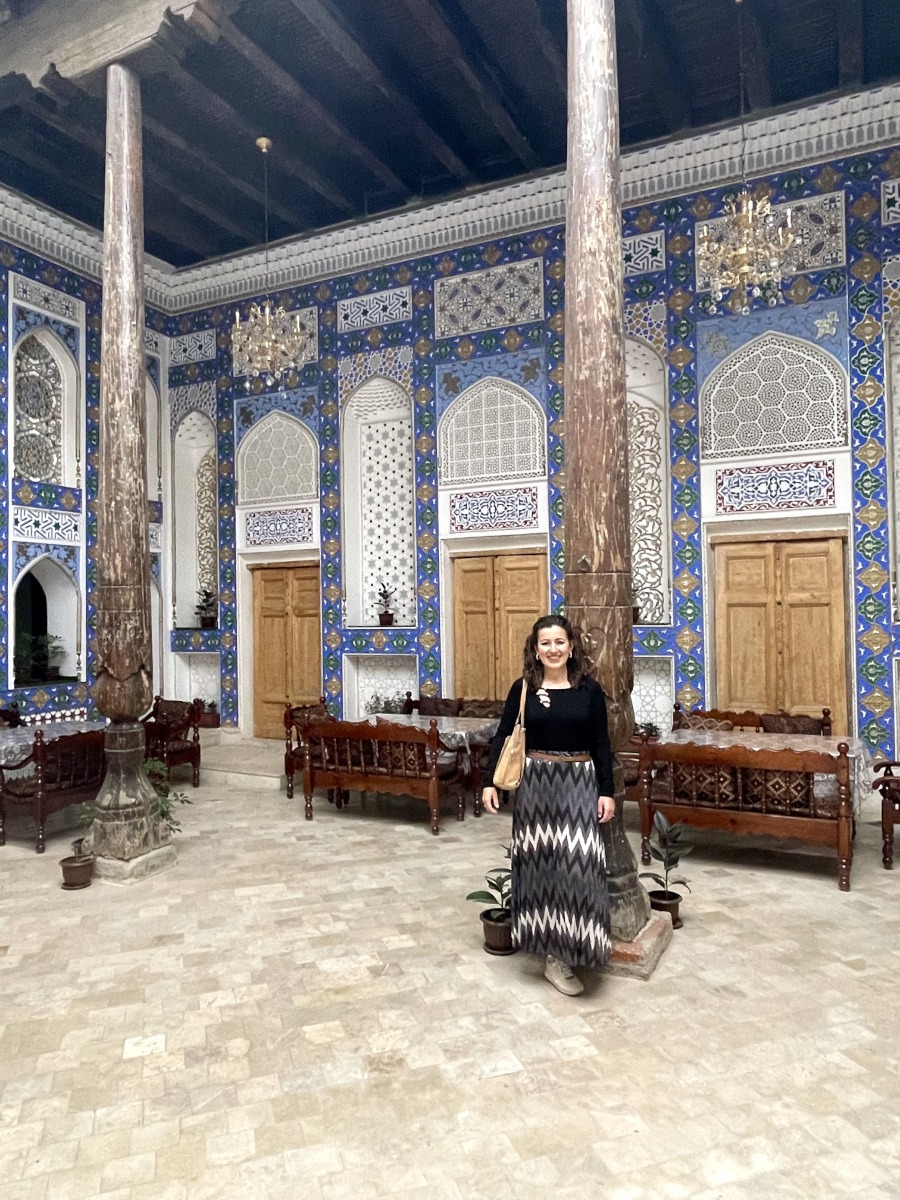
We stayed at the Rayyan Hotel Bukhara, which we loved. The hotel is centrally located and the staff was very kind and going above and beyond to help you. The central courtyard, where staff serve breakfast, also displays beautifully-tiled walls, offering an authentic look into wealthy merchant life.
11. GO OFF THE BEATEN PATH TO THE ISMAIL SAMANI MAUSOLEUM
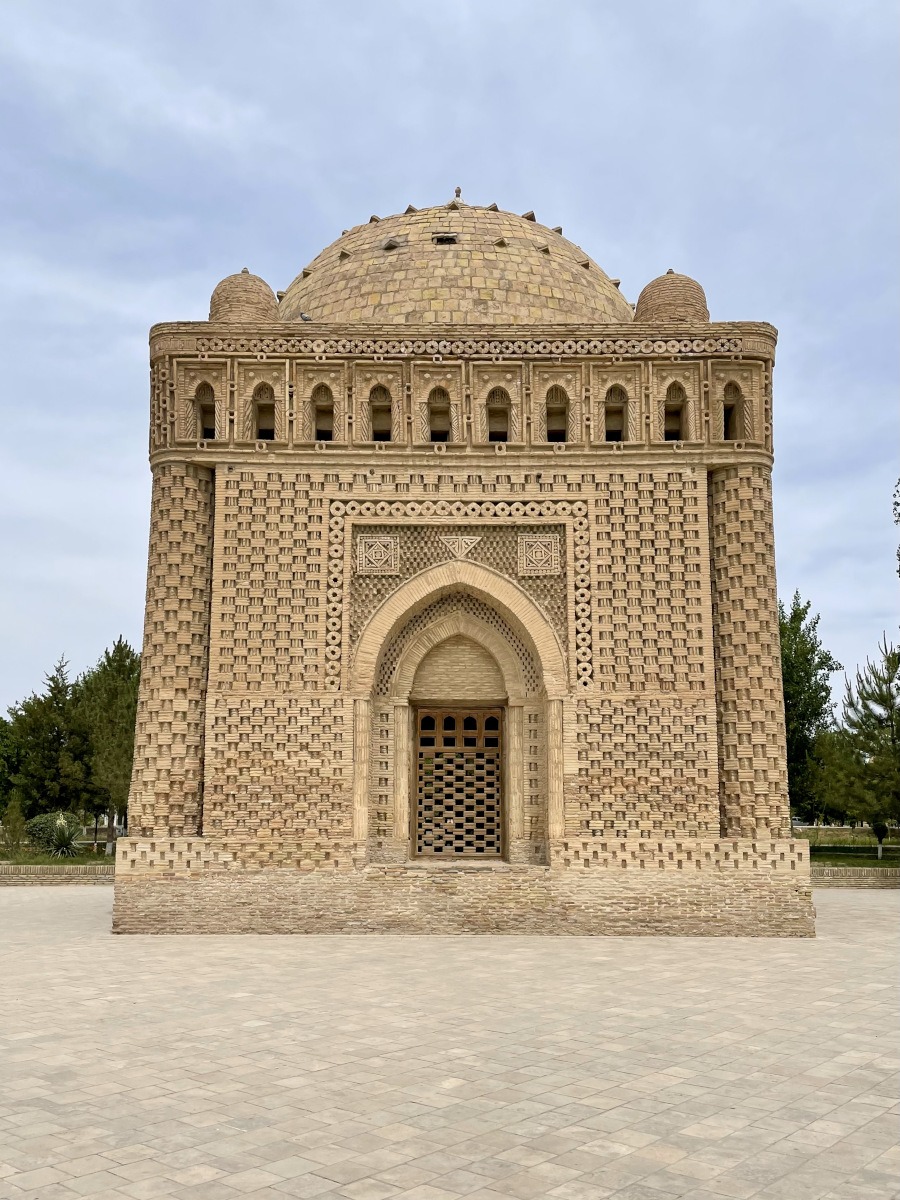
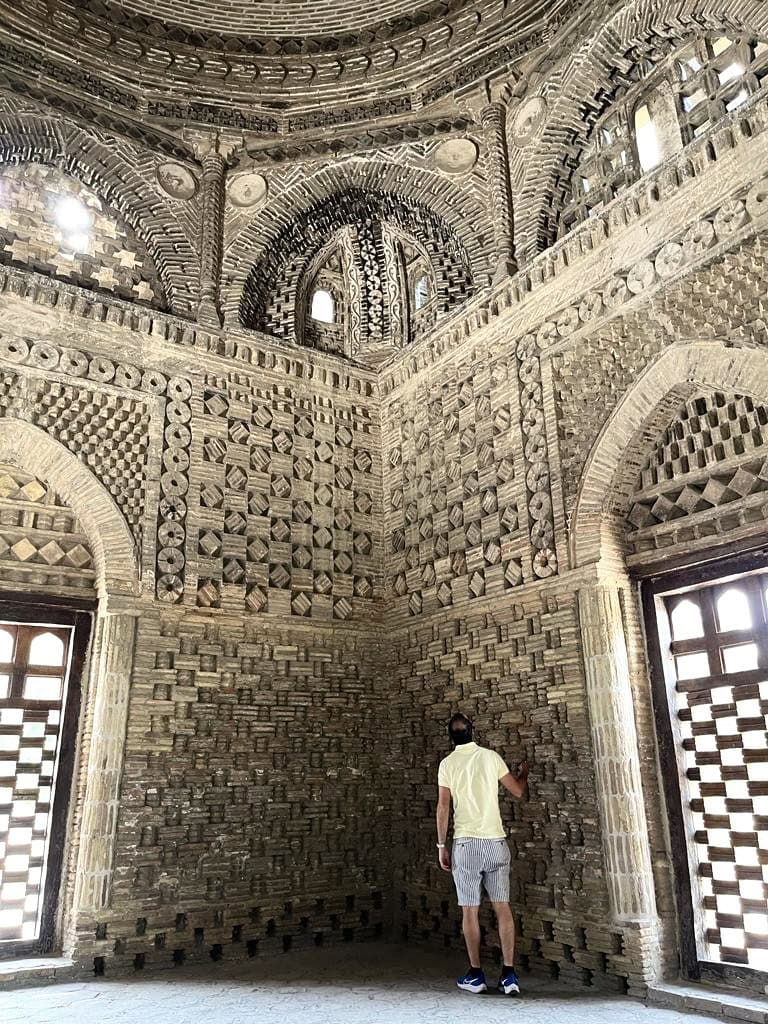
Set within a leafy park not far from the Ark, Ismail Samani Mausoleum is one of Uzbekistan’s oldest architectural treasures. Built in the 9th–10th century as the resting place of the king Ismail Samani, it is constructed entirely of baked bricks set up to form intricate geometrical patterns.
What makes it even more remarkable is that the mausoleum was once completely buried under sand after a natural disaster. Hidden from view, it survived both the Mongol invasions and Amir Timur’s campaigns, remaining untouched for centuries! It was only serendipitously discovered in the 1930s, to the astonishment of the Soviets, virtually intact and with barely a scratch.
It’s a quick and easy stop, and the entrance fee is pretty small but honestly, it’s totally worth it. Once you step inside, you immediately see how old and well-preserved the monument is!
12. ADMIRE THE KHOJA GAUKUSHON ENSEMBLE
Set right in the city centre but overlooked by most, the Khoja Gaukushon Ensemble is one of the city’s most impressive architectural complexes. Built in the 16th century on site of a former slaughterhouse, it once served as a bustling commercial and religious hub.
It includes a monumental mosque, expansive courtyard, a (dried) water reservoir and a minaret closely resembling (on a smaller scale), the one on Po-I-Kalyan.
Apart from the architectural marvels, we were surprised by how quiet the whole square was. It seems like we almost found this corner of the city by chance, despite being right in the centre. Also stop at the madrasah in front, which owners have reconverted into a restaurant facing the square.

13. STOP OUTSIDE MAGOK-I-ATTARI MOSQUE
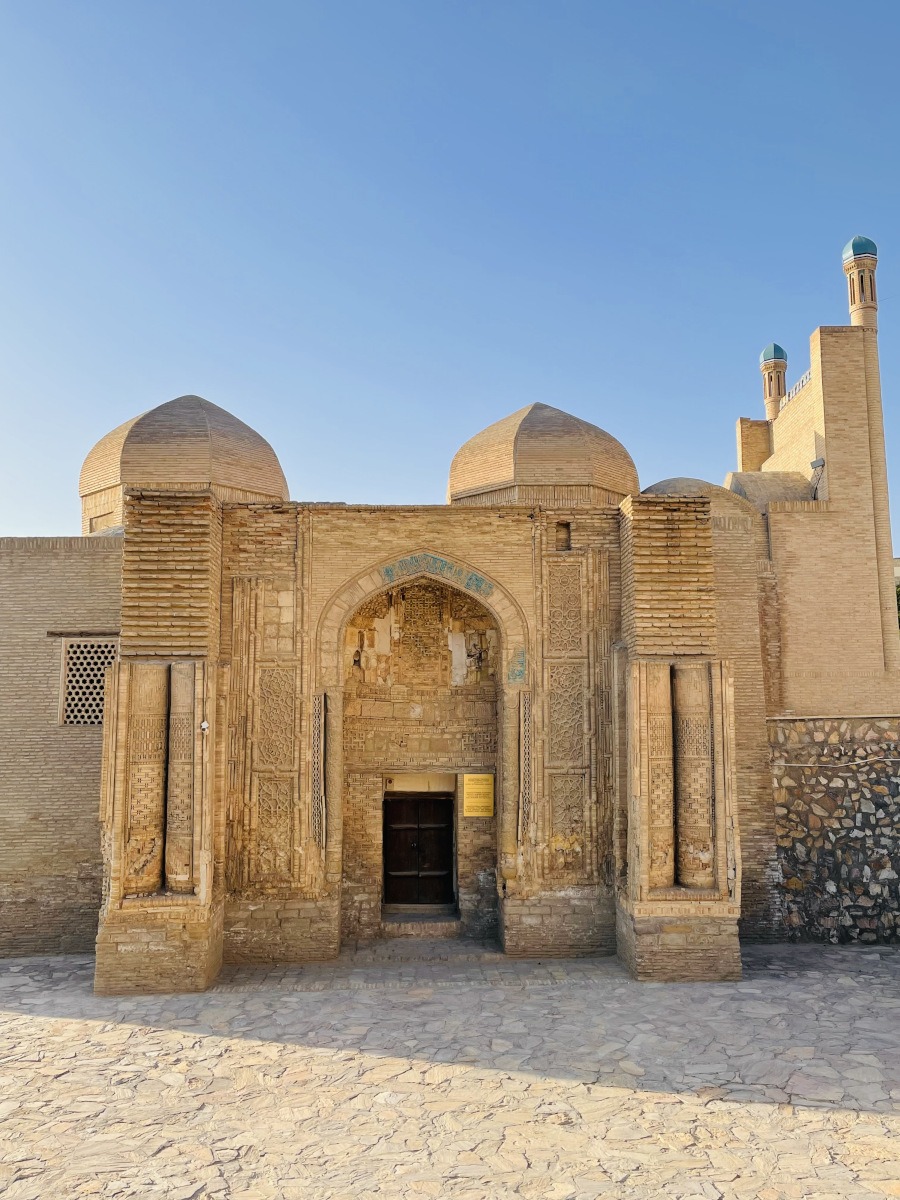
In the centre of Bukhara, the Magok-i-Attari Mosque (9-10th century) is one of the city’s oldest surviving sites, built on a former Zoroastrian temple and later a bazaar site.
Not an active mosque anymore, today it houses a small carpet museum inside. We often found the entrance closed when we stopped by, but honestly, unless you’re especially into textiles, you can just admire it from the outside.
14. NICHE DARK TOURISM AT THE ZINDAN
Just a short walk from the Ark, the Zindan resembles a miniature version of the citadel from the outside. It attracts the small-ish niche of dark tourism travellers, and given this premise we couldn’t resist to stop by.
Being the historic city’s jail, there is nothing particularly “pretty” inside. However, the Zindan is linked one of Bukhara’s most infamous episodes. In 1842, British officers Charles Stoddart and Arthur Conolly were accused of espionage and imprisoned on the Khan’s order. They were later beheaded amid tensions of the “Great Game”, a geopolitical rivalry between The British and Russian Empires for the control of Central Asia.


IF YOU HAVE MORE TIME…
- Bukhara Tower: For nice city views from the paid observation deck
- Bukhara’s Central Bazaar: Typical Central Asia marketplace rich in nuts, dried fuits and spices
- Qo’sh and Abdullakhan Madrasahs: Beautiful madrasahs near the Ark, with almost no tourists around
- Sitori-I-Mokhi-Khosa Palace: The summer palace of the last Emirs of Bukhara, just outside of the city