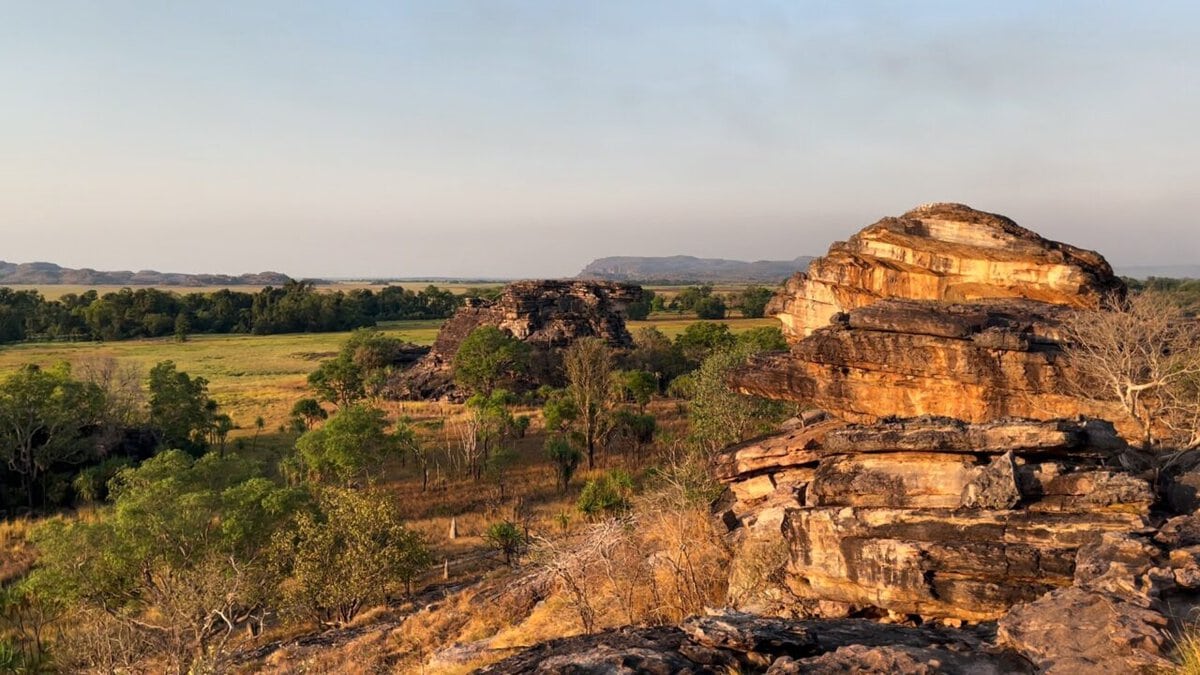

Find out how to squeeze the best of Litchfield into a half‑day itinerary and enjoy the park’s highlights even with limited time.
When we planned our 4-day Kakadu adventure, we often wondered whether Litchfield was worth squeezing in. After all, as great advocates of quality vs quantity, we didn’t want to rush for the sake of ticking another item off a bucket list.
Our sneak peek of Litchfield was completely spur-of-the-moment and decided at the last minute. Luckily, coming from Kakadu, the park sits conveniently on the way back to Darwin, aside from a 1h diversion as you get close to the city.
In this pocket guide, we share our opinion on whether you should add Litchfield to your NT itinerary and how to make the most out of it if you have limited time.
Is Litchfield National Park worth visiting for half-day?
It depends.
Litchfield is not a place to rush through.
With a full day you’ll only skim its surface, and giving yourself more time lets you slip into its quieter corners. Anything less than a day can feel like a strain on time and energy. But if your route naturally takes you past Litchfield, it’s still well worth considering.
On our way back to Darwin, after spending four full days in Kakadu, Litchfield became an unexpected bonus. Because of that, we felt no pressure to “do it all”. We simply explored at our own pace and enjoyed whatever came our way.
With that mindset, Litchfield becomes an easy, worthwhile addition to any Northern Territory itinerary, even for just a few hours.
Kakadu vs Litchfield
The critical dividing line between Kakadu and Litchfield is time.
Litchfield can, at least in theory, be squeezed into a half‑day dash. Kakadu simply can’t — the scale, distance, and pace of the park make a rushed visit unrealistic.
A big part of this comes down to geography. Litchfield sits roughly an hour from Darwin, while Kakadu demands a three‑plus‑hour drive just to reach the boundary. And if, like us, you’re returning to Darwin after exploring Kakadu, you’ll find that the road to Litchfield overlaps most of the same route, branching off only near Humpty Doo, not far from the city.
The respective size of the two parks is also important. Kakadu is roughly 14 times larger than Litchfield, and Litchfield is hardly small.
In Kakadu the major sites are far more spread out. In Litchfield, you can tick off several highlights within a short drive between each other.
Beyond scale, the parks also have distinct personalities and strenghts.
Kakadu is a sprawling, world-class national park, remarkable for both its natural landscapes and its cultural significance. You’ll find far more Aboriginal heritage sites, rock art, and cultural experiences here than in Litchfield. To do Kakadu justice, you need at least three days, and many of its most rewarding spots require a 4WD.
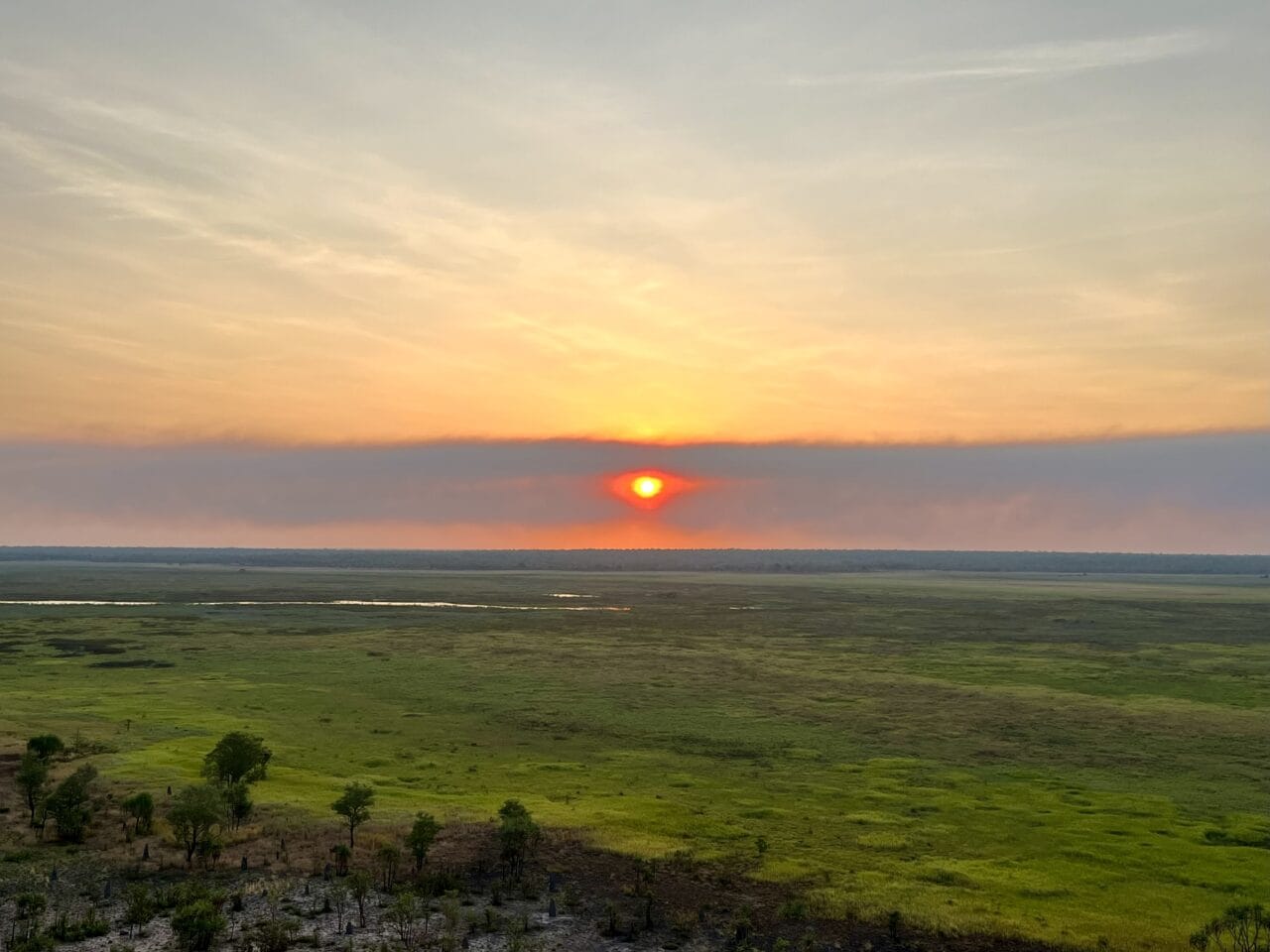
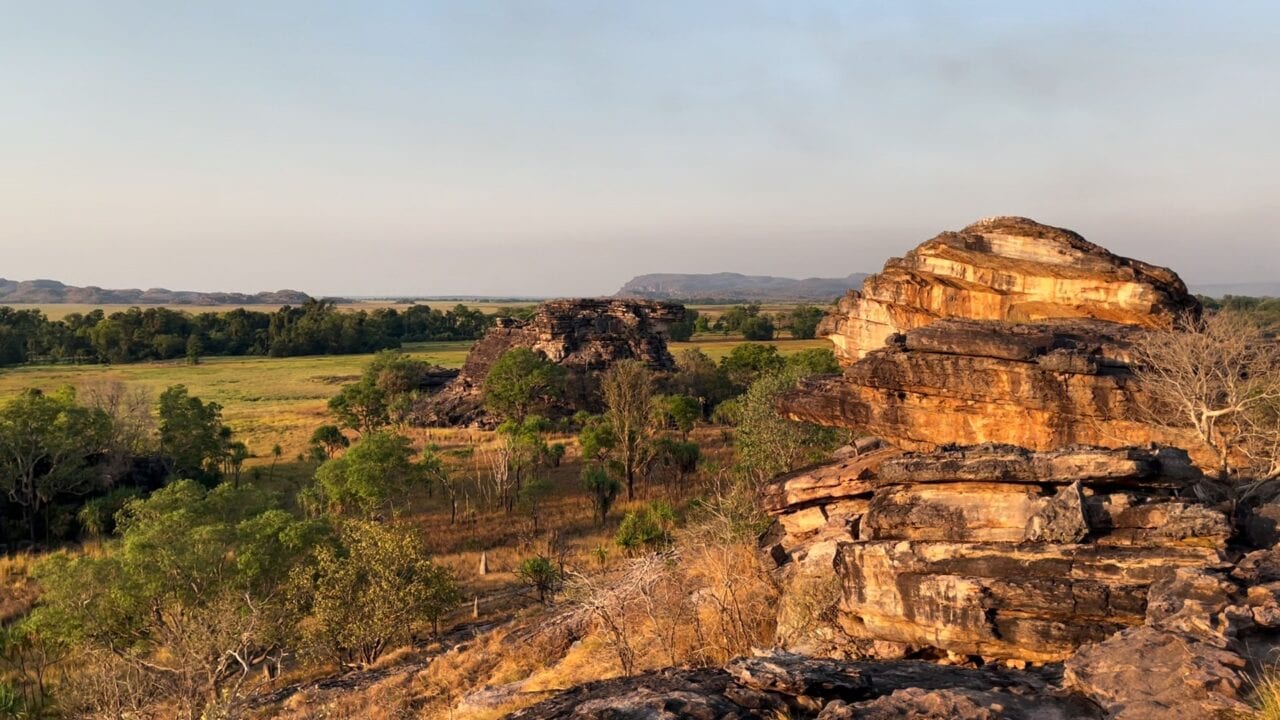
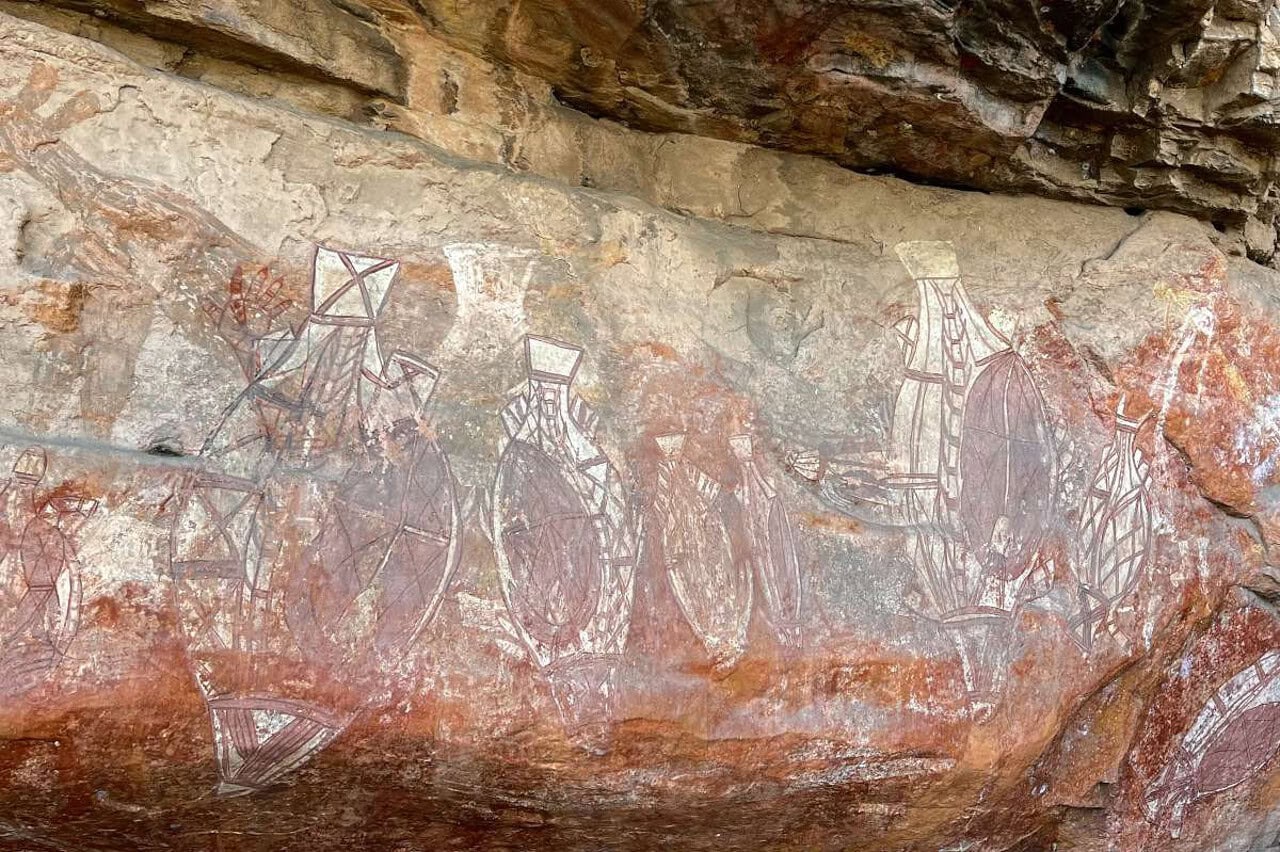
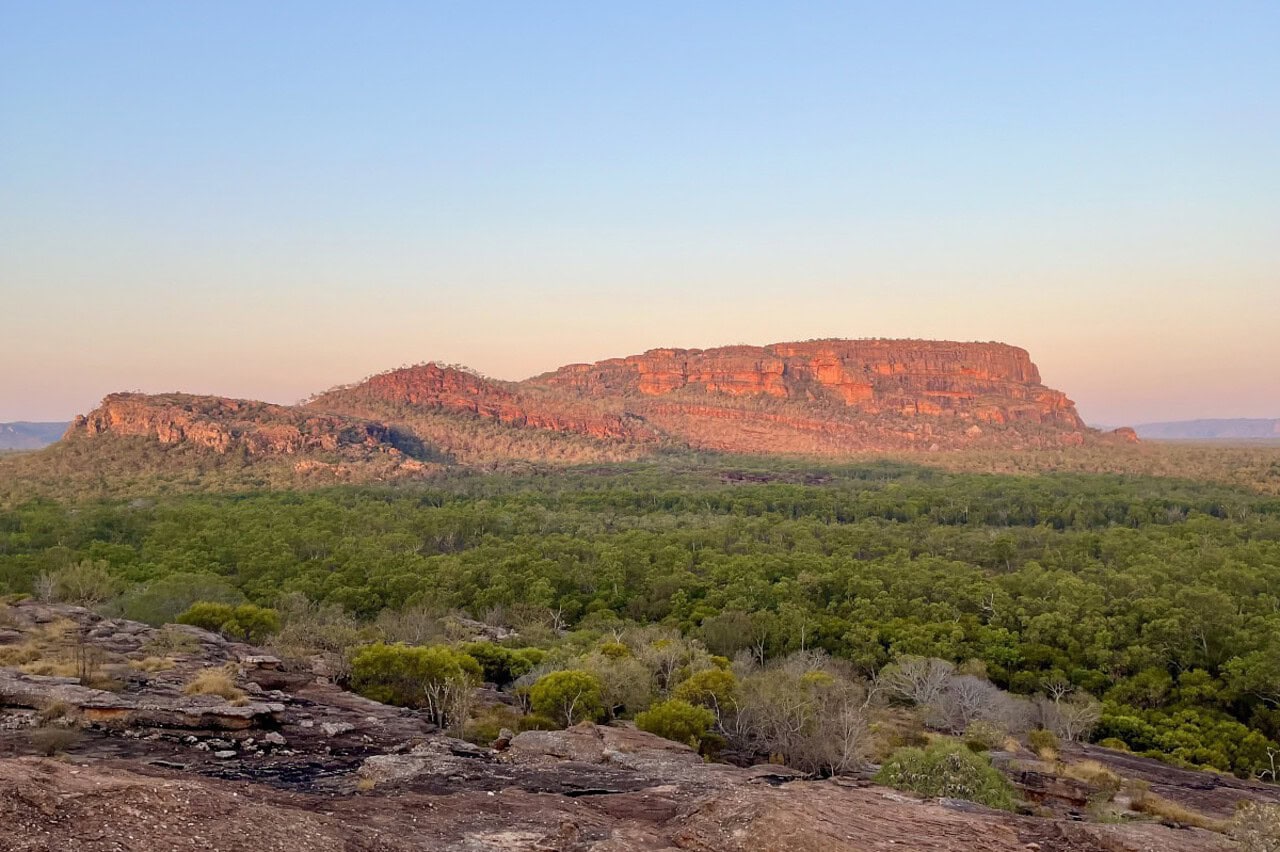
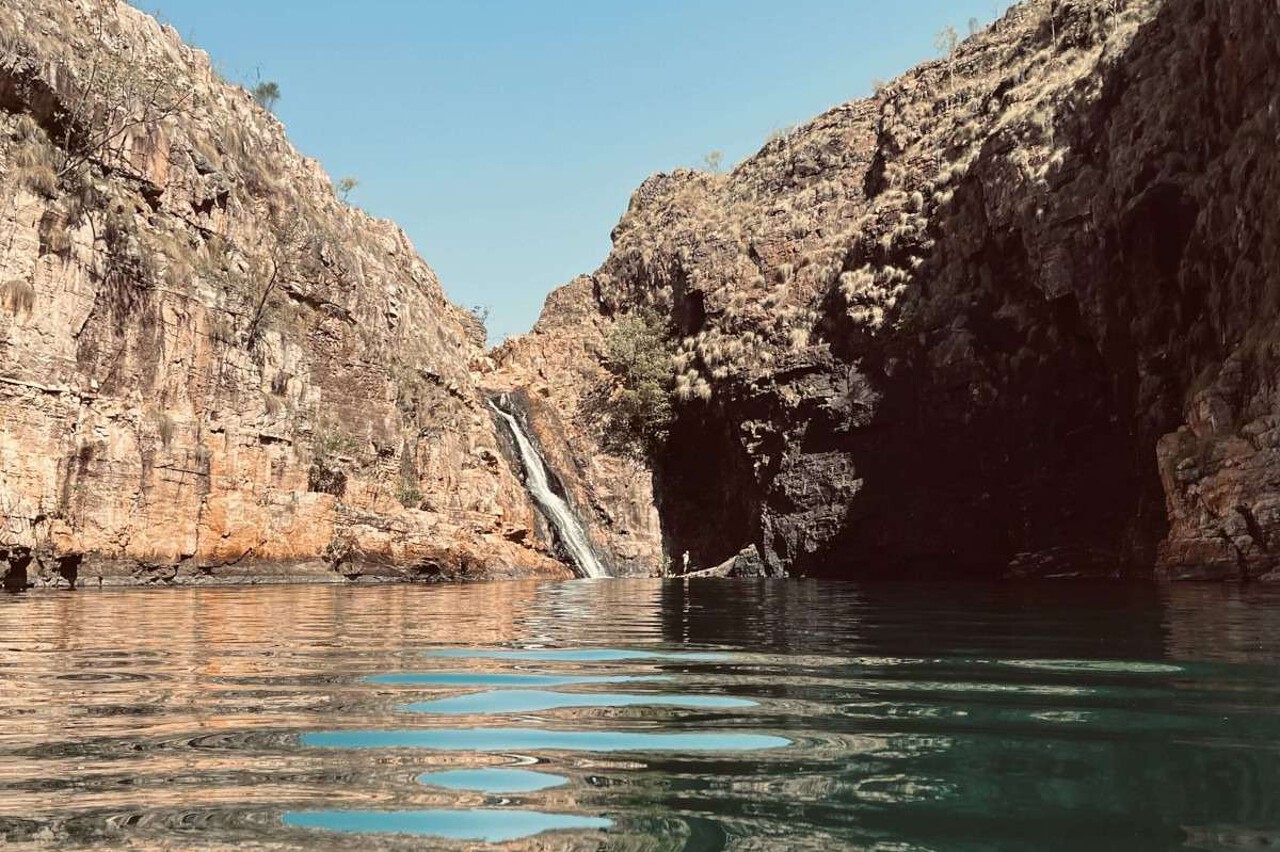
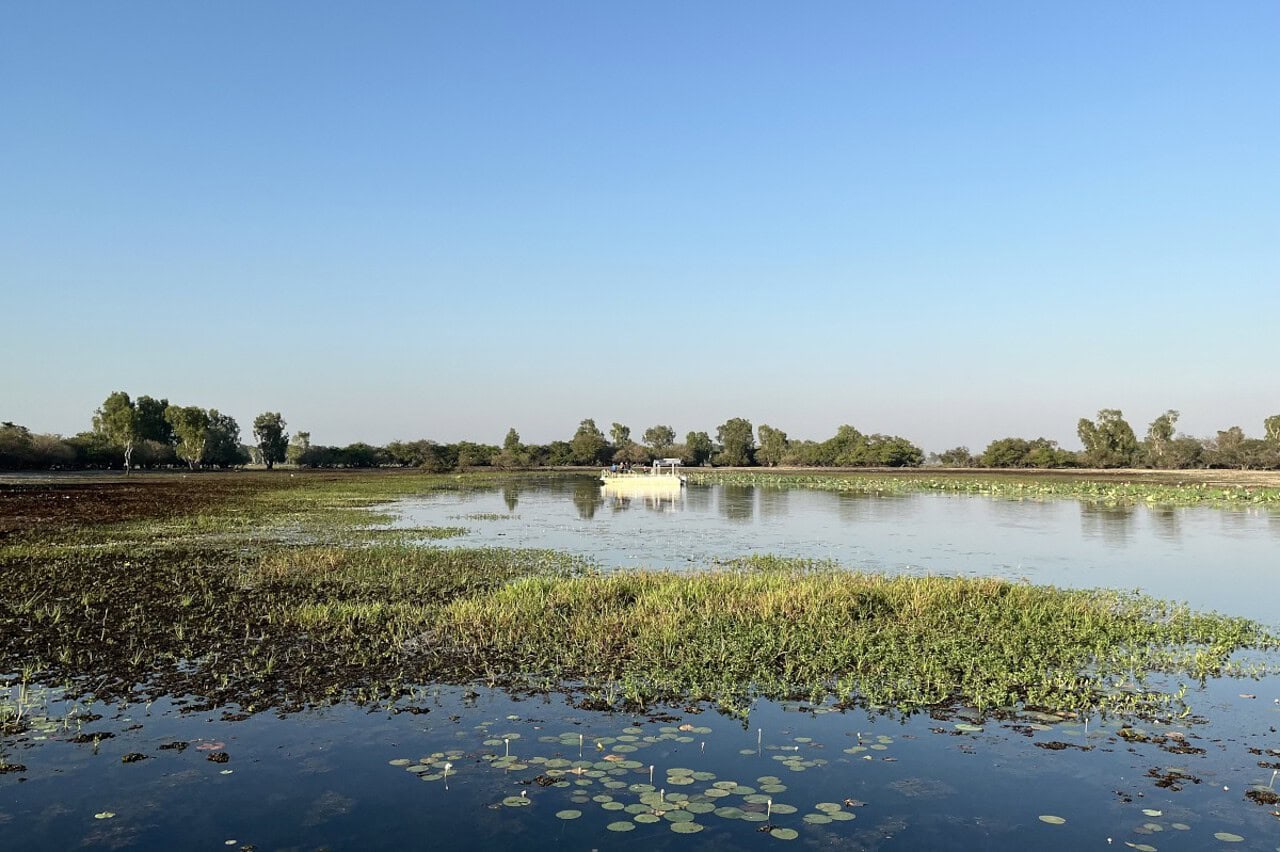
Read our 4-day Kakadu itinerary to know how to get the most out of it!
Litchfield, by comparison, is compact, easygoing and instantly gratifying. Its waterfalls, swimming holes, and short walks are close together, making it perfect for spontaneous exploration and refreshing dips without the logistical planning Kakadu requires. And if swimming in natural pools is your priority, Litchfield is also the better (and safer) option.
Do you need to pay to enter Litchfield National Park?
Unlike Kakadu, where buying an entry pass is straightforward and well‑signposted, Litchfield is far more ambiguous.
We spent a lot of time digging the internet and traveller forums, only to find conflicting information. We think this stems from a few factors:
- Litchfield used to be completely free, so many people still assume no pass is required.
- There’s no checkpoint at the entrance, which makes the requirement feel optional or unclear.
- It’s poorly advertised, so visitors often don’t realise a pass exists at all.
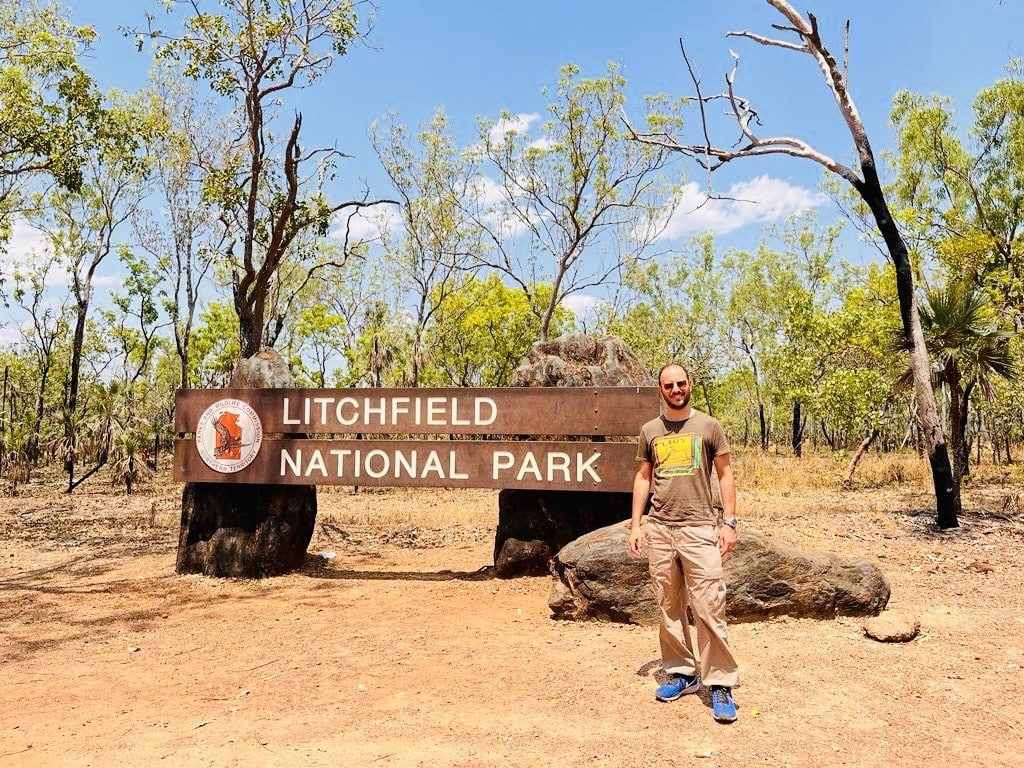
To err on the side of caution (and the right side of the rules), we purchased a day pass for $10 per adult, available here.
Must-know before visiting Litchfield
Crowds – Try to be there early to minimize the crowds as the natural pools tend to fill up very quickly. Unlike Kakadu, Litchfield is more crowded due to its smaller size and easier accessibility.
Most major sites are close together – Florence Falls, Buley Rockhole, Wangi Falls, and the Magnetic Termite Mounds are all within short drives.
2WD – Enough for half a day or 1 full day visit. 4WD is needed for secluded spots (Lost City or Tjaynera Falls) which should be skipped if you have limited time.
Visit – Dry season (May-Sep) is the best time to go.
Swimming – Litchfield’s pools are generally safer and more accessible than Kakadu’s. Waterholes occasionally close for maintenance or safety checks — always verify before you go.
Bring – Sunscreen, gopro, snacks, insect repellent, swimwear, towels, reef shoes
Wildlife – Our experience is that wildlife spotting is better at Kakadu. However, less / no crocs means better opportunity for swimming!
Facilities – While less relevant if you’re only visiting for the day, it’s still useful to know what’s available. Toilets can be found at the major sites, but not everywhere, so plan accordingly. As for food, come prepared. Aside from the seasonal café at Wangi Falls, there are no places to buy meals inside the park. Pack snacks, lunch, and plenty of water because once you’re in Litchfield, you’re essentially self‑sufficient.
Petrol – No stations available inside the park, so fill up before you go.
You can find a map of the park with the main facilities here.
Litchfield National Park Half-Day Itinerary
Ok so you have a few hours to spend in Litchfield. Your itinerary needs to be smart, strategic and realistic, emphasizing quality over quantity.
If you come from Kakadu, you already had your share of satisfaction and everything else should be an added bonus.
Luckily, Litchfield main attractions are well concentrated and you can pack a few together without too much strain.
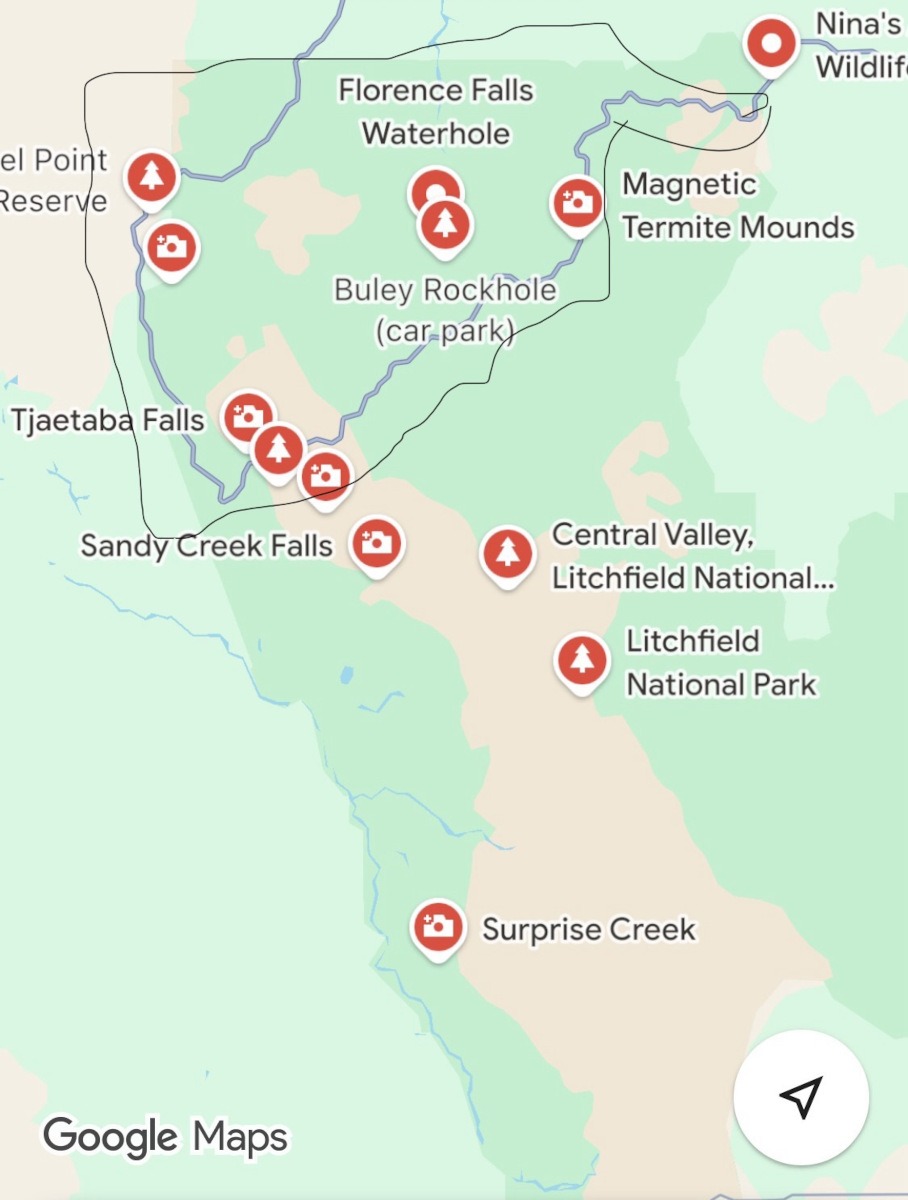
Map of most popular attractions in Litchfield (circled)
MAGNETIC TERMITE MOUNDS
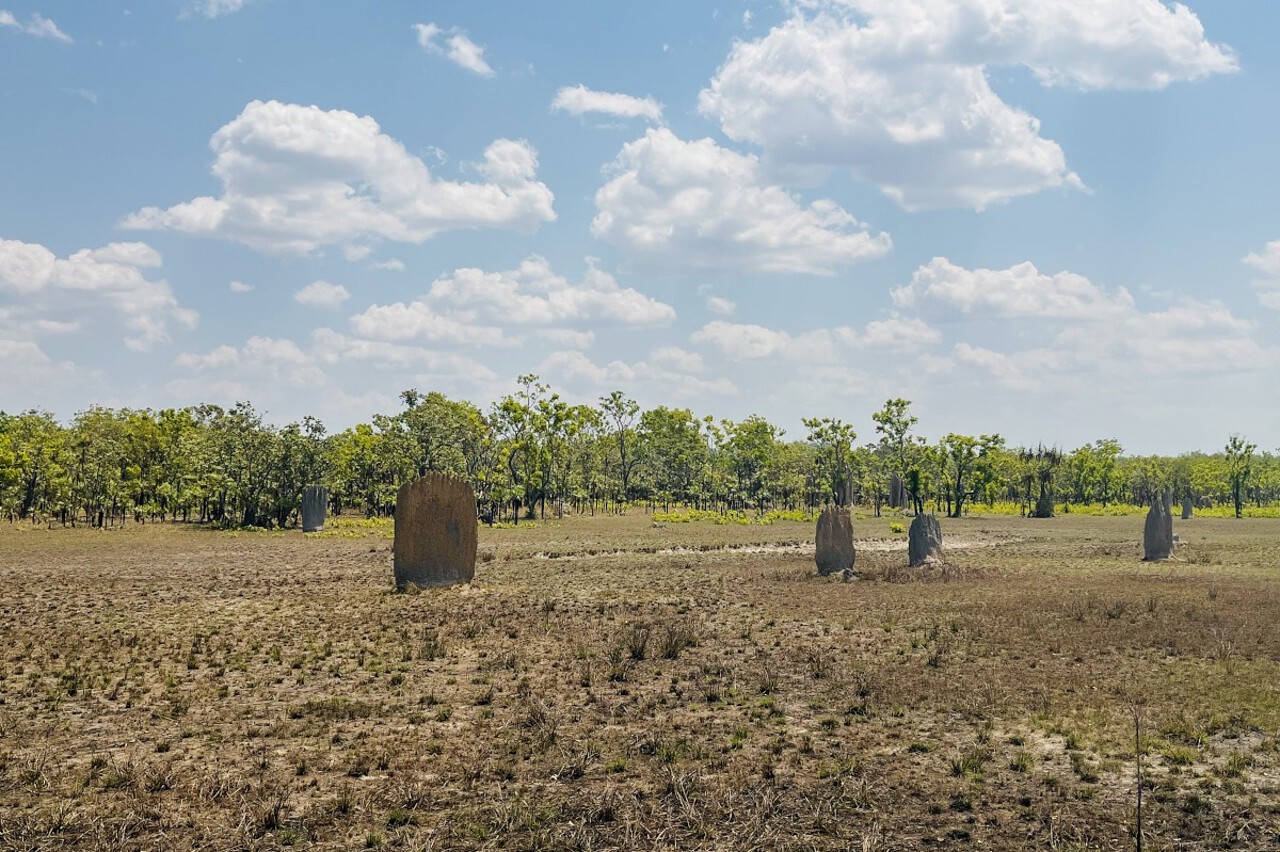
The first stop after entering the park, should be by the iconic Magnetic Termite Mounds.
They’re one of Litchfield’s most intriguing sights, but also one that doesn’t require too much time, especially considering the boiling heat and limited shade.
The field looks almost extraterrestrial, with hundreds of thin headstone-like towers aligned in the same direction like a natural compass. These mounds are engineered with remarkable precision: their long, flat faces point east–west, allowing the termites to regulate internal temperature by catching the morning sun and avoiding the harsh midday heat. Some of them are over 2 meters high and up to 100 years old!
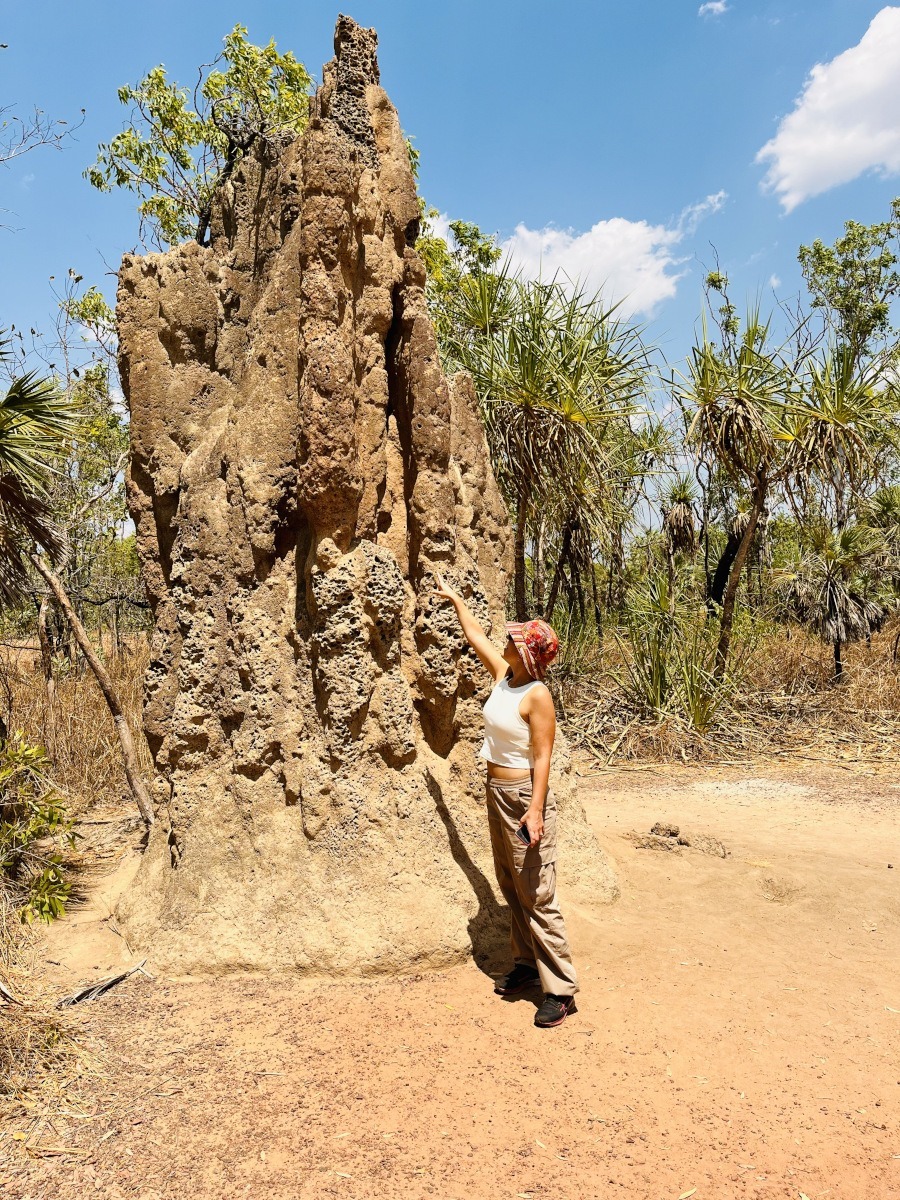
Nearby you’ll also see the more familiar cathedral termite mounds, created by a different species. These are the same that you spot in the Kakadu, but the Litchfield ones could be up to 7 meters high!
Tip | Spend about 20 min here before heading to Florence Falls!
FLORENCE FALLS
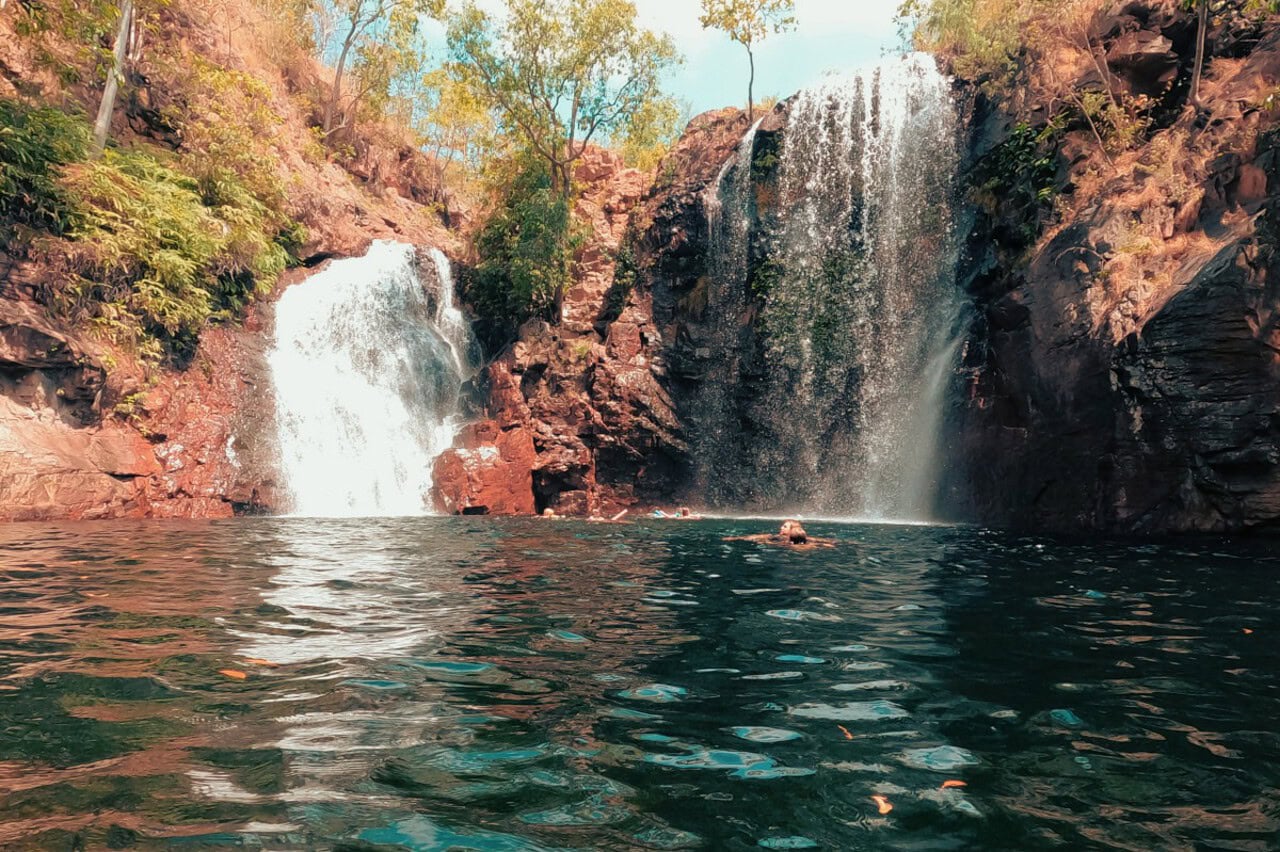
About 10 min drive from the Magnetic Termite Mounds will lead you to one of Litchfield signature stops: Florence Falls.
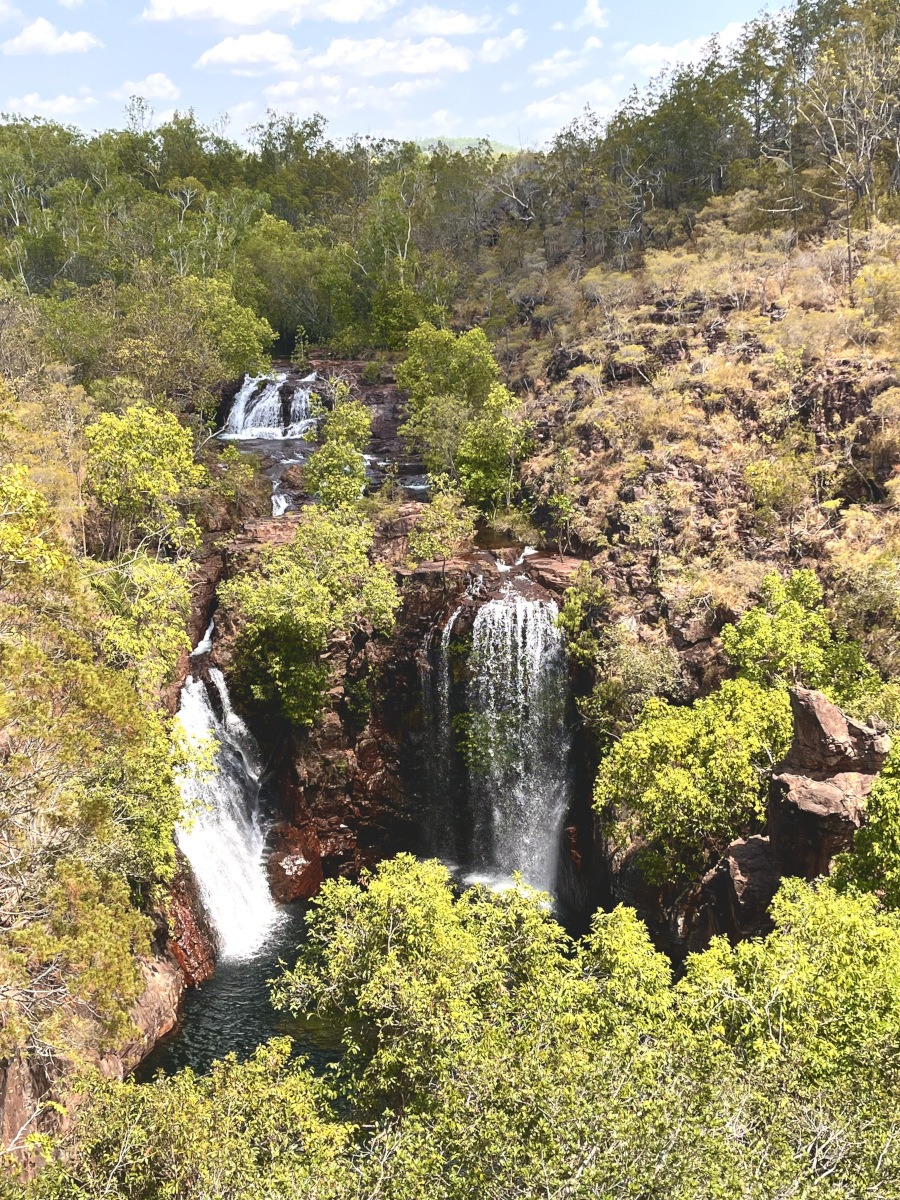
Featuring a double waterfall plunging into a deep pool surrounded by monsoon forest, it’s the perfect mix of scenic and refreshing. You can admire the falls from the viewing platform above (perfect for photos), before following the short trail down to the water for a swim.
The falls are beautiful even though, understandably, could be quite busy. This is a constant in most swimming spots at Litchfield, which unlike the ones in Kakadu, are much more accessible (and safer from a croc point of view!)
The area also has a car park and a campground with showers and toilet facilities.
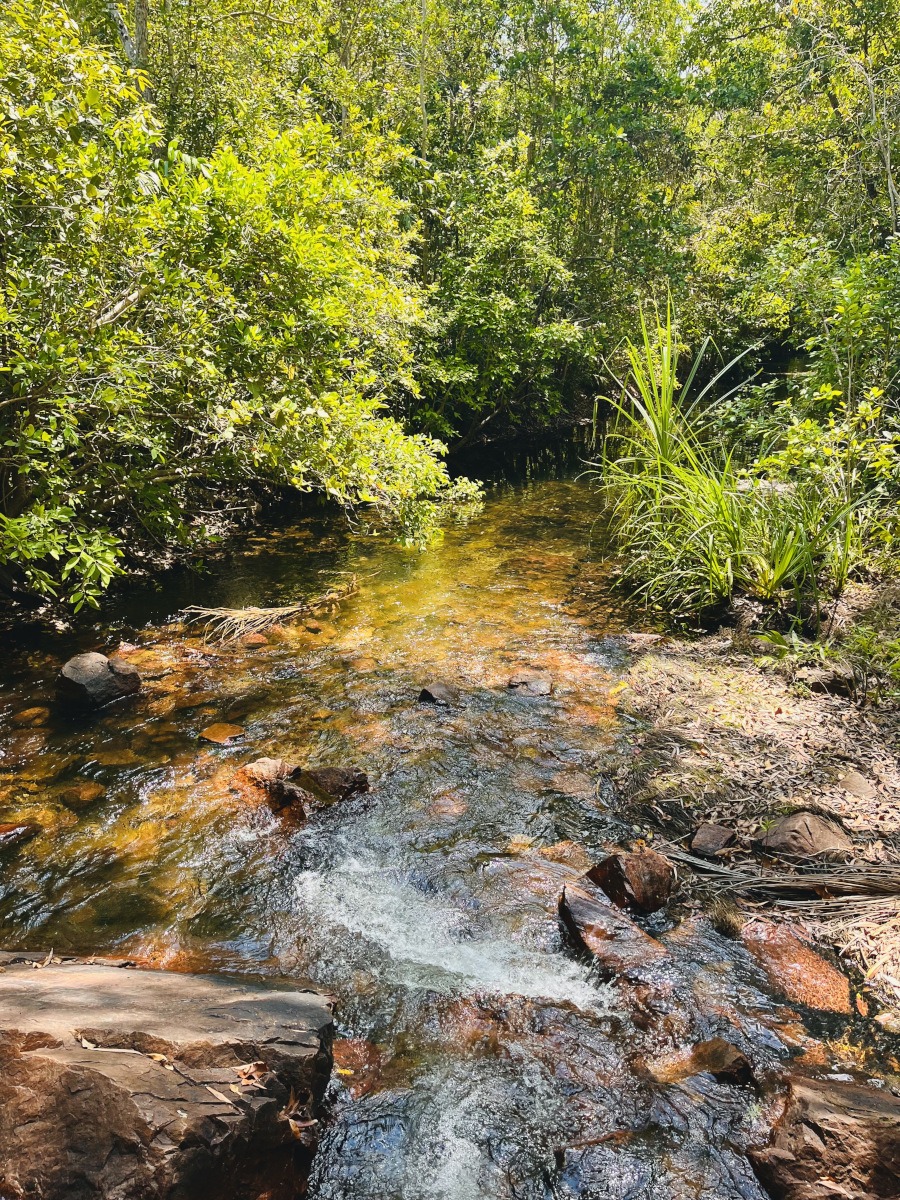
Tip | Swimming in beautiful plunge pools is what you came to Litchfield for. We recommend you spend a few hours here, taking all in without rushing to visit your next spot. If like us you want to avoid climbing up the stairs, you can take the Shady Creek walk (1.7 km), a lovely loop bringing you back to the car park through monsoon lush forest. The walk is very easy and gentle, but factor an extra 30 min to help you staying on track.
BULEY ROCKHOLE
From Florence Falls you can hike (3.5 km round trip) to Buley Rockhole, but as time is of essence you should opt for the short drive instead. There is plenty of parking space once you get there, so accessibility shouldn’t be an issue.
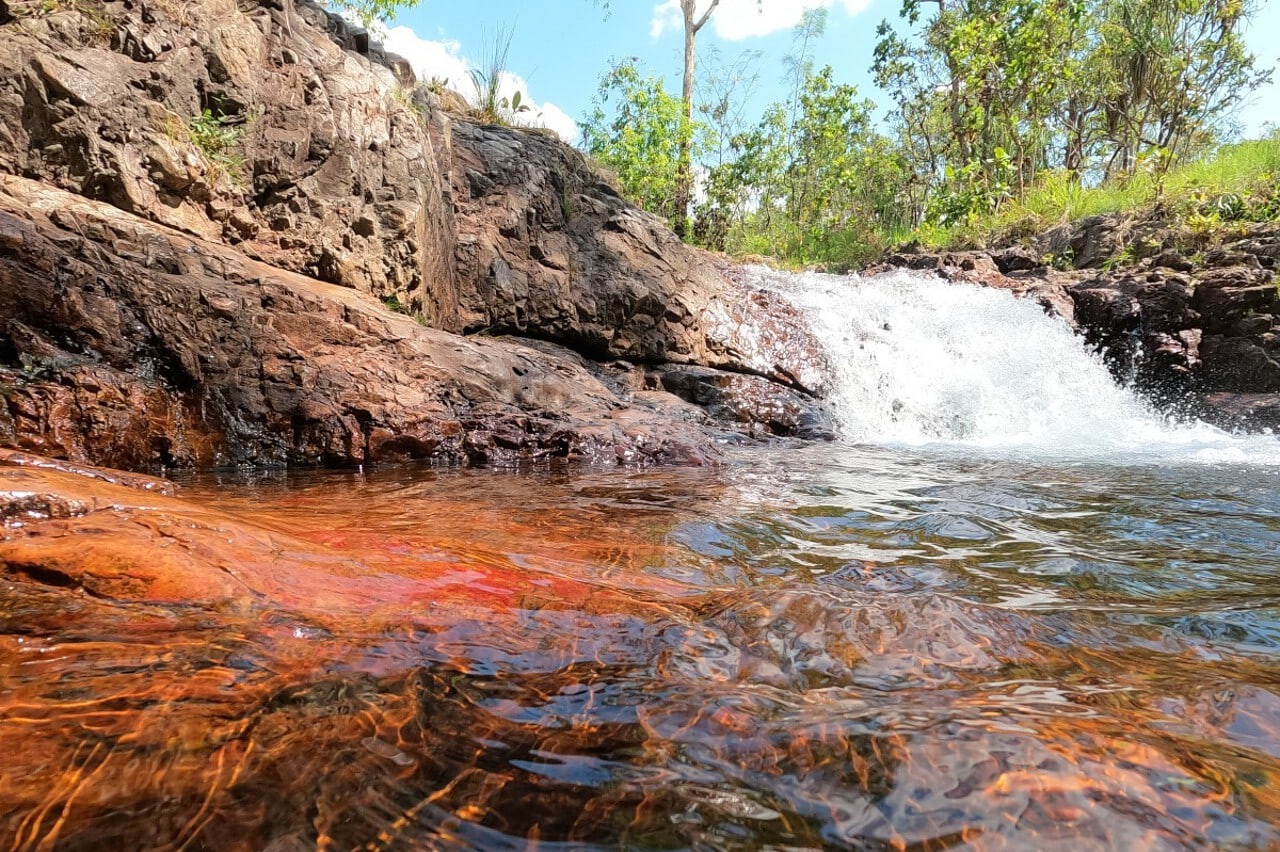
Buley Rockhole features a series of small waterfalls and rockholes, and is the perfect place to cool off and relax. The water is crystal clear and (like Florence Falls) it is safe to swim here, as you’ll see plenty of people enjoying the natural pools.
To be honest, it is less spectacular than Florence Falls but as the two are so close to each other, it would be silly to skip it. Just tread carefully around the pools though. The rocks could be VERY slippery and we saw various people (including ourselves) unintentionally audition for an ice skating routine on the wet stone!
Tip | Make Florence Falls the main attraction and stop at Buley Rockhole for the last quick swim.

How To Avoid The Crowds
We arrived to Litchfield at about 11am and by the time we got to Florence Falls it was quite busy.
We felt that this is pretty much inevitable though. Litchfield is popular for a reason: it’s close to Darwin and delivers maximum beauty with minimal effort. Even though should try to beat the rush as much as you can, there’s only so much you can do.
That said, it never felt overwhelming or disruptive. Even though attractions like Florence Falls tend to be busy, we felt that is was never to a point to negatively impact our experience. We had plenty of “escape it all” moments in Kakadu, but replicating that in Litchfield would have meant leaving Jabiru before dawn to reach the falls before 8:30am.
To be frank we weren’t quite that committed, and honestly, arriving around 10am seems like a nice sweet spot.
Crowds also concentrate mainly at Florence Falls. The Magnetic Termite Mounds were almost empty, Buley Rockhole was perfectly manageable, and venturing a bit further (like taking the Shady Creek Walk), gives you peaceful pockets away from everyone else.
How To Divide Your Time
If you’re driving from Jabiru (Kakadu’s main township) or Darwin, enter the park via Litchfield Park Road past Batchelor (about 3h drive).
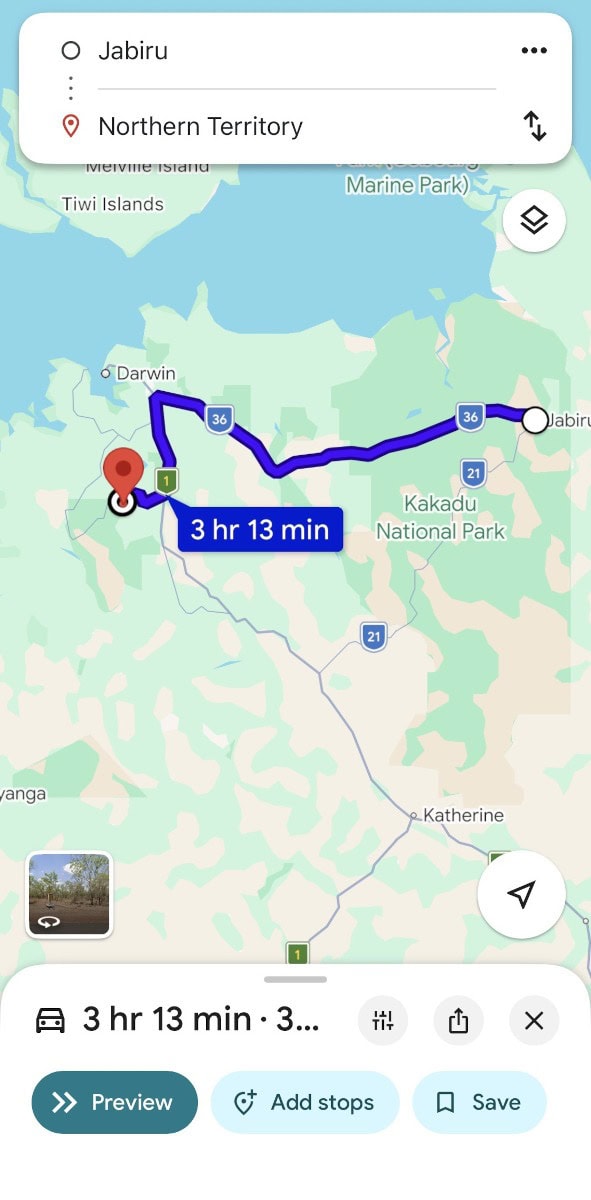
If, like us, you’re constrained by the time you have to return your car, you’ll want to be laser-focused on how you spend your day.
The drive by the edge of the park to the Magnetic Termite Mounds takes about 20 minutes, and apart from a few photos and moments to appreciate the uniqueness of the place, you shouldn’t spend to much time here.
Florence Falls is next, just 10 minutes away and you should aim to spend at least 2-3 hours here, including the 1.7 km Shady Creek walk if you have time.
The driving distance between Florence Falls and Buley Rockhole is negligible, and once you arrive, we suggest you spend up to 1h to enjoy the pools.
TOLMER AND WANGI FALLS
You read read online about two other key spots at Litchfield: Tolmer Falls and Wangi Falls.
Tolmer is one of the parks’s most striking waterfalls, dropping over two separate escarpments into a distant plunge pool where several colonies of Ghost Bats and Horseshoe Bats live. You can’t swim here, but the apparently the viewpoint is one of the best in Litchfield.
A little further along, Wangi Falls is one of the Litchfield’s most popular attraction thanks to its huge freshwater pool (where you can swim) fed by two high falls and easy access.
They are the perfect addition if you have a full day, but we’d recommend skipping them on a half-day visit, as you’ll end up rushing and won’t fully enjoy the other attractions in the park. Driving from Buley Rockhole to Tolmer Falls takes about 20 minutes, then other 15 min to Wangi, followed by 1.30h drive to Darwin. Unless you just want to pass by to say “I have been there”, we don’t think it is worth it.
Conclusion
A half‑day in Litchfield isn’t enough to see all the highlights, but it’s enough to enjoy some of park’s greatest hits.
With its compact layout, easy accessibility, and refreshing swimming spots, Litchfield lends itself surprisingly well to a short, well‑planned visit.
We recommend you go and focus on a few key highlights, taking your time at Florence Falls, and treating everything else as a bonus. With the right expectations, even a brief stop here delivers a rewarding slice of the Northern Territory’s beauty without the pressure of a full‑day or multi-day itineraries.