
A complete 8-day Uzbekistan itinerary covering Tashkent, Samarkand, Bukhara & Khiva, with real tips, logistics, and hidden gems
Despite its impressive growth in visitors over the last few years, Uzbekistan is one of those places that still feels quite obscure to many.
But scratch beneath the surface, and you’ll find one of the most rewarding destinations on the Silk Road. This is a land of turquoise domes, desert fortresses, bustling bazaars, and cities that have existed for over 2,700 years.
It all sounds exciting, but we know it can still trigger that uncomfortable flutter you feel when you’re pushed past your comfort zone. This is understandable but quite frankly not grounded in reality.
Despite its remote location and absence of mainstream tourism, this is a country that is safe, very easy to navigate, and suitable for shorter or longer visits alike.
This 8‑day Uzbekistan itinerary follows our own journey and is perfect for first‑timers who want to cover the country’s greatest hits. It includes Tashkent, Samarkand, Bukhara, Khiva, and nearby day trips, with a pace that lets you enjoy the experience without rushing.
- Uzbekistan Itinerary Essentials
- Uzbekistan Itinerary Summary
- Why Visit Uzbekistan?
- Why the Best Time to Visit Uzbekistan Is Right Now
- What Is The Best Season to Visit
- How Long Should You Stay in Uzbekistan
- How to Divide your Time Between the Cities
- Is Uzbekistan Safe?
- Practical Tips for the Perfect Uzbekistan Itinerary
- Final Thoughts
Uzbekistan Itinerary Summary
- Day 1 – Arrive in Tashkent and visit of the city
- Day 2 – Morning in Tashkent and then transfer to Samarkand – Stay at Kosh Havuz Boutique Hotel or Hotel Platan (bit further)
- Day 3-4 – Samarkand and half-day trip to Shahrisabz
- Day 5-6 – Bukhara – Stay at Kukaldosh or Rayyan Hotel
- Day 7 – Transfer to Khiva and Khorezm Fortresses
- Day 8 – Khiva – Stay at Ulli Oy Boutique Hotel & Terrace or Polvon Qoriy Boutique Hotel
- Day 9 – Departure via Urgench
Why Visit Uzbekistan?

Uzbekistan was a bit of a wild card for us. We knew we wanted to go, but it came more from a spontaneous whim than a carefully planned bucket‑list choice.
However, we found that nowhere else blends monumental Islamic architecture, Silk Road romance, Soviet quirks, and warm hospitality quite like this. Uzbekistan is safe, surprisingly easy to navigate, and still feels refreshingly unspoiled by mass tourism.
You can expect:
- Epic architecture rivalling Iran and Türkiye, giving you a sense of stepping into a living history book
- A culture shaped by Persians, Mongols, Russians, and nomads
- Genuinely friendly and hospitable people. Expect locals wanting to pose for a photo with you and sending you a “follow” request on Instagram
- Walkable old towns and atmospheric bazaars
- High‑speed trains connecting major cities
- Affordable prices
Why the Best Time to Visit Uzbekistan Is Right Now

Planning an Uzbekistan travel itinerary has never been easier, and if there’s ever been a perfect moment to visit, it’s right now (2026 at the time of writing).
The country is pouring serious investment into its tourism sector, opening the doors wider than ever so more travellers can experience what makes this place extraordinary.
Even the annual Uzbekistan Festival we attend at the foot of Tower Bridge in London grows busier each year, a small but telling sign of the country’s rising profile.
Travel has become dramatically easier, too. Many nationalities can now enter visa‑free for short stays, credit cards are increasingly accepted, and the quirky old rituals, like exchanging money on the black market or collecting stamped slips from every hotel, are firmly in the past.
And yet, despite this surge in accessibility, Uzbekistan remains wonderfully under the radar. It hasn’t been polished into a theme‑park version of itself or overwhelmed by mass tourism.
How long this balance will last is impossible to predict, but it shows that the best time to go is now.
What Is The Best Season to Visit
The sweets spots are either March–May for mild(ish) temperatures and blooming trees or September–October for golden light, warm days and cooler evenings.
Winter (Nov-Feb) can be atmospheric, but expect shorter days and temperatures that can very well go below zero. Full summer (July-August) is for the masochists who want brutal heat with no sea to cool off.
How Long Should You Stay in Uzbekistan

The “Classic Uzbekistan” itinerary is a simple one.
It covers Tashkent, Samarkand, Bukhara and Khiva, with the potential of a few days trips along the way.
The minimum to enjoy it is a week, but it could be stretched across 10 days for slow travellers.
For longer trips, we recommend that you either add more “off the beaten path” stops along the way (like Nukus, the Aral Sea and/or the Fergana Valley) or you branch off to some of the neighbouring countries.
How to Divide your Time Between the Cities
When we planned our Uzbekistan itinerary, we were unsure at first on how to divide our time. This depends on how many days you have, but overall we recommend 1 day in Tashkent and 1 in Khiva.
Tashkent is interesting but quite honestly not the main reason someone would travel to Uzbekistan. Unless you want to dig deeper into museums, 24 hours are usually enough.
Khiva is probably the pretties city in Uzbekistan, but it’s also very small and easy to cover in a day. Unless you venture into the Aral see, 1 full day is also enough.
If we then exclude travelling days (e.g. Khiva-Bukhara with stops at the Khorezm fortresses), the rest of the days should be split between Bukhara and Samarkand.
We recommend a minimum of two days in each, ideally three. If you need to prioritize, we suggest giving the “extra” day to Bukhara (simply because we preferred the vibe).
How to Travel Around Uzbekistan
Uzbekistan is easier to navigate than most expect, if you exclude off-the-beaten-path places like the Aral Sea and Fergana Valley.
If you stick to the classic Uzbekistan route covered in this post, travelling is simple and you have various options.
HIGH-SPEED TRAINS (AFROSIYOB)
Fast, clear, reliable and cost-effective, this is the best way to travel between all the major cities (Tashkent – Samarkand – Bukhara – Khiva). You can book tickets directly here, but we found the website to be a bit un-cooperative when booking from abroad.
Alternatively, you can use a third-party agency. We used Advantour to book us the Afrosiyob (Tashkent to Samarkand and Samarkand to Bukhara) and were very satisfied.
PRIVATE TRANSFERS
Private transfers are still relevant for day trips (like the Khorezm fortresses from Khiva or Shahrisabz from Samarkand), or if you like flexibility on your journey between Bukhara and Khiva (expect $60-80 one way).
This is what we have done (via our Bukhara hotel and stopping to the Khorezm desert fortresses along the way), even though the whole journey is quite long.
However, a new high-speed rail line is connecting Bukhara and Khiva from 2026, making the journey a lot easier.
For all the other destinations, including Tashkent-Samarkand and Samarkand-Bukhara, the high-speed train is by far the best option.
DOMESTIC FLIGHTS
Useful for Khiva to Tashkent via Urgench Airport.
SHARED TAXIS
Cheap, chaotic, and very local. Can be a way to travel between cities, but only if you have a taste for real adventure.
Is Uzbekistan Safe?
In short: yes, very.
Uzbekistan is one of the safest countries in Central Asia, with low crime rates and a strong tourism infrastructure.
We had zero problems along the journey and never felt unsafe at any point.
Practical Tips for the Perfect Uzbekistan Itinerary
- Money – Cash is king, but a few places (hotels, some restaurants) started to accept cards
- Language – Except for hotels, English is not widely spoken
- Booking Trains – Reserve Afrosiyob tickets soon after they go on sale (typically 60 days before departure)
- Dress Code – Modest clothing is appreciated in religious sites, but they’re quite relaxed elsewhere
- Connectivity – Local SIM cards (Ucell, UZ Mobile) are cheap and reliable. We got Ucell SIMs at Tashkent airport
- Download – Yandex Go App (local Uber) before arriving and link it to your local SIM card. You can pay cash or attach a credit card to pay for each ride
8-Day Uzbekistan Itinerary

Below is the complete day‑by‑day plan, based on our direct experience.
It starts in Tashkent, Uzbekistan’s modern capital, and moves westward along ancient trade routes to monumental Samarkand, Silk Road’s heart Bukhara and Khiva, a perfectly preserved desert citadel that looks almost too beautiful to be real.
While it is possible to approach the journey in the opposite direction, we recommend starting in Tashkent and ending in Khiva, possibly flying out from nearby Urgench Airport.
This itinerary is designed for first‑timers who want a balance of iconic sights, atmospheric neighbourhoods, and a few hidden corners. It works well if you’re travelling as a family, with friends or solo.
DAY 1 – ARRIVE IN TASHKENT
Your introduction to Uzbekistan will be through Tashkent, the country’s modern capital.
Shaped by Soviet reconstruction, yet still distinctly Central Asian, the city mixes leafy boulevards, brutalist blocks, Islamic architecture and an almost eerie sense of order.
The time of your arrival will probably dictate the pace of the sightseeing. After a well‑earned rest, start exploring the city centre around Amir Timur Square, where you’ll likely stumble upon several monumental sights, including the enigmatic Hotel Uzbekistan, an heritage of the bygone KGB era.
Head northwest (Gafur Gulom metro stop) to the Hazrati Imam Complex, your first real taste of Islamic Uzbekistan. It’s quieter and less dramatic than the ones in Samarkand or Bukhara, but still beautiful and pleasantly uncrowded. When we visited, it housed a 7th‑century Uthman Quran (one of the oldest in the world), now displayed next door at the Center of Islamic Civilization.
About 20 min walk brings you to Chorsu Bazaar, the city’s most atmospheric market and our favourite in Uzbekistan. Wander, get lost and if you’re up for it – bargain!
You can either eat here or, if you don’t mind the ride, cross the city to reach Besh Qozon to eat authentic plov.
After a long day and plenty of steps, head back to your hotel, unwind and stay local.
KEY HIGHLIGHTS | Hazrati Imam Complex, Chorsu Bazaar


DAY 2 – FROM TASHKENT TO SAMARKAND: THE JOURNEY BEGINS
Final morning in the capital before stepping into Uzbekistan’s true magic.
Tashkent is interesting, but the real magic in any Uzbekistan itinerary lies west.
One full day is usually enough, but with jet lag in the mix, it’s fair to use the morning to fill any gaps.
As weird as it sounds, one of Tashkent’s best attraction is…drum roll…the metro.
Few places outside Moscow have turned their stations into striking works of art. Visit Alisher Navoiy, Kosmonavtlar, Mustaqillik Maydoni and Bodomzor, which now you can freely photograph after a ban was lifted.
Stroll the leafy boulevards (a blessing in hot days) before heading to Tashkent Central Station for the fast train to Samarkand.
The ride takes about 2h, and despite the beautiful Tajik mountains in the distance, is not particularly eventful. On arrival, expect a swarm of fierce taxi drivers, eager to offer you an overpriced fare disguised as a great deal.
Now you have three options:
- Pay (still talking about £10 here…)
- Negotiate (it’ll probably still be above market value)
- Download Yandex Go before arriving and link it to a local SIM for the best prices
After checking-in (we stayed at Platan), head to one of Samarkand’s greatest highlights: the Shah-I-Zinda necropolis.
Climbing the first staircase leads you to a narrow corridor lined with radiant turquoise mausoleums, some from the 11th century.
The whole complex is breathtaking and we suggest to stay until closure.
STAY | Kosh Havuz Boutique Hotel, Hotel Platan, L’Argamak Boutique Hotel
KEY HIGHLIGHTS | Alisher Navoiy, Shah-I-Zinda


DAY 3 – THE BEST OF SAMARKAND
A journey through monumental Samarkand and its 2,700 years of history.
Samarkand is the city that most defines Uzbekistan’s cultural identity, and where the past still shapes its soul.
Start your day by visiting Gur-i-Amir (tomb of the most famous Uzbek historical figure, Amir Timur) and the nearby Aksaray Mausoleums.
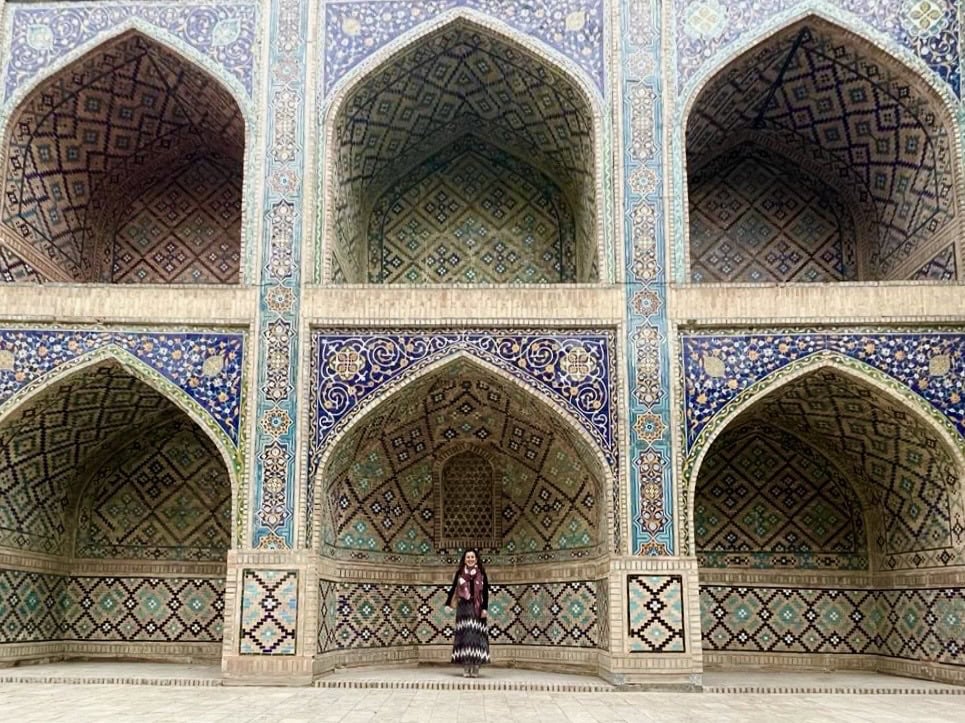
Continue with Samarkand most iconic site: the Registan. Spend a few hours exploring the wonders of the Tilya-Kori, Ulugh Beg and Sherdor madrasahs. The golden, purple‑hued interior of Tilya‑Kori alone is worth the trip, and remains the best we’ve seen in Uzbekistan.
Have lunch at the traditional Bibi Khanum Teahouse before visiting the homonymous mosque. Not far from the Registan, the Bibi-Khanum mosque is another of Samarkand’s greatest hits, remarkable for its colossal scale, slightly crumbling architecture and fascinating history. You can also briefly stop by the Siyob Bazaar next door, the city’s main market for nuts, spices, sweets and people-watching.
Spend the rest of the afternoon by strolling around the “Russian Quarter” for a completely different, but not any less authentic, perspective of the city. This is a refreshing contrast to Timur’s ancient world and the perfect place for some breeze under the leafy trees, and booze from some of its lively cafés and bars.
Read here for more info on the best things to do in Samarkand!
KEY HIGHLIGHTS | Registan, Bibi-Khanum Mosque
TOP TIP | Gur‑i‑Amir isn’t large inside and fills up fast. If you want to avoid elbow‑to‑elbow crowds come early!


DAY 4 – TRACE TIMUR STEPS IN SHAHRISABZ
A journey through mountain roads and ancient ruins
If you’re in Samarkand for more than 2 days, making a (half) day trip to Shahrisabz is a good option.
We organized this through our hotel, but you can find various tours using Get Your Guide.
Shahrisabz is famous for being the birthplace of Amir Timur. It is not an essential stop in our opinion, but it can be a nice (heat permitting) detour.
The key highlights are the ruins of the Ak-Saray Palace, the Kok‑Gumbaz Mosque and Dorut‑Tilovat complex, all relatively close to each other.
As you go back to Samarkand, (depending on your stamina), you can either (i) stop at the Ulug Beg Observatory and/or the ancient Afrasiyab settlement and museum, (ii) or go back to your hotel to relax.
As the evening approaches, return to the Registan to admire it one last time. We loved it so much that we bought another ticket to soak it all in the softer light. This is when the Registan looks unreal!
KEY HIGHLIGHTS | Ak-Saray Palace, Registan (at night)
TOP TIP | Driving back from Shahrisabz, stop for lunch at the restaurant at the top of the mountain (here). The view and the unbelievably good kebabs, definitely make up for it!


DAY 5 – FROM SAMARKAND TO BUKHARA
Welcome to the Silk Road’s beating heart
Take an early high-speed train to Bukhara (1.5 hours).
The railway station is 15km from the city centre, so you have to take a cab or use Yandex Go.
We recommend staying around Lyabi Khauz square, the perfect hub for people-watching and to unwind in some of the cafés and local teahouses.
Bukhara is much more compact than Samarkand, it capture the essence of the Silk Road and it strikes, in our opinion, the perfect balance between curated and authentic.
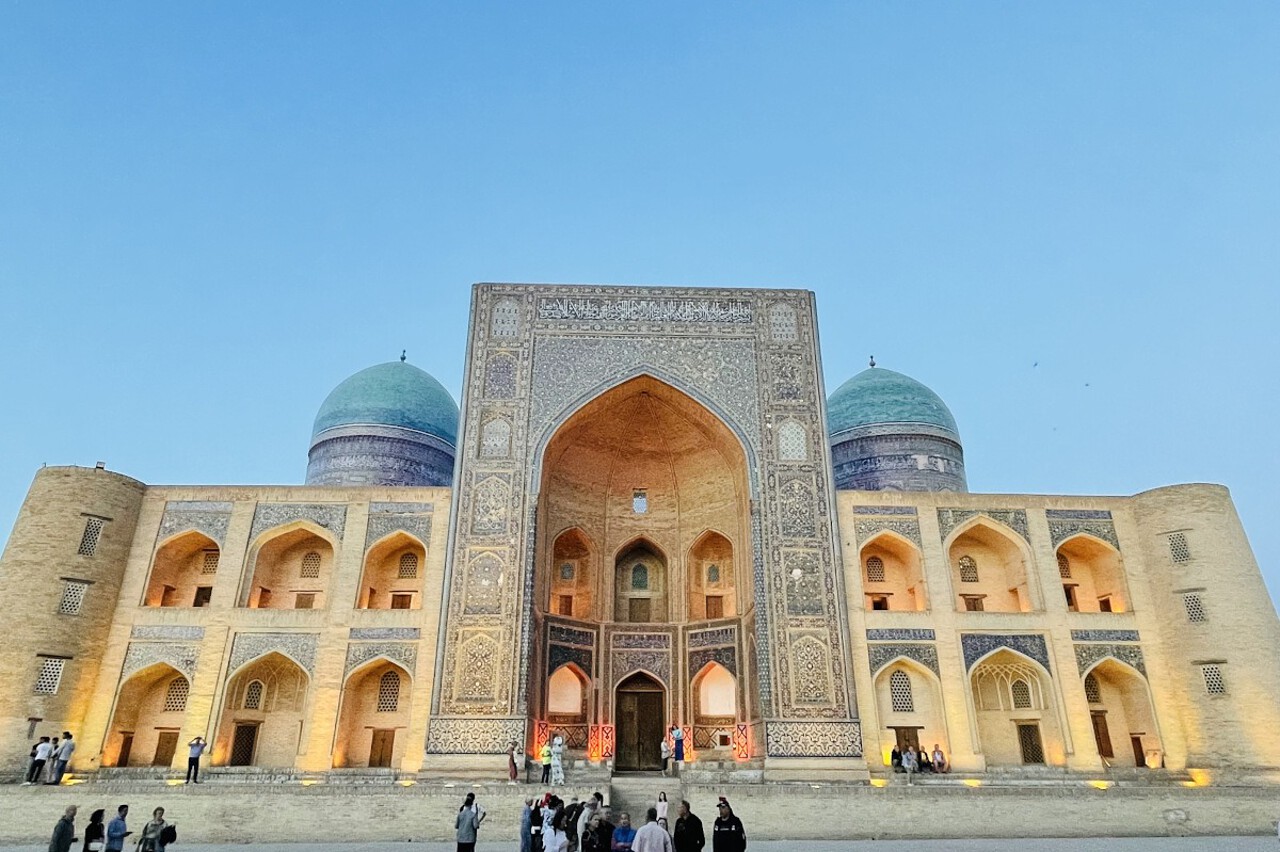
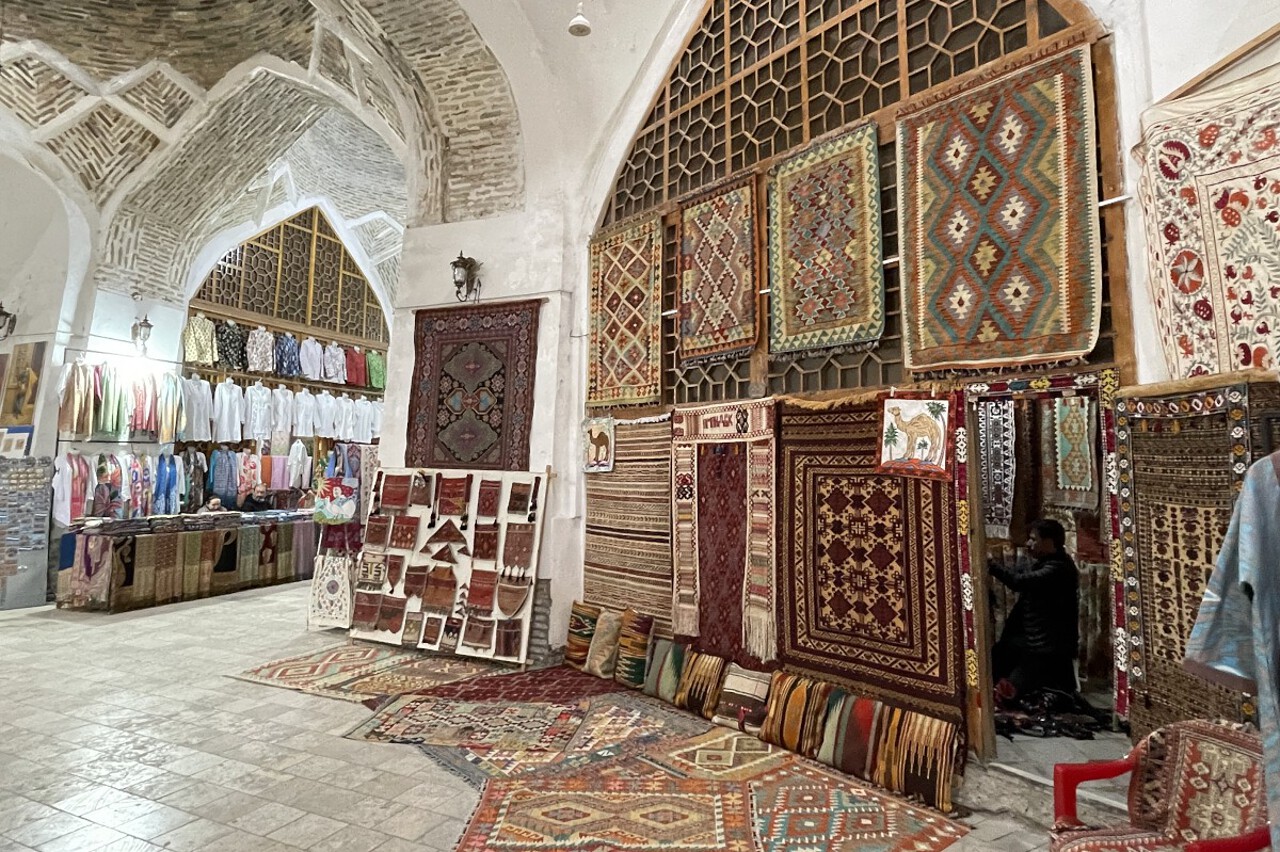
Head to the unique Chor Minor before strolling the labyrinthine alleys behind Lyabi Khauz as they come to life. Take a moment to admire the Nadir Divan-Begi Madrasah (1622), visit a old Jewish house nearby, and slow down your pace by sitting at some of the teahouses in Lyabi Khauz.
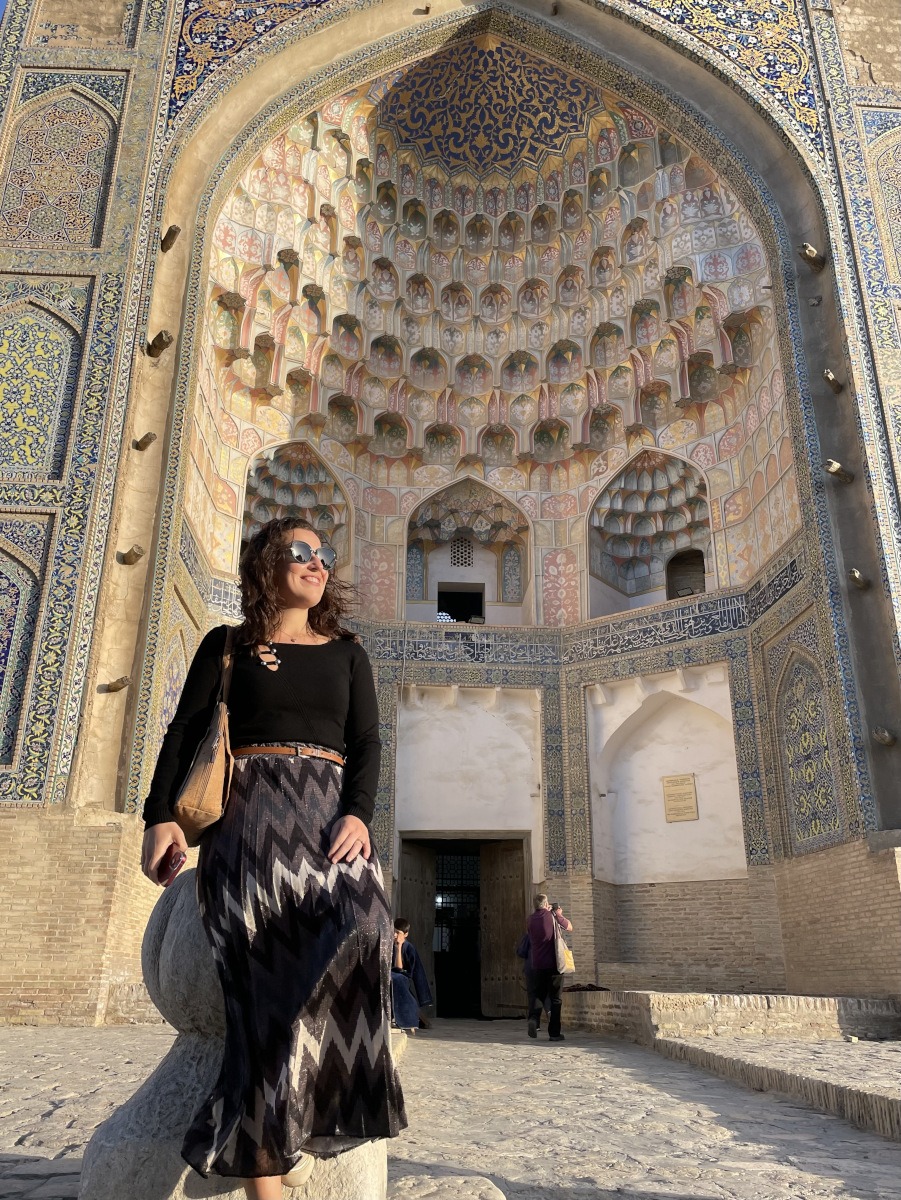
As you wander around, stop by the nearby trading domes, strong reminders of Bukhara’s Silk Road heritage, before visiting the beautiful Ulug Beg (1417) and Abdulaziz Khan (1652) madrasas.
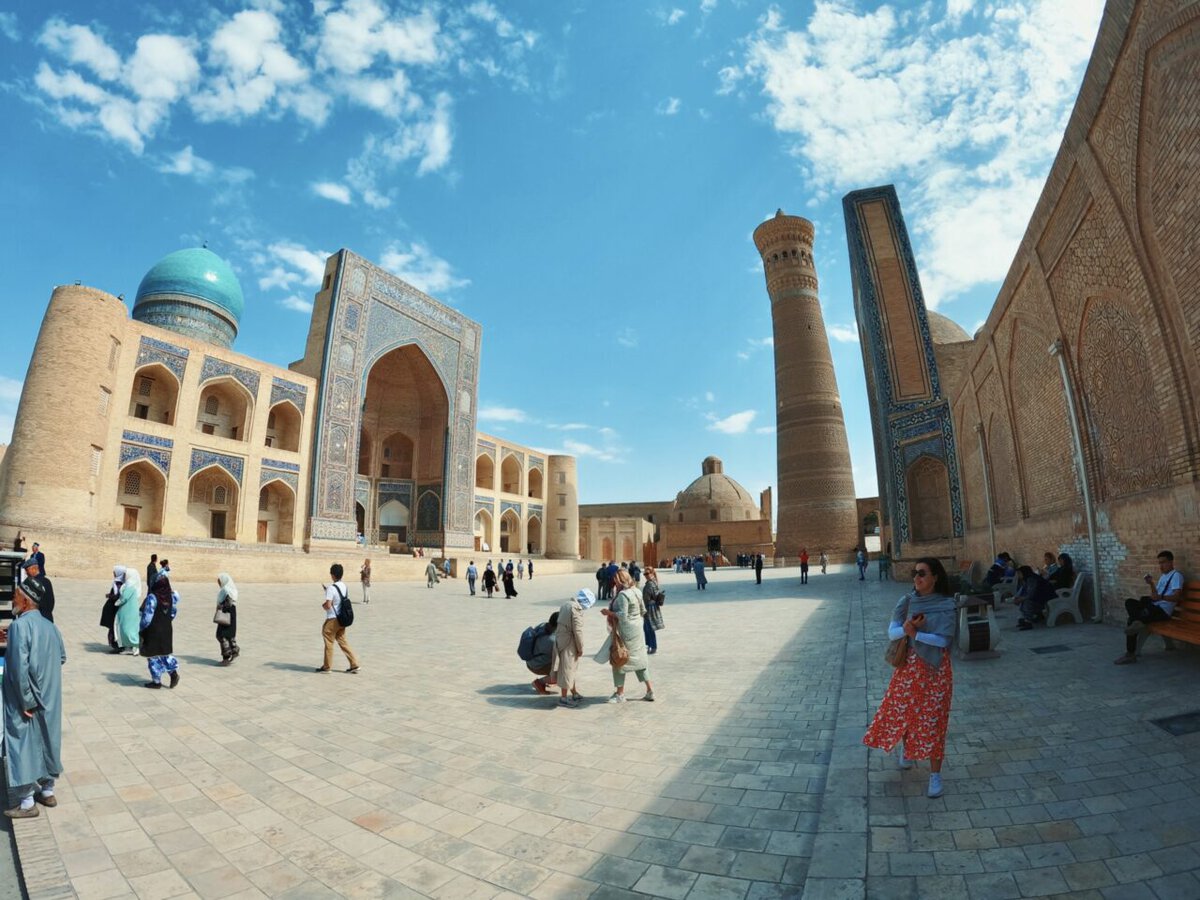
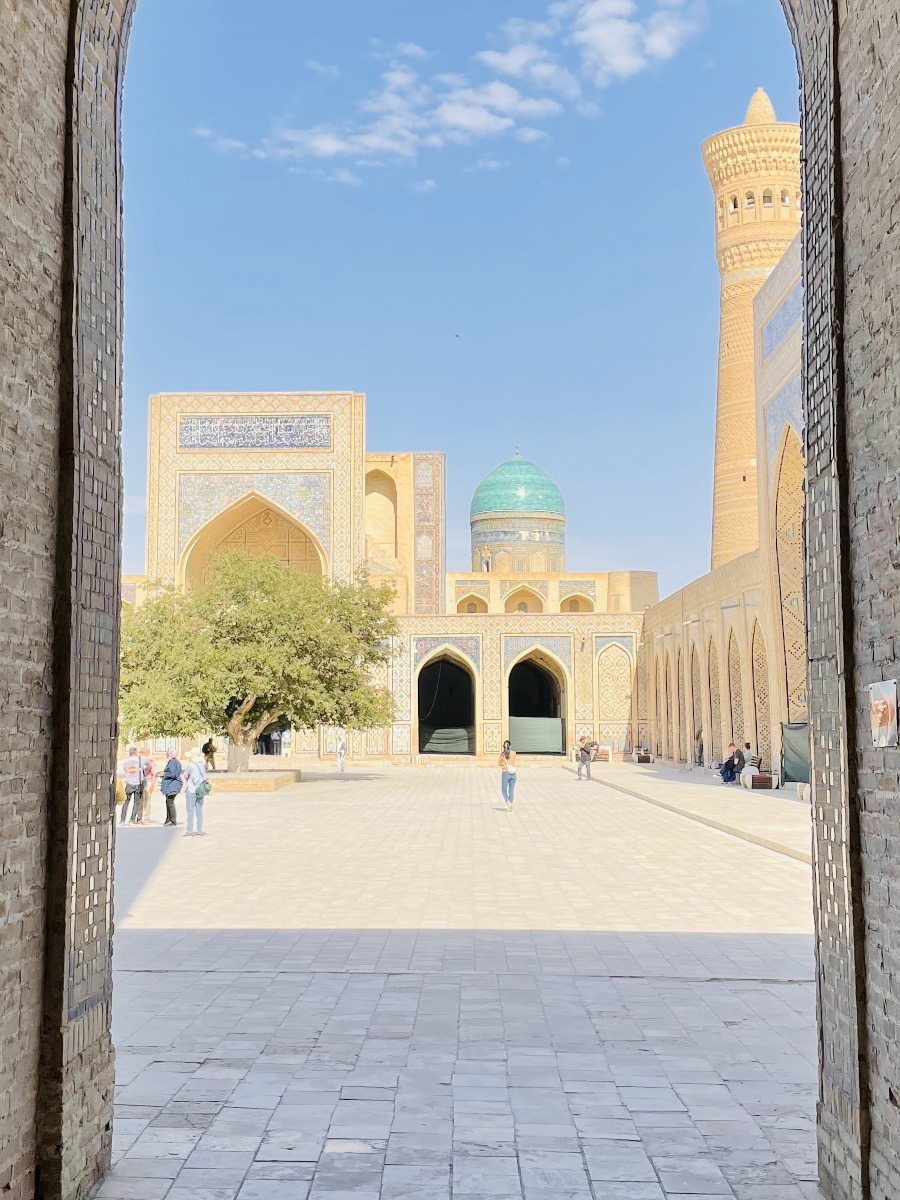
But the heart of the city is without a doubt the Po-I-Kalyan Complex, Bukhara’s equivalent of the Registan in Samarkand (except that it’s unfenced).
Spend a couple of hours here, then return at golden hour and stay until dark.
STAY | Traditional – Rayyan Hotel, Minzifa, Bibi-Khanym, Madrasah – Amulet, High-end – Duston, Kukaldosh
KEY HIGHLIGHTS | Po-I-Kalyan Complex (golden hour), Abdulaziz Khan Madrasah, Chor Minor

DAY 6 – BUKHARA
Ancient citadels and mausoleums
You can see most of Bukhara in a single day, but the real charm lies in slowing down and letting the city reveal itself.
Unlike Samarkand, where sightseeing follows a more linear path, Bukhara unfolds as a seamless blend of obvious highlights and hidden corners, polished monuments beside half‑ruined relics, and it is best explored in a random-walk fashion.
Some essential stops to round out your visit:
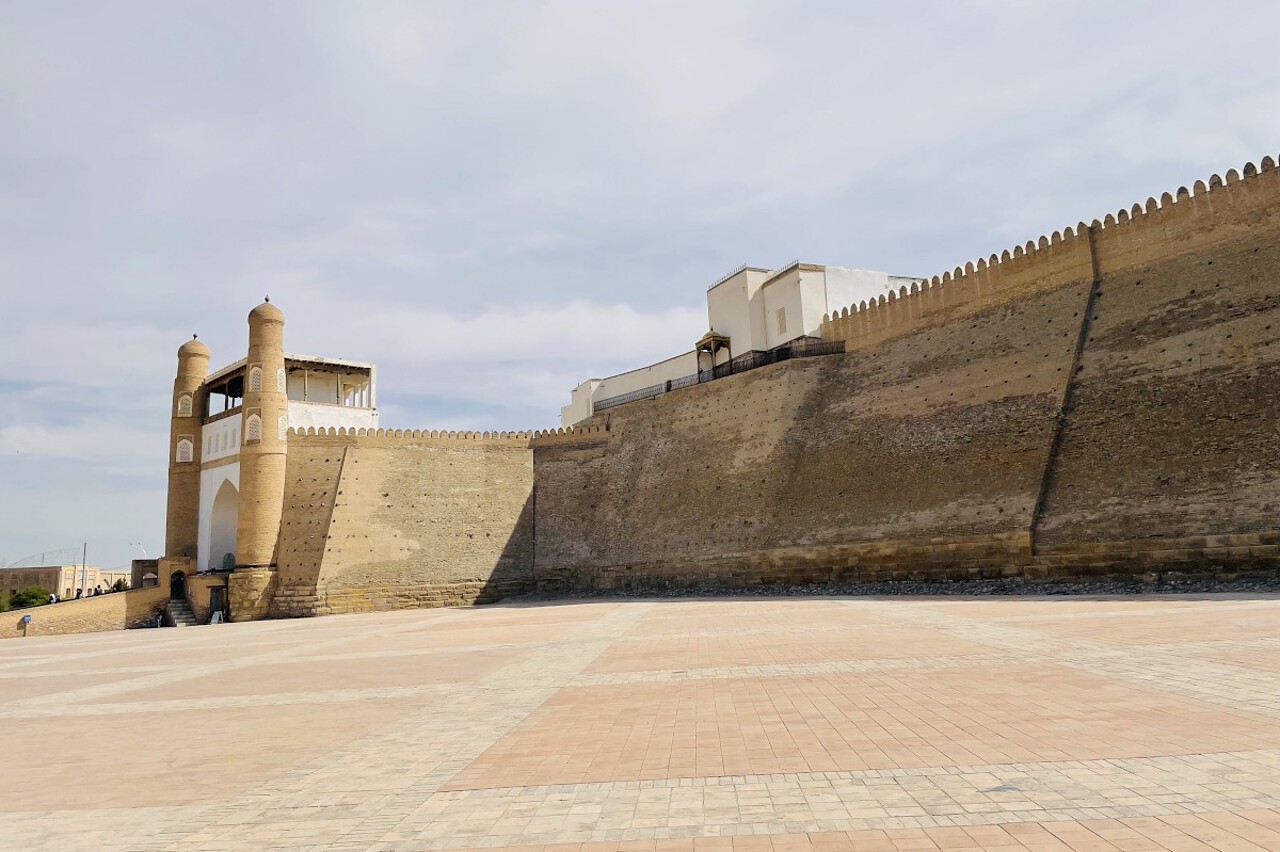
- The Ark Citadel – Impressive from the outside, historically fascinating but a bit flat on the inside
- Bolo Hauz Mosque – Iconic landmark with dozens of finely carved wooden columns
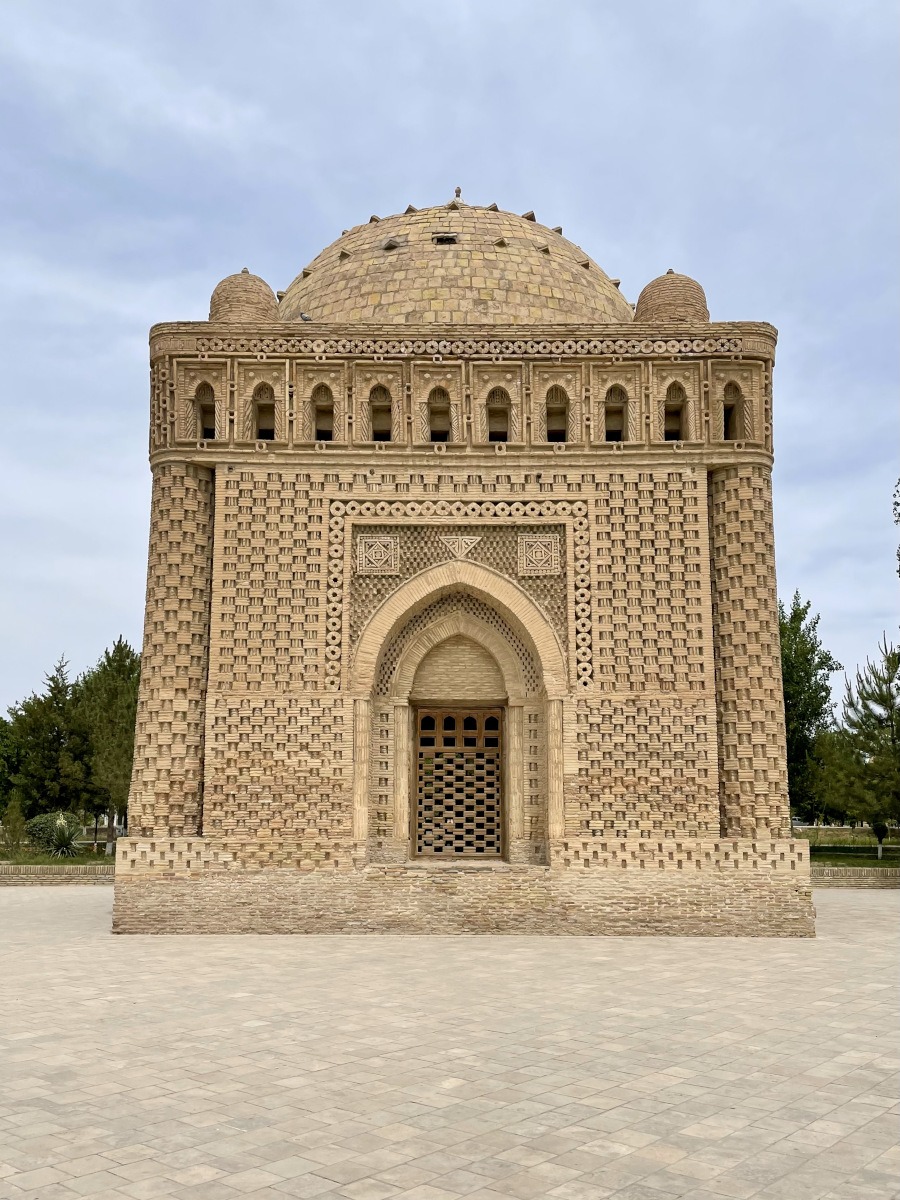
- Ismail Samani Mausoleum – For ancient, perfectly preserved architecture
- …
Read here for more info on the best things to do in Bukhara!
KEY HIGHLIGHTS | Bolo Hauz Mosque, Ismail Samani Mausoleum


DAY 7 – TRAVELLING TO KHIVA AND KHOREZM FORTRESSES
Hidden treasures in the Karakalpak desert
This is the travelling day between Bukhara and Khiva.
When we visited, the only options for transport were either a private transfer (approx. $70) or a slow night train. Since then, a new high-speed railway has opened making the journey much easier.
Irrespectively, this is a long and dull journey so you should combine it with something interesting, like the Khorezm fortresses.
We admit our expectations were modest at first. From afar, they look like little more than crumbling mud‑brick heaps lost in the desert. But once we arrived, we realised that what initially looked like their biggest flaw was actually their greatest charm.
Located in the arid Karakalpak Desert, they are a UNESCO World Heritage Site, some of them over 2,000 years old. Standing among the ancient ruins, with nothing but desert stretching to the horizon and not another soul in sight, you can’t help but feel a little like Indiana Jones stumbling upon a forgotten kingdom.
There are more than 50 fortresses around the desert, but the one you absolutely should visit is Ayaz Qala. Toprak Qala and Kyzyl Qala are also worth visiting if you have more time.
Arrive in Khiva by evening and relax at your hotel.
KEY HIGHLIGHTS | Ayaz Qala Fortress


DAY 8 – DISCOVERING KHIVA
A perfectly preserved Silk Road citadel
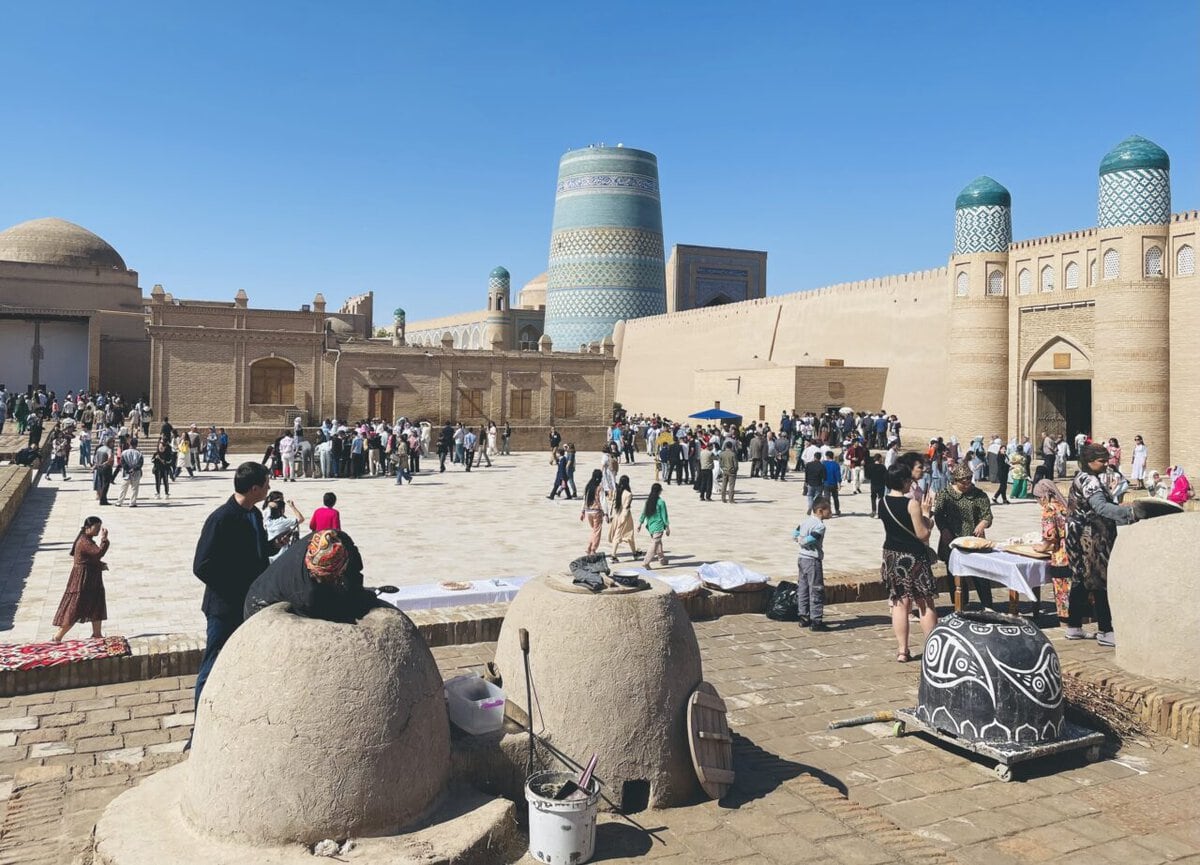
Khiva is the most visually perfect city in Uzbekistan, compact and incredibly cinematic.
Itchan Kala is the most picturesque part of the city. It’s a walled “city within a city” and includes most of the highlights, including the iconic Kalta Minor, Kuhna-Ark and the unique Juma Mosque.
We wrote a dedicated guide on how to spend one perfect day in Khiva, for more details!
STAY | Ulli Oy Boutique Hotel & Terrace, New Star Boutique Hotel, Polvon Qoriy Boutique Hotel


Final Thoughts
Uzbekistan is one of those rare countries that still feels authentic without overwhelming first‑timers.
It’s atmospheric, culturally-rich, welcoming, and a destination that doesn’t require a long trip to experience it fully.
Read our posts below if you were intrigued by our Uzbekistan itinerary and want to learn more!
- How to spend a memorable day in Khiva
- The best things to do in Samarkand, Uzbekistan
- 14 best things to do in Bukhara, Uzbekistan